A children’s bed is not just a place to sleep, but part of a child’s daily routine, room layout and growing independence. The right choice depends above all on the child’s stage of development, the bed’s size, the space available and how long you want to use the same solution. A Baby may suit a Baby Cot or a Baby Bassinet for early rest; an older child may suit a lower House Bed with rails or a Standard Bed, while Bunk Beds may work well in a room shared by several children.
Always start with the type of bed, not the colour or playful shape. Then check the sleeping area and the bed’s external dimensions, the safety rail or protective edge, mattress compatibility, the bed base and what is included in the set. If you want to compare the entire shop selection, also browse the children’s beds selection – this article helps you establish how to make your decision before browsing products.
The practical route to choosing is simple: first identify your child’s needs, then measure the room and decide how long you want to use the bed. Only then is it worth comparing extras such as an underbed drawer, extra bed, ladder, stairs or removable rail.
To make choosing easier, this article looks separately at the categories House Beds, Baby Cots, Bunk Beds, Standard Beds and Baby Bassinets. This makes it possible to compare subcategories as part of one overall selection, without mixing up different needs.
How to choose a kids’ bed: start with needs, not appearance
When choosing a kids’ bed, the most important question is what stage your child is at and how you expect to use the bed. For a newborn or very young baby, the priority is a sleeping space designed for babies, whose instructions and permitted use can be followed precisely. When moving from a cot to a larger bed, your child’s readiness, how easily they can get in and out, and the need for a guard rail become important. A toddler bed may have a lower sleeping height, but a low frame does not in itself mean that every such option is suitable for every child.
Also consider whether you want a compact bed for a short stage or an option that can be used for longer. The shop offers, for example, 60x120 cm and 70x140 cm Baby Cots, as well as a recurring 90x200 cm sleeping surface across the kids’ bed and House Beds ranges. The 80x160 cm and 80x180 cm dimensions mentioned in the category description may be suitable as intermediate stages, but the final decision should be based on the sleeping surface and external dimensions of the specific product.
The sleeping surface is not the same as the bed’s external dimensions
If the product name states, for example, 90x200 cm, this usually refers to the mattress or sleeping surface dimensions, not the overall width and length of the piece of furniture. The bed frame, rails, headboard, ladder or other structure may take up additional space. Before buying, measure both the available wall space and the area needed to get out of bed, clean and open a drawer.
- 60x120 cm is a Baby Cot size worth comparing when looking for a smaller cot.
- 70x140 cm may provide more room to use a Baby Cot, but check the conversion options for the specific model.
- 80x160 cm and 80x180 cm are worth comparing when these sizes are actually available for the product you have chosen.
- 90x200 cm is a longer sleeping surface found in several kids’ bed and House Bed options, but it is not a universal standard for all children’s beds.
Always check what is included before buying
The product name does not always tell you whether the price includes a mattress, bed base, safety rail, bed drawer or fastening accessories. Open the product page and check each part separately. If you already have a mattress, compare its size with the bed’s internal dimensions and also check the permitted mattress thickness range, if stated in the product description or instructions.
For a safety rail, check whether it is fixed or removable, where the entrance opening is and how the rail attaches to the frame. A guard rail may make getting out of bed more settled, but its suitability depends on your child’s movements, the mattress thickness and the specific model’s construction. For a bunk bed, also assess the position of the ladder or stairs, the room height and use in accordance with the manufacturer’s instructions.
Quick decision guide
- Early rest for a baby: compare a baby basket and a Baby Cot, and follow the permitted use for the specific product precisely.
- Moving on from a cot: consider whether your child still needs an option with enclosed sides or can use a lower children’s bed that is easier to access.
- A playful children’s room: a House Bed may be suitable if its house-shaped design, guard rail and possible storage meet the needs of the room and your child.
- Longer-term use: a standard bed or a children’s bed with a longer sleeping surface may be more practical if space and your child’s needs allow.
- Two children sharing a room: compare a bunk bed, an option with an extra bed and separate beds, taking access, space and the instructions for the specific model into account.
House Beds
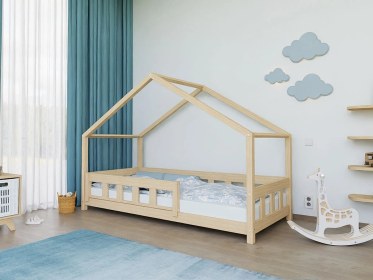
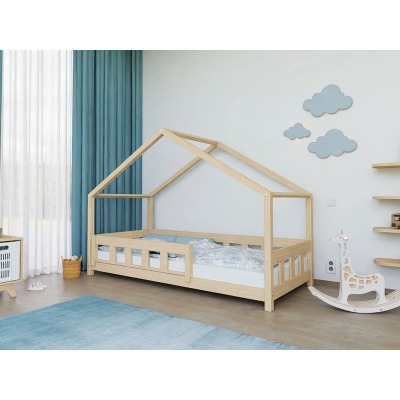
A House Bed for a child combines a sleeping space with a playful approach to room design. Its house-shaped frame can give a children’s room a clear focal point and encourage a child to use the bed as their own space during the day too. However, don’t base your choice on appearance alone: check the sleeping height, the extent of the guard rail or safety rail, the entrance arrangement and how much space the frame actually takes up.
A House Bed may resemble a Montessori-style option when the sleeping surface is lower and easier for a child to access. However, it should not automatically be treated as a separate category or assumed to make a child independent. The specific construction, rails and your child’s readiness are important. To compare models with different shapes and functions, start with the House Beds category.
A 90x200 cm House Bed may be a sensible choice if you are looking for a longer sleeping surface and have enough room for it. However, distinguish the mattress size from the bed’s overall external dimensions. Roof-like frame parts, side rails or a headboard may make the bed wider or longer than planned.
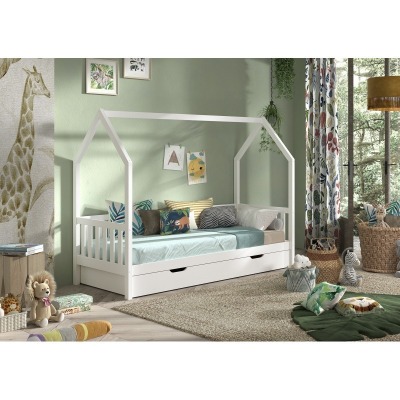
When is a bed drawer useful with a House Bed?
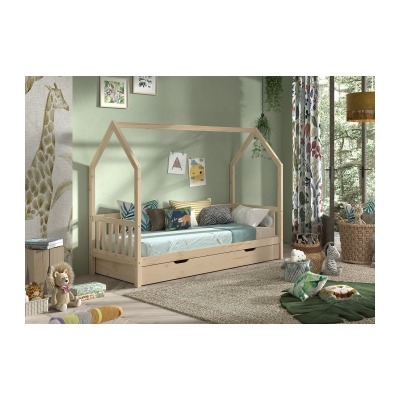
A bed drawer affects both storage and how you use the space. It can help keep bed linen, toys or other children’s room items organised, but for some models the drawer can also serve as an extra sleeping space. Before buying, check whether the product description says the drawer is for storage or is an extra bed, which way it opens and whether there is enough clear floor space in front of it.
The product range includes, for example, the PLOTTY House Bed with a headboard and front safety rail, available in different sizes and colours. According to the product page, the desired colour must be added to the order. The CABANE House Bed is listed in 90x200 cm in both natural and white; it has a safety rail on three sides and a bed drawer that, according to the product description, can be used either as an extra sleeping space or for storage. These features apply to the named products and not automatically to all House Beds.
Baby Cots
A Baby Cot is intended for an earlier stage of a child’s development than a standard cot. Its barred structure defines the sleeping area and helps a parent keep track of where the child is, while the adjustable mattress height can make daily care more convenient. Suitability depends on the child’s development, home routine and the instructions for the specific model, so it is not advisable to choose a cot based only on a general age recommendation.
The main sizes in this selection are 60x120 cm and 70x140 cm. With a smaller sleeping area, consider whether it suits the available space and the intended period of use. A 70x140 cm option may offer more room to grow, but a larger size is not automatically better – the decision is also affected by the room layout, mattress availability and whether the cot can later be converted into another type of bed. You can compare options in the baby cot category.
When preparing to move on from a cot, check whether the side panels can be removed, the height of the mattress frame and how the bed’s use changes as the child becomes more independent. Removable bars or a convertible frame can be practical, but check their exact use in the product description and instructions.
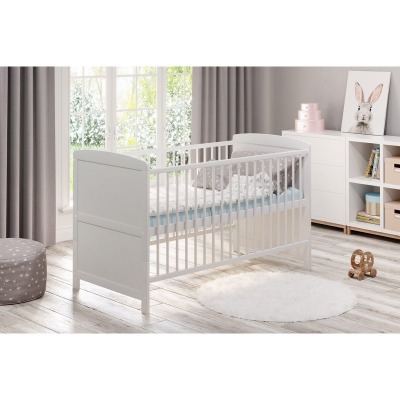
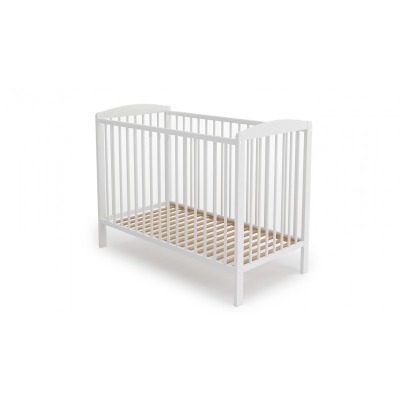
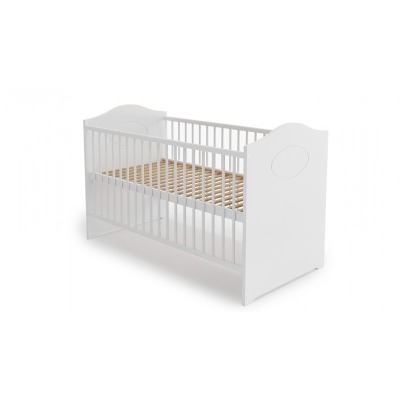
Adjustable base and conversion option
According to the product descriptions, the Alia, Amelie and Augustin baby cots have solid pinewood frames and mattress frames adjustable to three heights. The Alia and Augustin are 70x140 cm 2in1 models: the Alia can be converted into a children’s bed and the Augustin into a baby sofa. The Amelie is a 60x120 cm model. The descriptions for all three mention three removable bars on one long side, so the child can later get out of bed independently, as well as round bars measuring 16 mm in diameter with 6 cm gaps between them.
These examples show why it is worth considering baby cots by their features. One model may offer a longer period of use, another a more compact size, and a third a different conversion option. Before ordering, check the mattress size, bed base construction, height settings, what is included and which parts are needed for conversion.
Bunk Beds
A Bunk Bed is primarily a space-saving solution. It may suit a family where two children share a room, or a situation where you want to leave more floor space for play, study and storage. However, a bunk bed is not simply two beds stacked on top of each other: consider access to the upper sleeping area, the position of the ladder or stairs, the room height and the instructions for the specific product.
The range may include sizes of 90x200 cm and 140x200 cm, as well as solutions that accommodate up to three sleeping spaces. The size does not describe the overall dimensions of the piece of furniture, so in addition to the mattress size, check the external dimensions and the space needed for movement.If you’re looking for a solution suitable for several children, compare different bunk beds for children, but don’t assume that one model has the same features as another.
Stairs may be a different solution for a younger user than a narrow ladder, but they can take up more floor space. Storage compartments and drawers help keep the room tidy, but there must be enough clear space beside or in front of the bed to open them. With three sleeping spaces, check especially carefully how they are positioned and what access is provided.
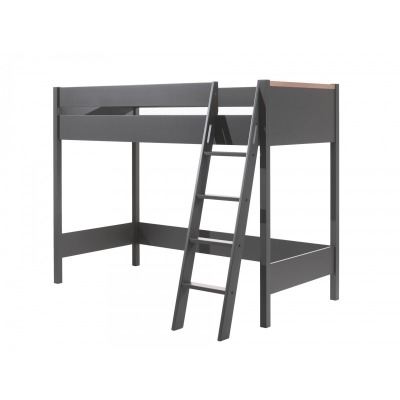
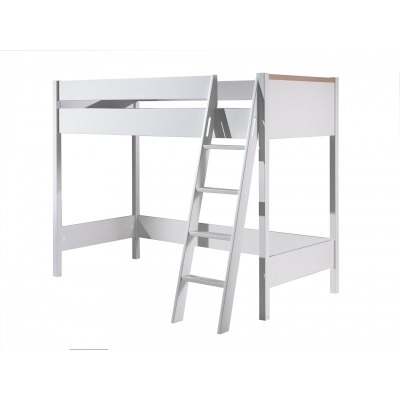
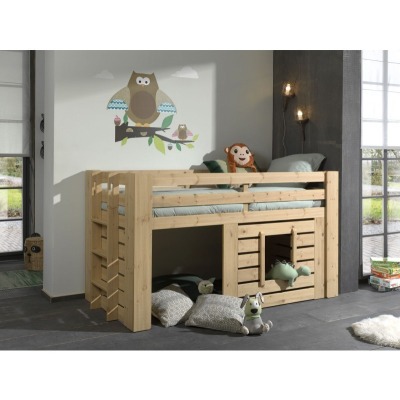
A high bed or a house-shaped design?
A high bed can free up space underneath for a play or study area. For example, the London high bed in anthracite/beech and white/beech is described as a design that can accommodate a play area or desk underneath. For both options, the ladder can be positioned on the left or right. According to the product information, the bed is made from furniture board, while the ladder and legs are made from lacquered pinewood.
The Oliver children’s bed 90x200 cm has a different use: its product description specifies a solid pinewood frame, a natural oak-coloured lacquer finish, an included bed base and a high guard rail. The lower section looks like a little house. The description also gives a maximum mattress height of 16 cm and a maximum load capacity of 75 kg. These details apply to this particular model – for another bunk bed or high bed, check the relevant specifications on its product page.
Standard Beds
A Standard Bed is the simplest starting point when a playful house-bed shape or the height of a bunk bed is not needed. It may suit a child who needs a stable bed frame, a clearly defined sleeping area and a flexible layout. The standard bed selection may include shorter sizes such as 80x140 cm, as well as longer options, for example 80x160, 80x180 or 90x200 cm, but always check the specific size on the product page.
Practicality is affected by the guard rail, drawer, bed base and any option to buy the bed as a set with a mattress. If storage space is limited in the child’s room, a bed with a drawer may be useful, but measure the space needed to open the drawer before buying. If you intend to use the bed for longer, compare your child’s current height and the available space, and consider whether a longer sleeping area would make it awkward to move around the room. You can compare suitable bed-frame and children’s bed options in the standard beds category.
With a standard bed, it is particularly important not to assume that a mattress or bed base is included. Check whether the description lists these parts separately and what mattress size is required. If the bed has a guard rail, check its position, the entry point and whether it can be removed, as these affect how the bed can be used as the child grows.
Baby Bassinets
A Baby Bassinet is intended primarily for a newborn or young baby when you want to keep the resting place close by at home and use it more flexibly than a larger baby cot. A bassinet may be suitable for daytime rest or when you want to move the baby’s sleeping place from one spot to another at home. It is not automatically a replacement for a later baby cot, as the period of use, size and permitted use depend on the specific product.
When choosing Baby Bassinets, it is worth considering the shape, finish, portability and whether the design has legs or the basket sits on another base. Crocheted baskets may suit soft or boho-inspired interiors, but an even finish and the manufacturer’s instructions matter more than appearance. Before buying, check what use the basket is intended for, how to move it and what restrictions are listed on the product page or in the instructions. You can explore different options in the Baby Bassinets category.
When comparing a baby basket with a cot, ask yourself whether you mainly need a nearby resting place for the early stage or a cot designed for longer-term use. In either case, follow the specific product instructions and do not assume that the basket’s dimensions, base or accessories are the same for every model.
Which kids’ bed is right for your situation?
Bed types are easier to compare by how they will be used, rather than by appearance alone. Baby bassinets and cots are for an earlier stage, while house beds and standard beds are generally everyday sleeping solutions for older children, and bunk beds mainly address room layout or the need for multiple sleeping spaces. A Montessori-style low bed is not necessarily a separate category; it describes a lower bed position and easier access.
- Baby Bassinet: suitable when you need a nearby, and possibly portable, resting place for a small baby. Check the permitted use, shape, base and instructions.
- Cot: suitable for a baby who needs a cot. Compare the 60x120 cm and 70x140 cm sizes, mattress height adjustment, side design and possible conversion options.
- House Bed: suitable for a playful children’s room and for those looking for a lower design or one with guard rails. Check the house frame, front panel, safety rail, entrance and the actual function of the bed drawer.
- Standard Bed: suitable if you want a simple bed frame that does not need a bunk structure or house shape. Compare the size, safety rail, drawer, bed base and what is included.
- Bunk Bed: suitable for several children or when you want to create a second functional area above or below the bed. Check the ladder, stairs, height, placement and the usage requirements in the instructions.
If your main question is which bed for two children to choose, compare a bunk bed with a house bed with an extra bed or a drawer-based option. A bunk bed often saves floor space, but requires suitable ceiling height and access. A drawer or extra bed may be more flexible, but its use depends on the bed’s construction and the free space in front of it.
Once you have narrowed down your options, visit the kids’ beds landing page and open the product pages for suitable categories. There you can compare actual dimensions, price, colour and set details—information you cannot determine from a general category name.
A practical checklist before buying a kids’ bed
Before placing your order, work through the checkpoints in sequence. This helps avoid a situation where you like the bed in a picture, but it does not fit the room, your existing mattress is unsuitable or the drawer cannot actually be opened.
- Write down the child’s current needs. Is the bed for a baby, a child moving on from a cot, a toddler, a preschooler or several children? Do not determine suitability by age alone; also consider whether the child is ready to get in and out of bed and follow the specific product instructions.
- Measure the area needed for the sleeping surface. Note the mattress size and distinguish it from the bed’s overall dimensions. Allow for the frame, rails, front panel, ladder, stairs and any extra space needed for a drawer.
- Measure the space needed for movement. There should be enough room around the bed for getting in and out, cleaning and everyday movement. For a model with a drawer, also measure the space in the direction the drawer opens.
- Check the mattress size and thickness. The mattress must match the bed’s internal dimensions. Check its thickness, ventilation options, cover care instructions and compatibility with the rail. A mattress that is too thick may change the rail’s relative height, so follow the instructions for the specific model.
- Check the bed base design. Check whether the bed base or slatted base is included or needs to be purchased separately. Do not assume all kids’ beds have the same type of slatted base.
- Assess the safety rail or guard rail. Check the rail’s position, length, entrance opening, fastening and whether it can be removed. Consider whether the child can get out of bed independently and in a controlled manner, and whether the rail is compatible with the chosen mattress thickness.
- Check the accessories. A bed drawer, extra bed, ladder, stairs, slide or conversion option may be useful, but each accessory takes up space or requires you to understand how it is intended to be used.
- Check what is included and how to assemble it. See which parts, fastenings and instructions are listed in the product description. Bear in mind that assembling a larger or taller structure may require more space and time.
Mattress and rail compatibility
When choosing a mattress, start with the size, not the softness or appearance. If the bed has a 90x200 cm sleeping surface, look for a mattress of the corresponding size, but final compatibility depends on the bed’s internal dimensions. The same principle applies to 60x120 cm and 70x140 cm cots.
Also check the mattress thickness and how it sits in relation to the bed base and safety rail. The actual height of the bed rail changes with the mattress. For information on ventilation, a removable and washable cover, and care, refer to the specific mattress description rather than assuming all mattresses have the same features.
Small rooms and shared children’s rooms
In a small children’s room, a bed with a more compact sleeping surface, a lower frame or a drawer may be a suitable option, reducing the need for a separate storage cabinet. However, do not treat the drawer as free extra space: measure whether there is enough room in front of the bed to open it. A high bed can free up floor space for a play or study area, but you should check the room’s height, the ladder’s position and whether the child is ready to use this design.
For a shared room for two children, compare three layout options: two separate standard beds, a bunk bed or an extra sleeping space that fits under one bed. A bunk bed can be space-efficient in terms of floor area, while a drawer or extra bed offers more flexibility if both children do not need a separate full-size bed all the time. Before buying, measure the entire route through the room, not just the space for the bed against the wall.
A calm transition from a cot to a bigger bed
The transition does not have to happen all at once. Introduce the new bed before it is put into use, talk to your child about where it will go and, if possible, let them choose suitable bedding or another neutral detail. Keep the evening routine as similar as possible, and observe how your child gets into and out of bed.
If you choose a solution with a removable rail, safety rail or lower sleeping height, always check its use against the instructions for the specific model. General advice cannot replace product information, as designs, rails and mattress heights vary.
Common mistakes when buying a children’s bed
1. Choosing a bed based only on its appearance
A house-shaped frame, lovely colour or playful detail may appeal to a child, but says nothing about the bed’s internal dimensions, rail, mattress or suitability for the room. The solution is to consider how it will be used and check the technical details first, then compare the designs.
2. Confusing the sleeping area with the overall dimensions
90x200 cm may refer to the mattress size, while the frame, headboard or ladder makes the whole piece of furniture larger. Always check the overall dimensions listed on the product page and allow enough space to move around.
3. Not checking the mattress thickness
A mattress needs to be the right length and width, but that is not all. Its thickness affects the rail’s relative height and its suitability for the bed base. Check the size, thickness, ventilation, cover and compatibility with the rail before ordering.
4. Assuming everything needed is included
A bed base, mattress, drawer, extra bed and fixings are not automatically included with every bed. Read the product page to see what is included and consider which parts need to be selected or purchased separately.
5. Assessing a safety rail only by whether it is present
The rail’s position and length, the entrance opening, its fastening and whether it is removable are also important. Check how the rail works with the mattress you have chosen, and follow the manufacturer’s instructions.
6. Not planning the bunk bed layout fully
The ladder or stairs may obstruct a door, window or furniture. Before buying, plan access to the upper sleeping space as well as the area needed for cleaning. Check the suitability of the height and use in the instructions for the specific model.
7. Not leaving clear floor space for a drawer
A bed drawer can provide storage or, with some models, an extra sleeping space, but it cannot be used if there is no room in front of the bed to open it. Measure the drawer’s opening direction and allow for a walkway too.
8. Making firm assumptions about age or safety
No general category name can replace the instructions for a specific product. Do not assume that the same size or appearance means the same permitted use, load capacity or safety features.
Frequently asked questions
Which children’s bed is suitable for a 2–3-year-old?
There is no single answer based on age alone. Consider whether your child is ready to move out of the cot, how they move around and whether they still need a safety rail or lower access. Always check the dimensions of the specific bed, its rail design and the manufacturer’s instructions.
When should a child move from a cot to a children’s bed?
The right time depends on your child’s development and readiness, as well as how they use their current bed. You can prepare for the transition gradually by introducing the new bed and keeping the familiar evening routine. For a specific convertible model, follow its instructions for use.
Is a house bed suitable for a child?
A house bed may suit a child who would enjoy a playful sleeping solution with a clearly defined space of their own. Before deciding, check the low sleeping height, safety rail or guard, entrance, mattress size and the bed’s overall dimensions. A house-shaped design does not in itself prove a particular level of safety or suitability.
Should you choose a children’s bed with or without a safety rail?
This depends on how your child moves, the height of the bed and how much of the sleeping area needs to be enclosed. If there is a rail, check its length, fastening, whether it is removable, the entrance opening and how the mattress thickness affects the rail’s relative height. If there is no rail, make sure the solution meets your child’s needs and the requirements of your home.
Which mattress fits a 90x200 cm children’s bed?
You need a mattress that matches the bed’s actual internal dimensions of 90x200 cm. In addition to the size, check the mattress thickness, compatibility with the bed base, ventilation and care instructions for the cover. If the bed has a rail, also check how the mattress affects the rail’s relative height.
Do the bed base and mattress always come with the bed?
You cannot assume that they are always included. Some product descriptions clearly state that a slatted base or bed base is included; for others, you need to check the contents separately. Always check the product page for the required mattress size and any restrictions.
Can a bed drawer serve as an extra bed or storage space?
It depends on the specific model. According to the description of some house beds, such as the CABANE model, the bed drawer can provide an extra sleeping space or storage. For a standard bed or another model, check the function on the product page. Also measure whether there is enough clear space to open the drawer.
Which solution is suitable for a small room or two children?
In a small room, a low frame in a suitable size, a bed with a drawer or a high bed with a play and study area underneath may help. For two children, compare a bunk bed, separate beds and a solution with an extra bed. Decide only after checking the overall dimensions, room to move around, ladder or drawer placement and the instructions for the specific model.
Summary
Choosing the right children’s bed means considering several things together: your child’s developmental stage and readiness, a suitable sleeping area, the room’s overall dimensions and space to move around, a safety rail or guard, mattress compatibility, the bed base and what is included. A baby basket and cot meet needs at an earlier stage, a house bed adds a playful space, a standard bed offers a simple frame bed, and a bunk bed helps organise sleeping spaces for several children or in a small room.
If your decision-making approach is clear, continue comparing products on the children’s beds page. Depending on your specific needs, you can also explore house beds, baby cots, bunk beds,