
- New
On order 5–15 business days5–15 business days
About the collection
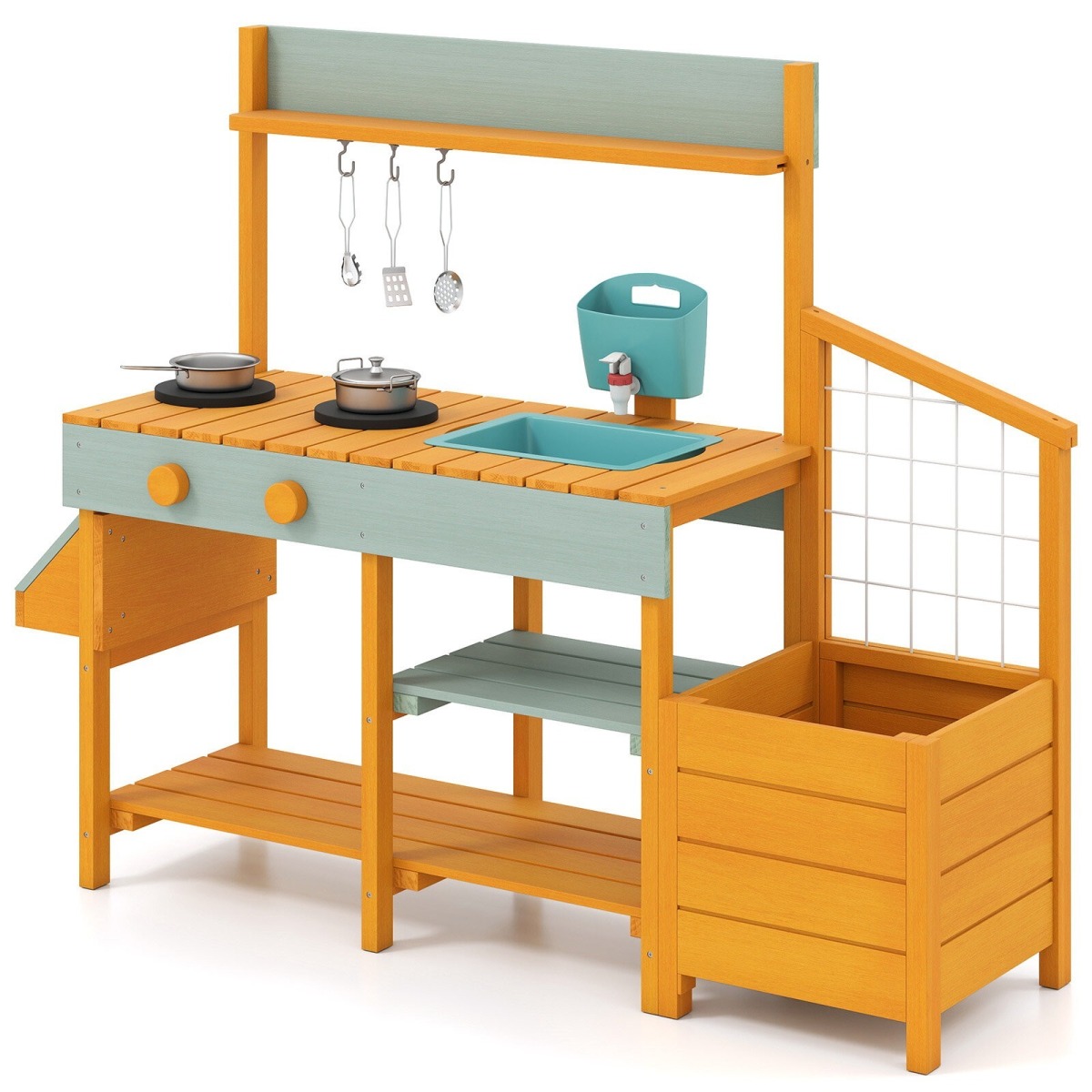
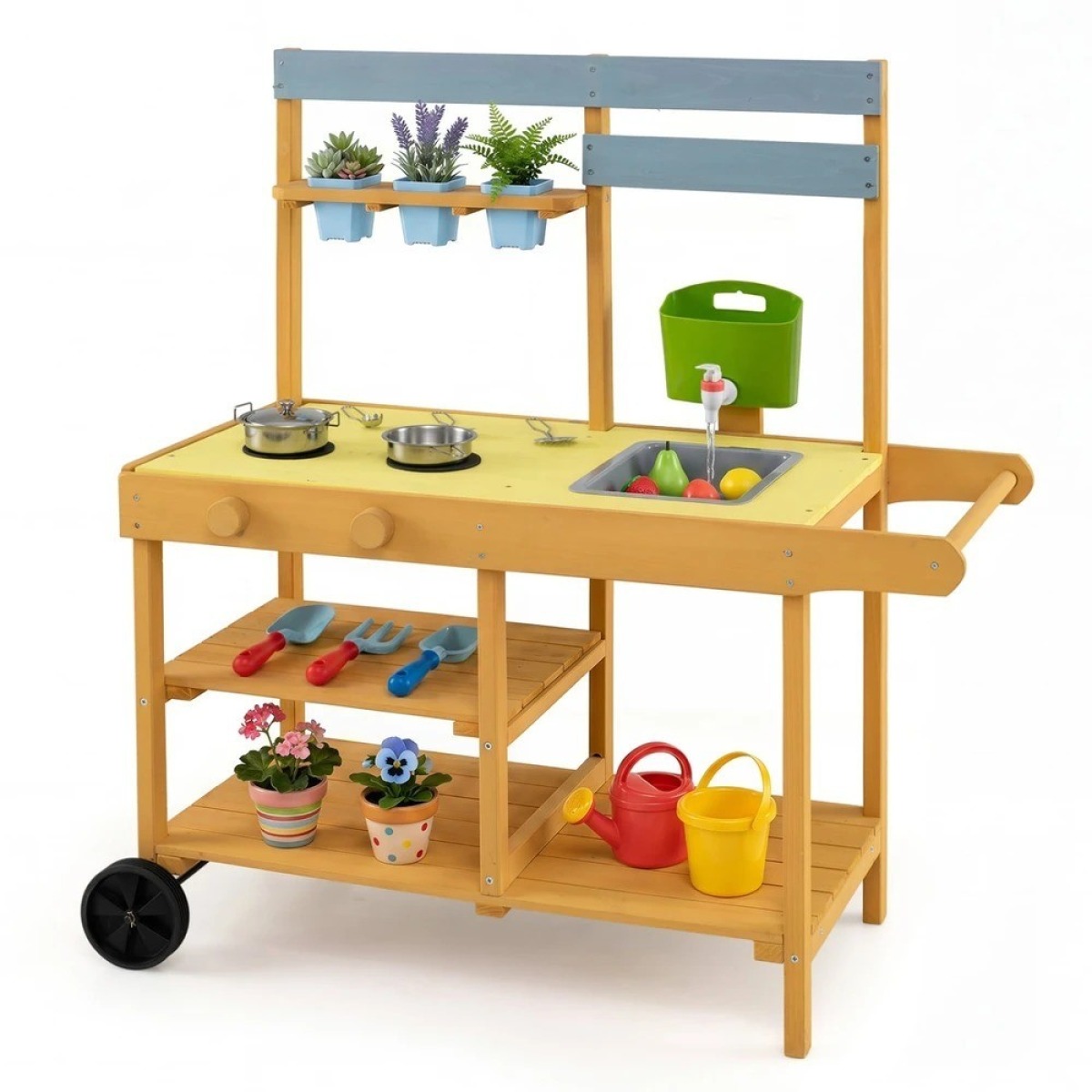
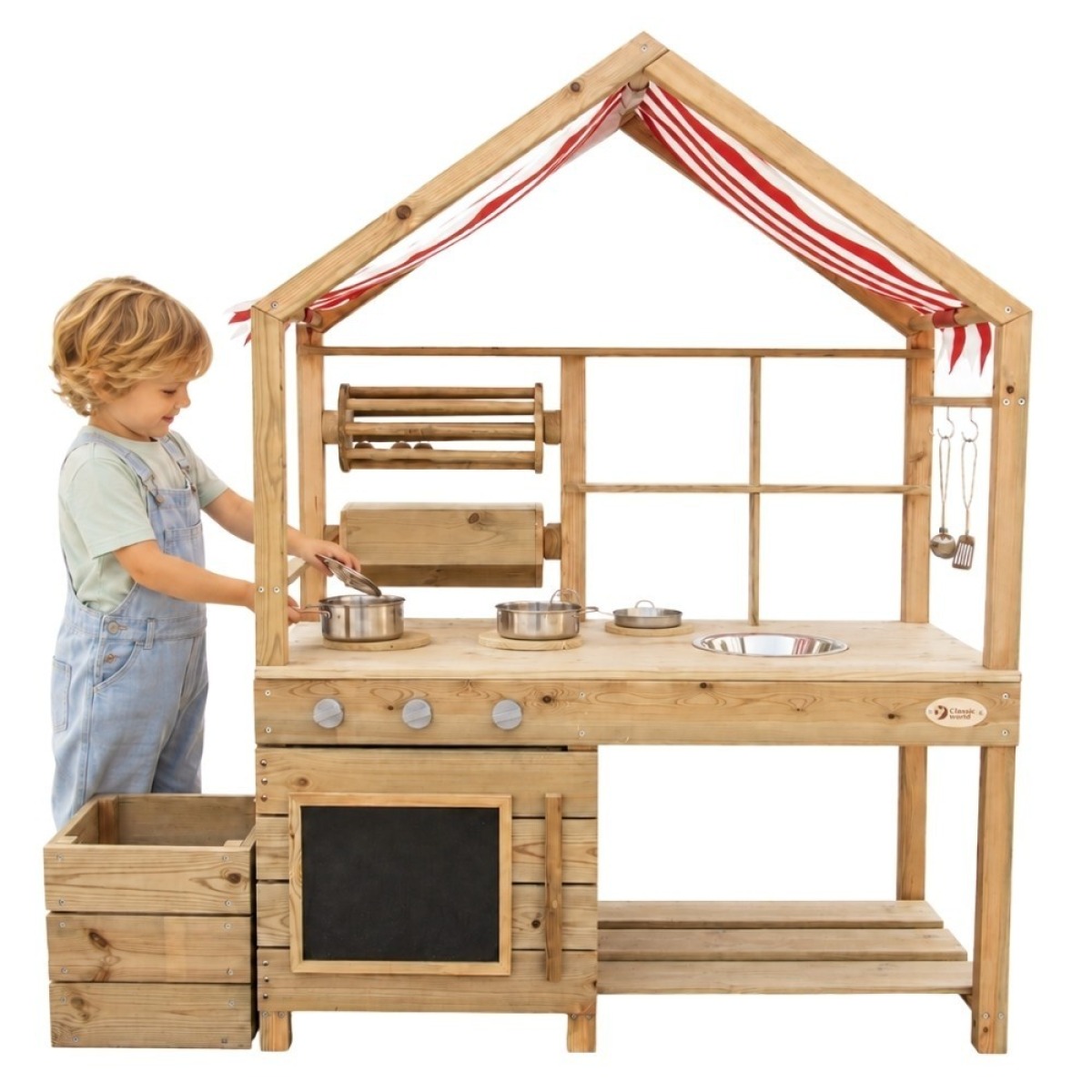
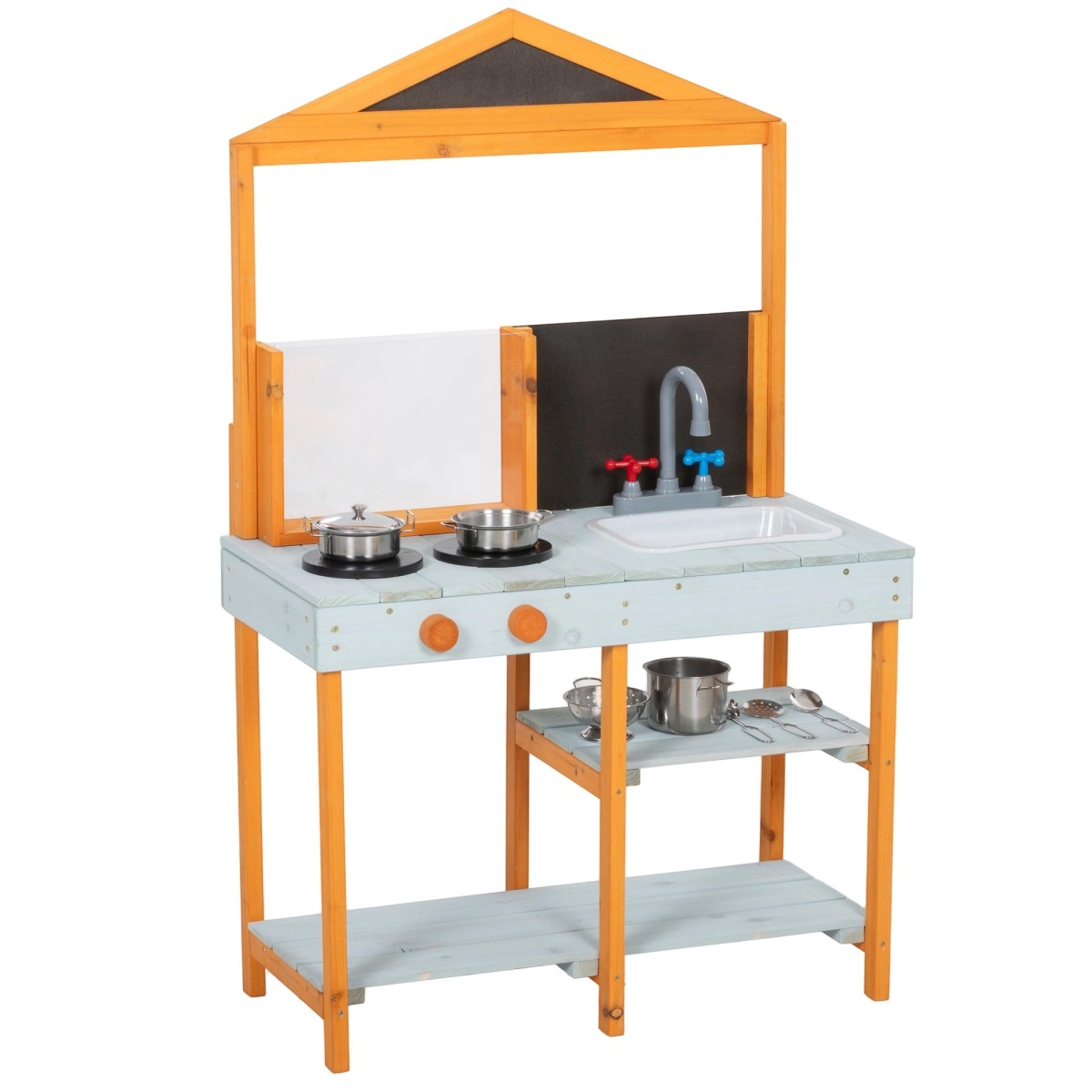
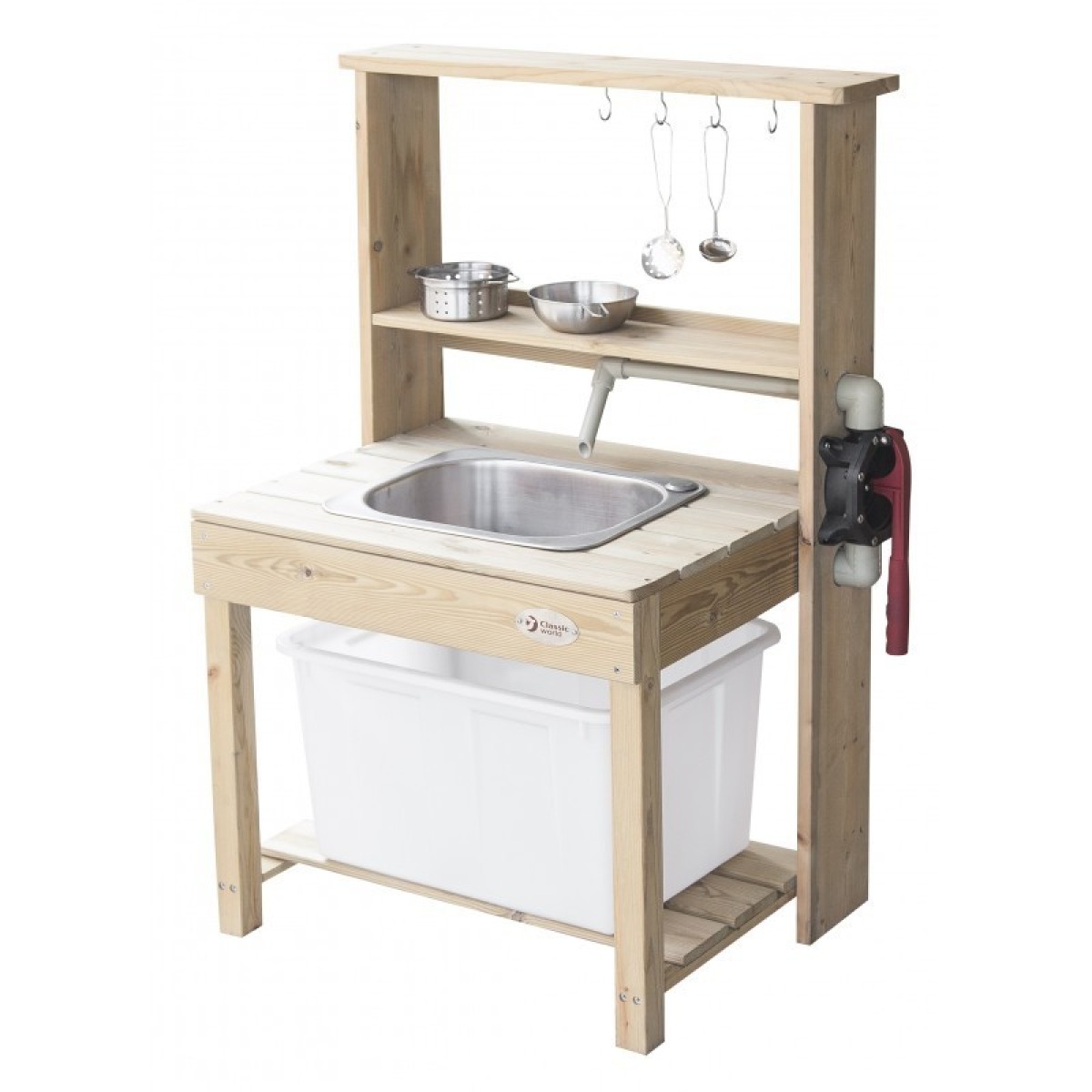
In a mud kitchen, sand cakes, mud soups and flower salads are on the menu. Wooden mud kitchens combine garden play with sensory experiences, as water, sand and soil find their way into a child's own kitchen. They inspire long,...
Category guide
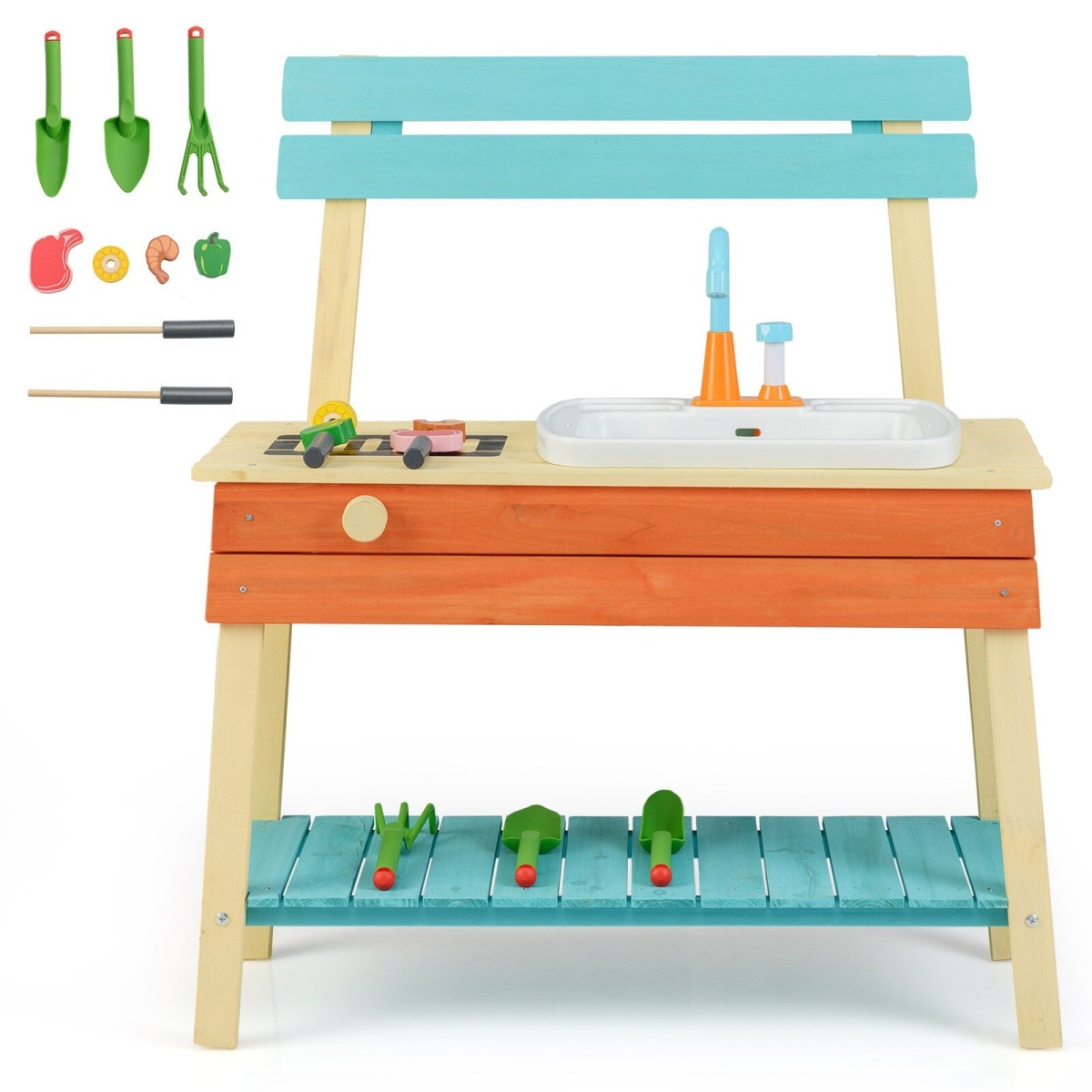
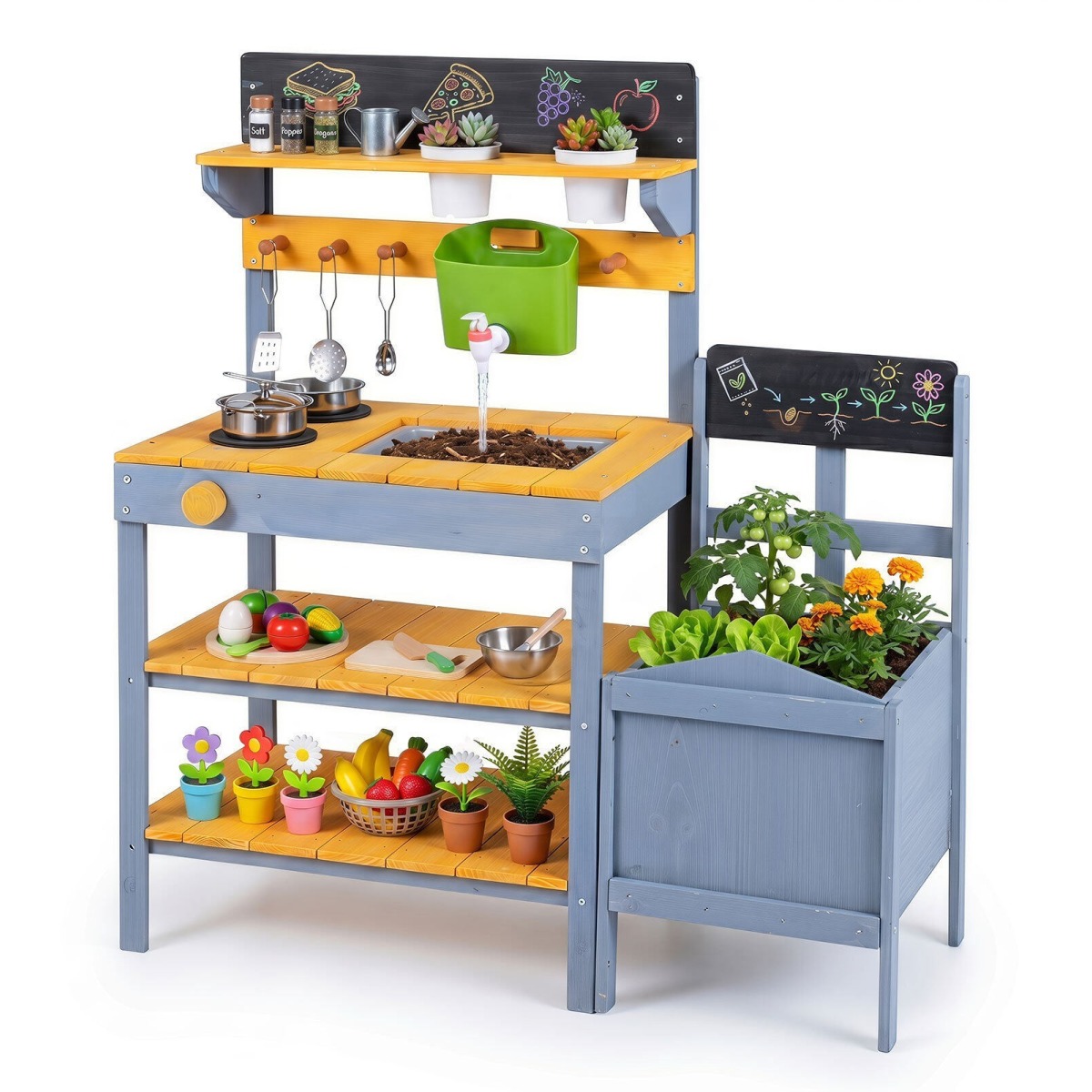
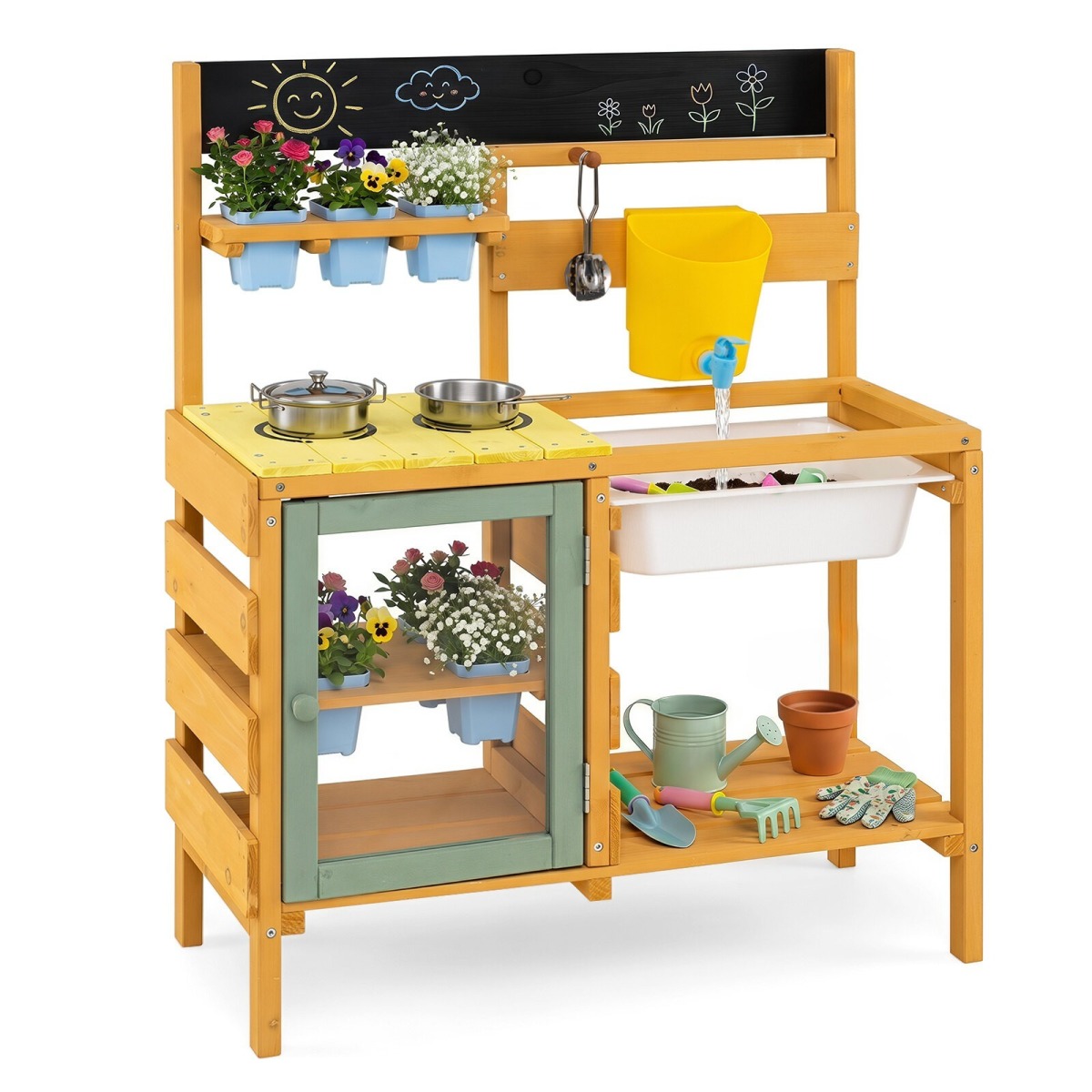
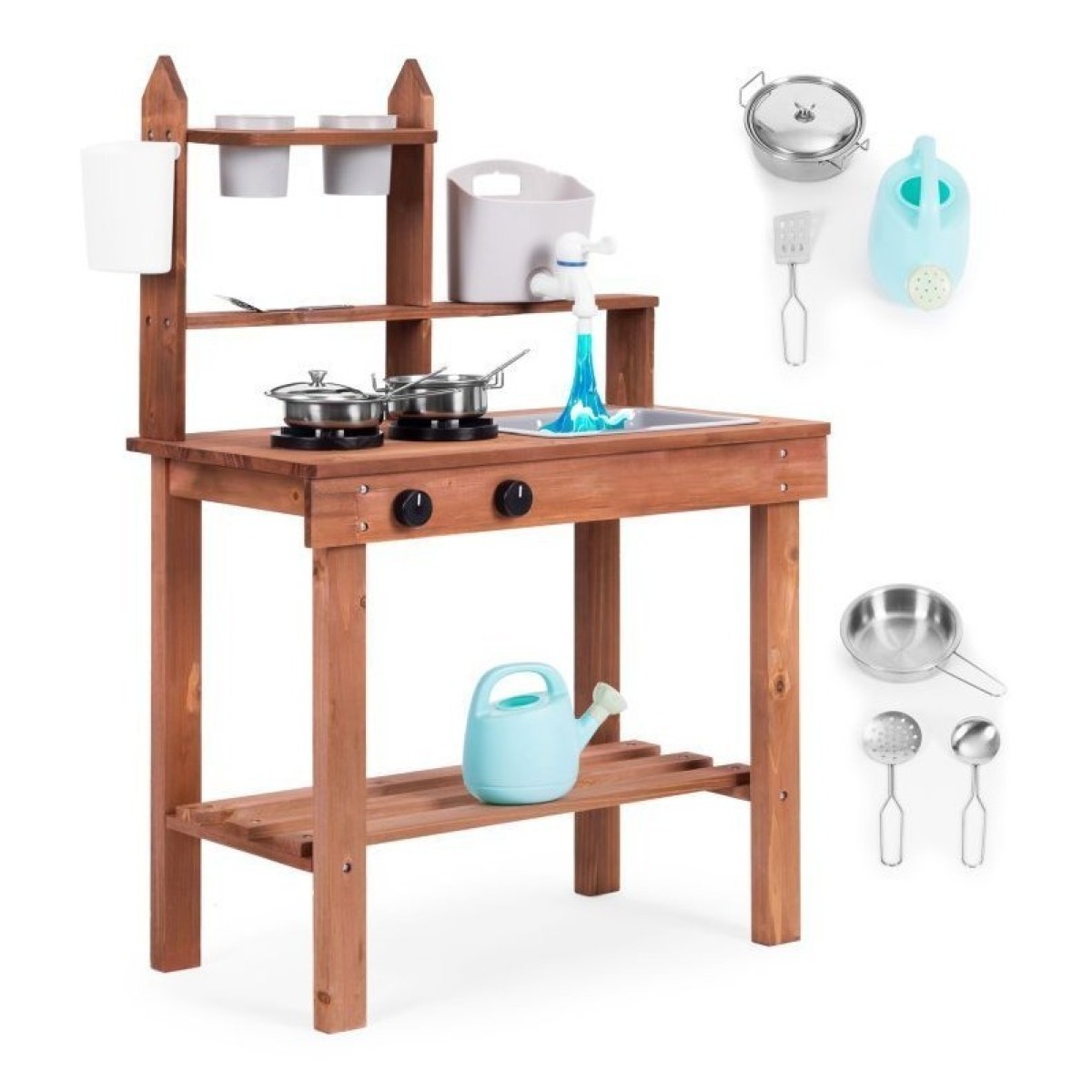
Mud Kitchens for kids are wooden outdoor kitchens that bring role play and sensory play together in the garden: water, sand and soil come together in a “kitchen” of the child’s own making. They are suitable for outdoor play with an adult for little ones who are beginning to explore, as well as for toddlers and preschoolers who want to mix, pour and “cook” for themselves.Activities in a mud kitchen usually take place on the terrace
Both in the garden, when the weather permits, and often designed for weather-resistant use. When choosing a mud kitchen, it is important to check for practical features (e.g. a tap, sink, water distribution or play table), a suitable height and safe use.The best mud kitchens support children’s development through hands-on activities and creativity, while keeping outdoor play structured and playful.
A mud kitchen is an outdoor play centre for children, where everyday kitchen tasks can be carried out “for real”, but safely and as part of play. With a sink, water-related details and a worktop, it creates a clear role for play with natural materials: children can be a cook, gardener or little maker.This creates sensory play (pouring, mixing, decorating) without the activity remaining purely in the realm of imagination.
Taking the playroom outdoors gives the family a chance to spend time together outside too.In practice, it works well in the garden, on a balcony or on a terrace, especially when the product is equipped with suitable play elements that invite children to engage with nature. It is also important that Mud Kitchens support hands-on activity and hand-eye coordination.
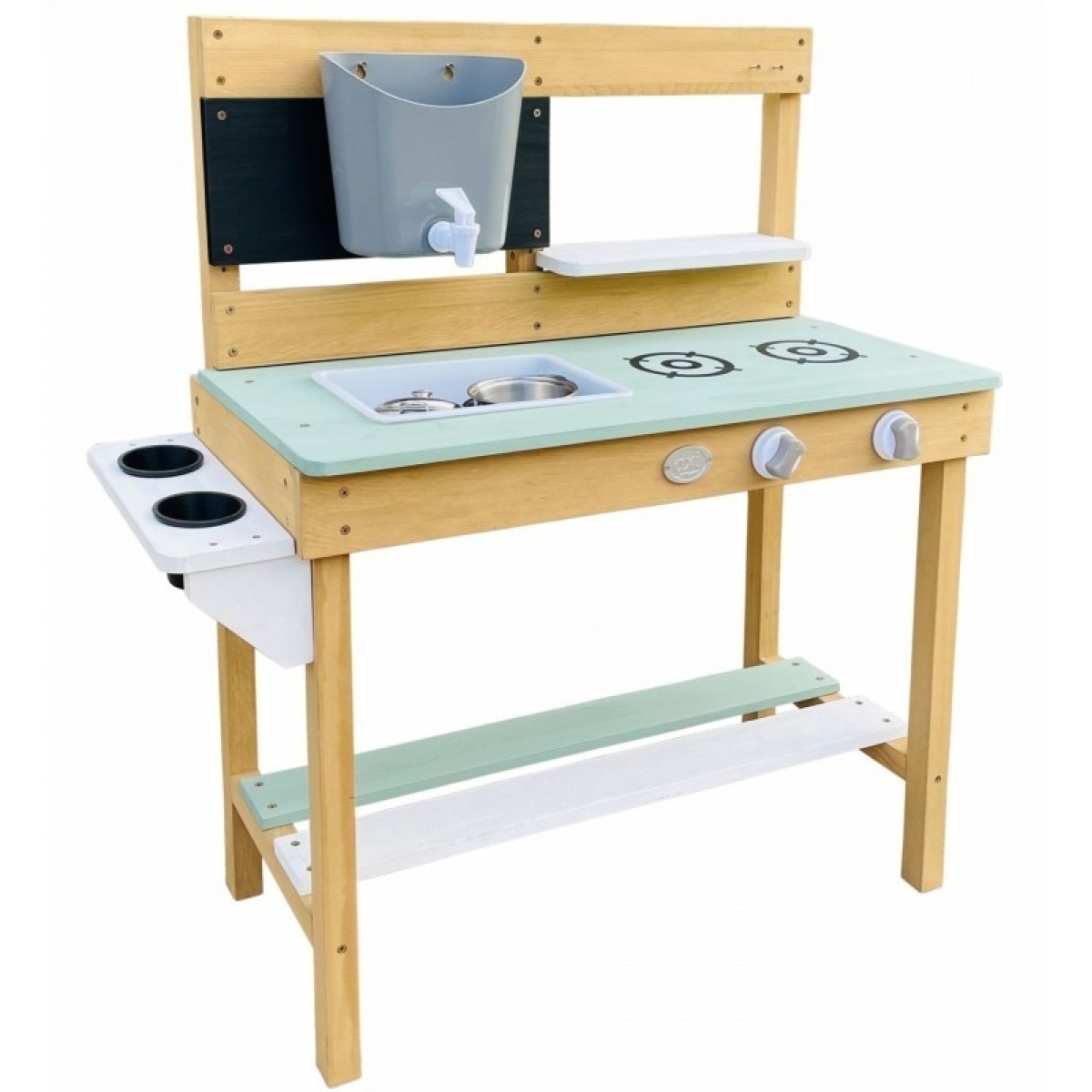
When choosing an outdoor mud kitchen, it is useful to consider the kinds of play that engage your child most. Some mud kitchens focus on water-related features (a tap, water distributor, sink), while others combine a worktop, storage and accessories. With a tap or water tank, children can pretend to cook and add various “ingredients” to sand and mud.
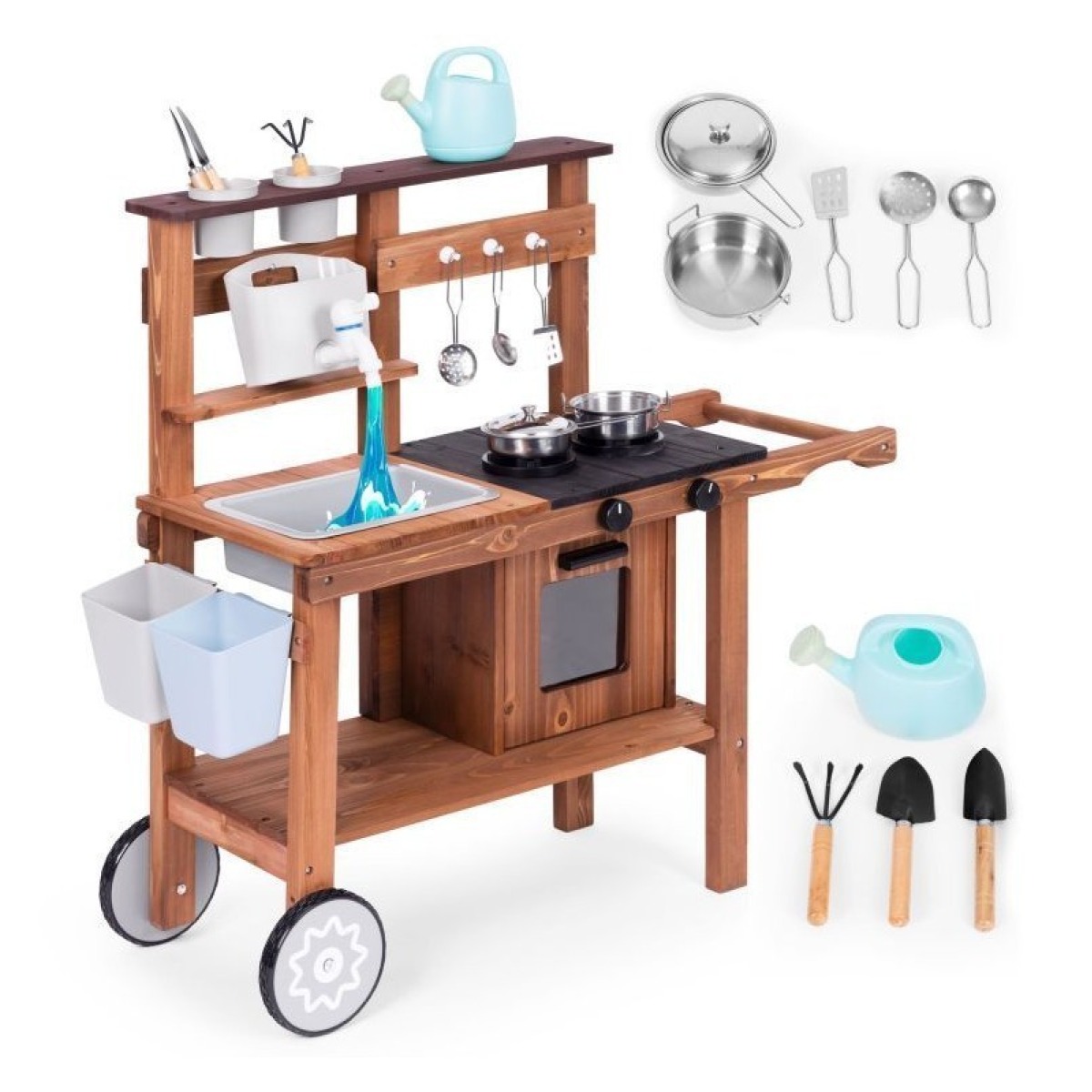
It is also worth considering how the product fits into the space. Some models are compact or mobile (e.g. on wheels), making them easier to place on a smaller terrace too. Wall-mounted options help save space when outdoor play space is limited. Combining a play table or sandpit can give one product several uses: mixing, pouring and longer play in one place.
Mud kitchens are more than just “play kitchens”. An outdoor kitchen for children often combines the idea of cooking with activities in nature: children can mix “soups”, prepare “sand dishes”, pour water, make different textures on the mud kitchen and repeat the same play structure again. If the mud kitchen offers the chance to plant or do gardening, for example, it connects play with everyday skills and can be linked to the seasons.
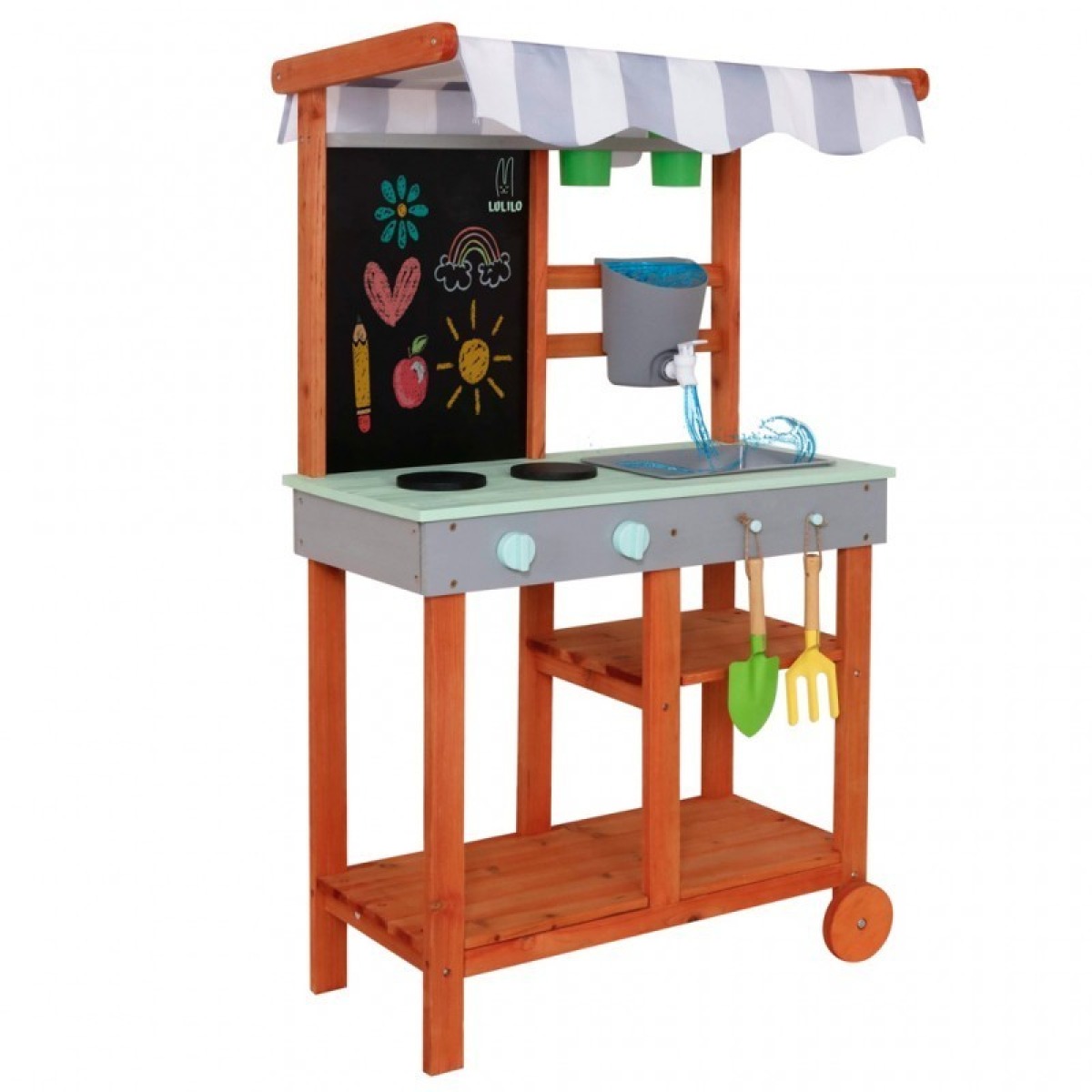
This kind of activity supports creativity and imagination, as well as communication skills. Children can play together: one pours while the other “serves”, they create menus or set up a mini café. Even when the mud kitchen is larger and includes more parts (a bar setup, shop or structure with several work areas), the goal remains the same – a clear role-play setting outdoors.
When making a practical choice, it is important that the mud kitchen is designed for everyday outdoor play. Wooden mud kitchens often have a weather-resistant finish, but readiness for use also depends on how the product is stored and cleaned. It is ideal to establish a regular play and storage routine: after active play, wipe away dirt and provide a dry, safe place for storage when the weather calls for it.
When it comes to safety, it is helpful to consider how the product is used: children play near the tap and sink, so it is advisable for an adult to supervise at first and remind them to keep water and objects within the play area. Care need not be complicated if the product has features designed for everyday use.
A compact or mobile mud kitchen works well when outdoor space is limited or you want to change its position according to the weather and activity. A wall-mounted option is a convenient choice if you want to keep floor space clear and use the mud kitchen in a fixed spot. If you have more room, a larger mud kitchen with accessories can offer longer playtime and more varied role play.
If your aim is to offer children ongoing sensory play with a clearly defined “activity area”, it is worth choosing a mud kitchen that supports both water play and worktop activities. This kind of setting helps children stay focused on their play and gives them the chance to develop skills at their own pace – whether they are creating with sand, water or garden materials.
MIU Kids
A quiet word about cookies
Necessary cookies are already on, so your basket and checkout can work. Analytics cookies stay off until you accept. Until then Google may receive a cookieless visit signal so we can count visits. It is not used for advertising. Accept all cookies, or keep only the necessary ones. Both are one click. We remember your choice for six months, and you can change it at the bottom of the page. Privacy notice
Analytics cookies wait for a yes
MIU Kids
Choose what stays on
Necessary
Always on. These keep the basket, checkout and the shop secure.
Analytics
No analytics cookie until you accept. A cookieless visit signal may still be sent. If you accept, Google Analytics shows which pages are used. It does not build advertising profiles.