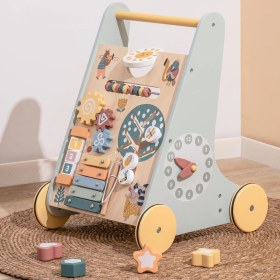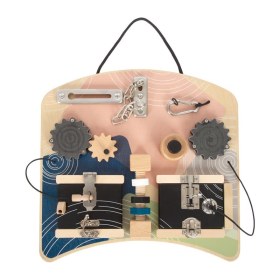
Wooden Activity Boards are educational or wall-mounted toys that encourage active, hands-on play by bringing several activities together on one surface. Children can turn gears, move beads, open buckles, match shapes, explore a maze or try counting. This makes the toy a small activity centre that children can return to throughout the day.
This article will help you choose based primarily on your toddler’s skills, the difficulty of the activities and where you plan to use the board at home. We look at what buckles, laces, mazes, matching activities, musical and educational elements help children practise, and when to choose a simple board with one focus or a larger option with several activities. Compare suitable models in the Wooden Activity Boards category.
It’s important to consider the specific product, not just its name. Not all activity boards have the same components or offer the same level of challenge. Before buying, check the age recommendation, dimensions, mounting options and whether the activities suit your child’s current interests and abilities.
This article focuses on the Wooden Activity Boards category and explores the options based on their intended use, suitability and practical comparison criteria.
How to choose a wooden activity board?
A good choice starts with observing your child. Are they still practising how to grasp and turn objects, or are they already looking for tasks that involve matching, sequencing and remembering? For younger children or those who are just exploring, clearly distinguishable rotating elements, larger movable parts and one simple activity at a time may be suitable. If your child can already follow instructions and is interested in numbers, shapes or cause-and-effect relationships, a more varied wooden learning board may offer more opportunities to explore.
The activity determines what your child practises
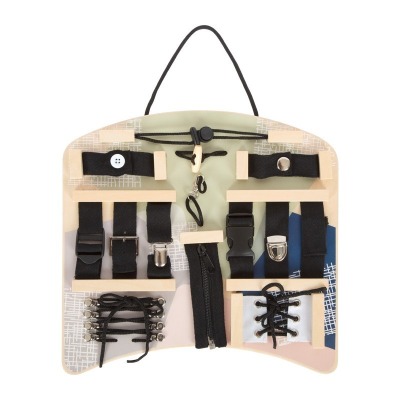
- Buckles and laces require more precise finger movements and are useful for practising hands-on tasks. They can be a good feature on a motor skills activity board, but not every fastening needs to be manageable for your child straight away.
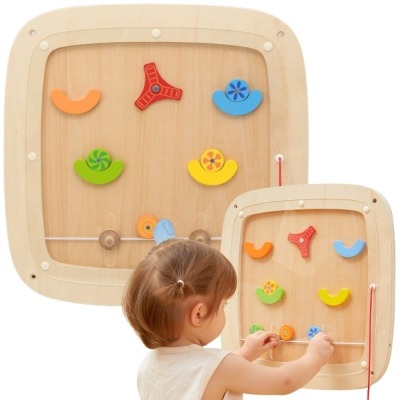
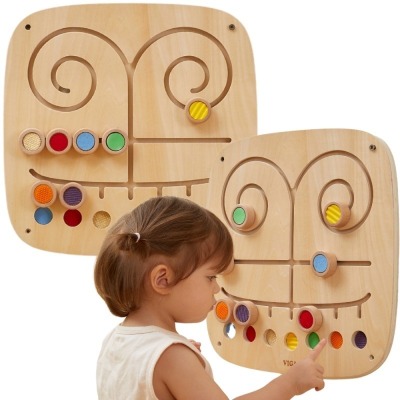
- Bead mazes and sliding tracks encourage children to follow movement, direction and destination. They involve using the hands, but also require attention and visual tracking.
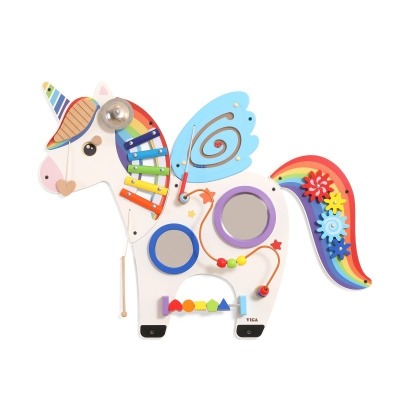
- Gears show playfully how moving one part can set another in motion. This lets children explore cause and effect; it does not guarantee a learning outcome.
- Matching activities, puzzles and shapes give children the chance to compare colours, shapes and positions. They suit children who enjoy trying, making mistakes and solving things again.
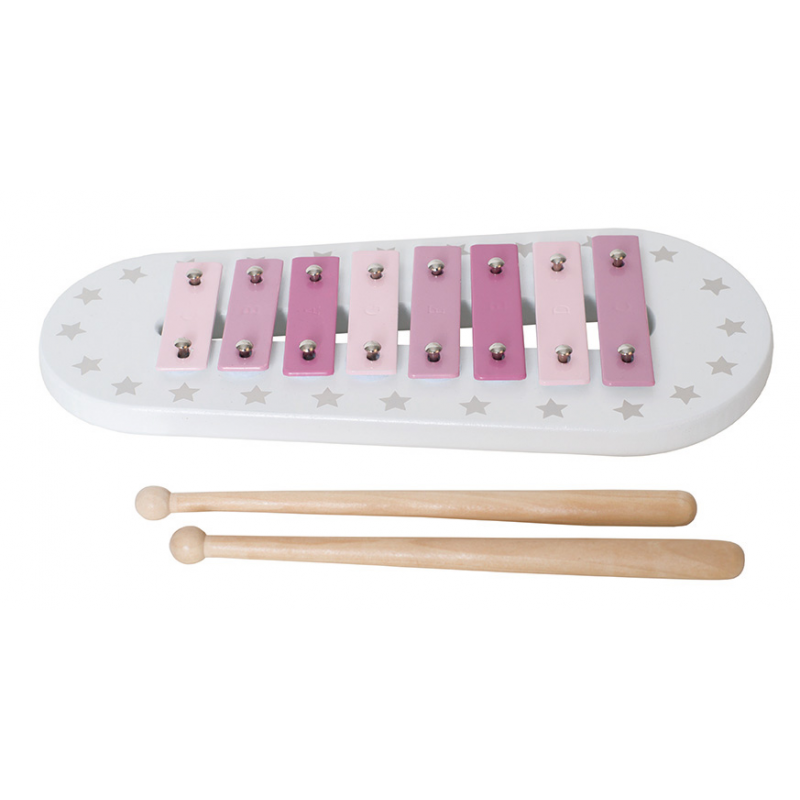
- A xylophone and other musical elements add sound feedback. They can support the sensory side of play, but it’s worth considering the room and other people using it too.
- Calendar, clock, numbers and counting details connect play with everyday concepts. Use them as a starting point for conversation and repetition, rather than as a test your child has to complete straight away.
A simple model or one with several activities?
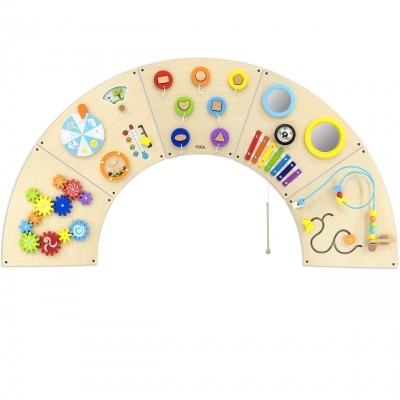
A single-focus sensory activity board, for example one with gears, spinning patterns or colours, may be suitable if you want to offer your child one easy-to-understand activity and see how they respond to it. A 6in1, 7-piece or 13-in-1 option brings together more activities and may suit a shared play area where children can choose activities with different levels of difficulty. More elements do not automatically make a better choice, however: a crowded or complicated surface may distract your child.
Installation and place of use
Before buying, measure the wall, check the mounting options and consider whether your child can comfortably reach the board while sitting or standing. Wall mounting helps keep the floor clearer, but the board needs a suitable wall and must be installed correctly according to the instructions supplied with the product. Check whether the dimensions suit a child’s room, kindergarten or playroom and whether there will be enough clear space around it.
The product-specific age recommendation always takes precedence over a general category name. Also check the size of the parts, finish, moving components and whether your child needs an adult nearby during use. The terms Montessori, sensory and motor-skill-building describe an approach or type of activity, but do not mean that one model suits every child equally well.
Wooden Activity Boards
The wooden activity board range includes models focused on motor skills as well as wall panels with learning elements. First, consider what kind of play you’d most like to offer your child: repeated hands-on practice, sensory exploration, musical activities or learning everyday concepts.
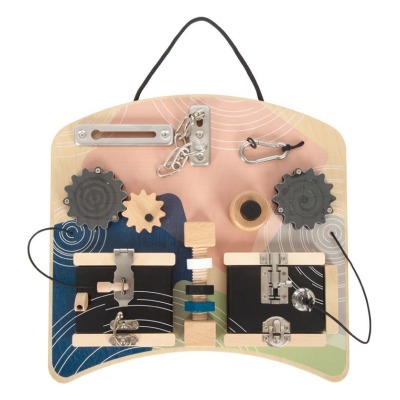
If fine motor skills are the main focus, look for buckles, laces, knobs and other parts that require precise finger movements. According to the product descriptions, the Motor Skills Activity Board offers 14 different types of motor activity, with buckles and laces. Another Motor Skills Activity Board has the same activity description, so the other product details listed and how well each board suits your space are the main points to compare.
If you want one dedicated play area on the wall with several different activities, the 7-Piece Wall Toy for Children Activity Board, Xylophone and Gears, 108 cm is described as offering seven engaging activities. This may suit families looking to reduce the number of toys scattered across the floor, but check the dimensions and whether the chosen spot is suitable before buying.
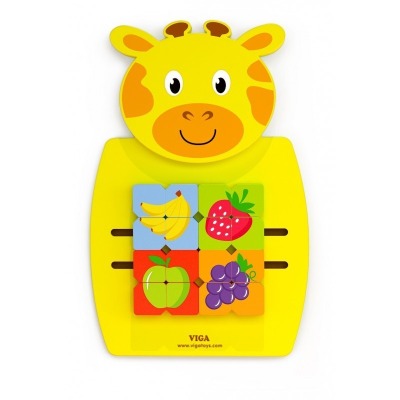
The variety of activities stands out in animal-shaped and themed models. The Wooden Giraffe Activity Board FSC Montessori Certified includes fruit-shaped puzzle pieces in the giraffe’s tummy that can be moved and matched. Here, the focus is on an imaginative theme and a puzzle, rather than simply having as many elements as possible.
The Wooden Sensory Activity Board – Pinball uses a magnetic pen and elastic cords to guide colourful balls towards targets. The 6-in-1 Wooden Activity Board Rocket combines an opening door, beads and loops, a spinning wheel, ladder, clock and button. The rocket design may appeal to a child who enjoys space themes, while the activities offer different ways to use their hands.
With these models, consider whether your child would find it easier to start with one familiar activity and move on to the others later. An adult can demonstrate one movement at a time at first, then give the child a chance to explore independently.
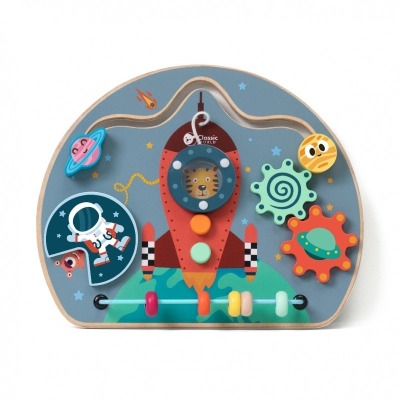
The VIGA Sensory Montessori Activity Board is described as a wall-mounted toy that supports manual skills, curiosity, sensory development and hand-eye coordination. It may suit a home, kindergarten or playroom where more than one child will use the board, but the mounting height and installation should be adapted to the users.
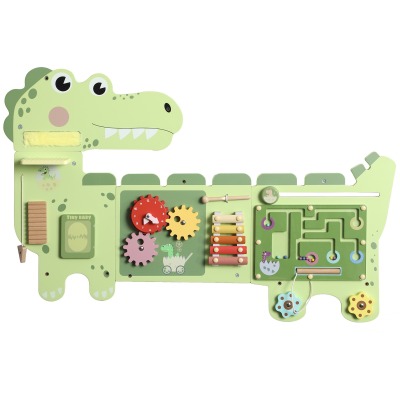
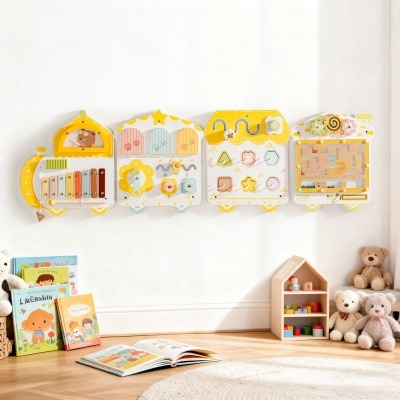
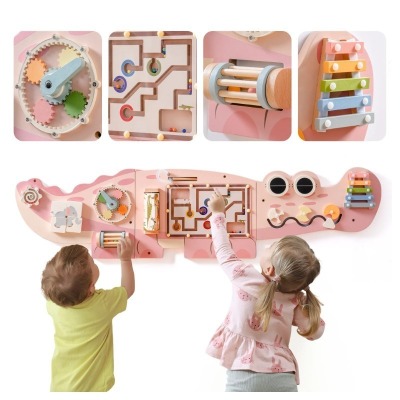
The Wooden Spring Train Activity Board, Wall Learning Board brings together a spinning bead maze, shape matching, gear puzzles, a magnetic bead maze and a xylophone. The Wooden Crocodile Wall Activity Board in Pink offers a similar range of activities: its description lists a bead maze, a shape-matching game, circular gears, a magnetic bead maze and a five-note xylophone.
The train and crocodile are practical examples of why it’s worth choosing by activities, not just by colour or shape. If your child enjoys movement and sound, these elements may draw them back to the board; if they need a calmer activity, a model with a narrower focus may be more suitable.
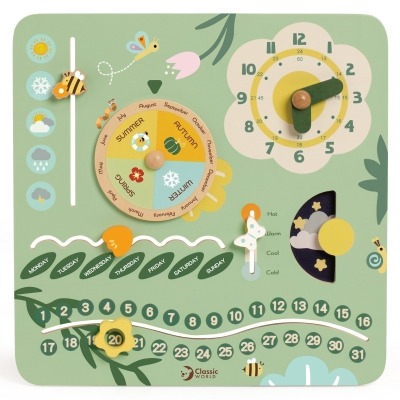
Learning elements offer a different way to use an activity board. According to its description, the Wooden Educational Activity Board “My First Calendar” helps children practise telling the time and learn the days of the week, dates and seasons, as well as explore the weather and temperature. It works well alongside everyday conversation: for example, your child can choose the day on the calendar and talk about the weather outside.
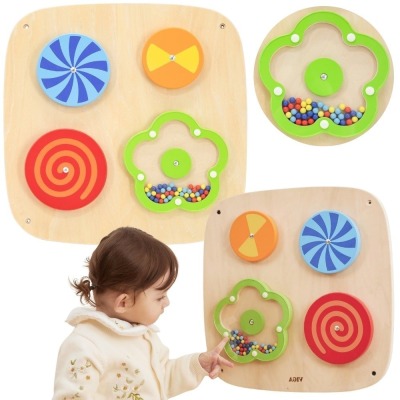
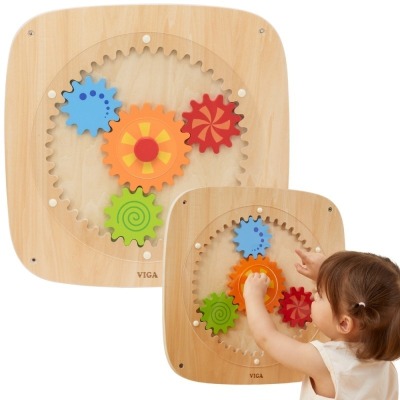
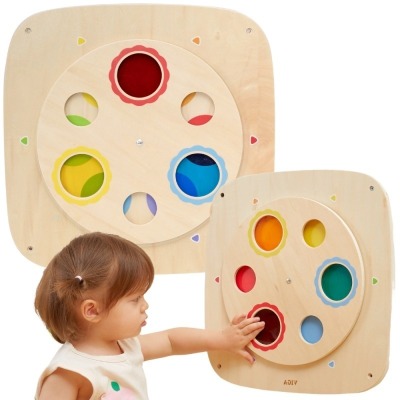
The Wooden Wall Panel “Spinning Patterns” features four rotating discs and a wooden-bead flower that gives audible feedback when moved by hand. The Wooden Sensory Activity Board – Gears lets children turn a knob to set the gears in motion; the different patterns create visual effects as they spin.
These models show that a sensory activity board doesn’t have to mean just one type of play. One child may be drawn to sound, another to repeated spinning or changing patterns. The key is to choose the movements your child enjoys and activities they can manage.
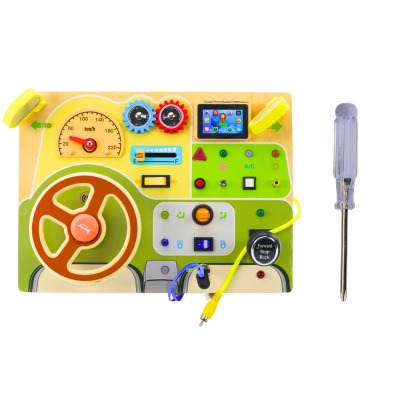
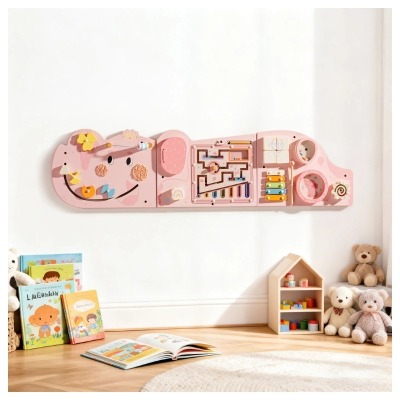
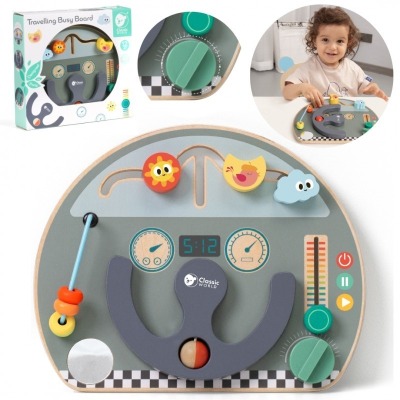
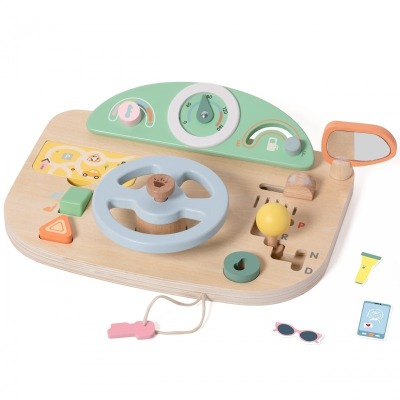
Car-themed models suit play scenarios for children who enjoy steering and vehicles. The Sensory Activity Board Car, Steering Wheel and LED Lights is described as a wood-panel design inspired by cars, combining traditional woodworking with interactive elements. The Wooden Children’s Wall Activity Board, Pink Elephant includes a spinning bead maze, shape-matching pieces, gears, a magnetic bead maze and a five-tone xylophone.
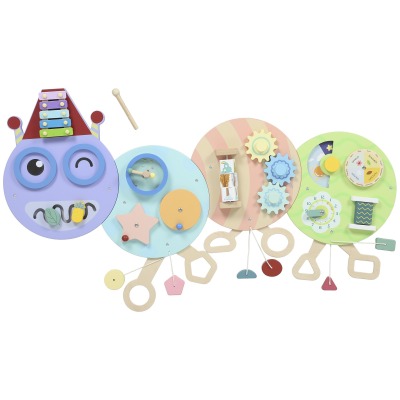
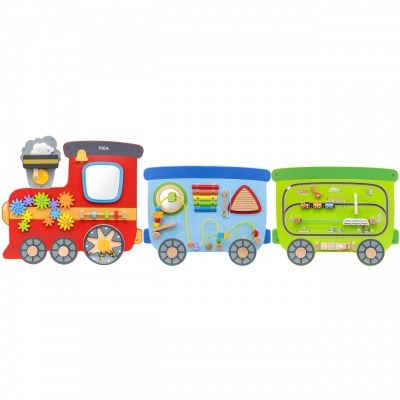
The sensory wall-mounted activity board train consists of three sections: a locomotive with gears, a mill wheel and a mirror; a blue carriage with plates, a motor loop and a bead maze; and a green carriage with a sliding train and blocks featuring famous places. Its multi-part design may offer more shared activities, but before buying, consider where all the parts will go and how much room will be left for play.
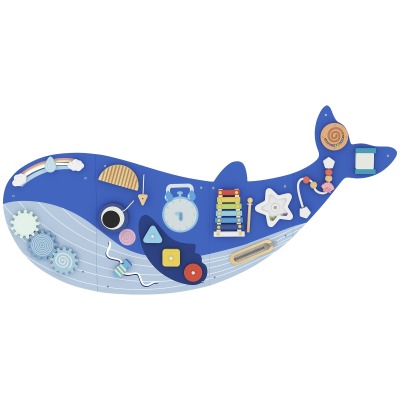
Models with a wider range of activities are intended for situations where a child needs different challenges on one board. The 13-in-one Montessori wooden whale-shaped motor skills board with xylophone and gears includes gears, bead runs, bells and musical elements in its description. The Montessori wooden dinosaur motor skills board with xylophone, clock and gears brings together colours, letters, numbers, sensory activities and a xylophone; the description gives an age of 1 year and up, but always check the latest information on the product page.
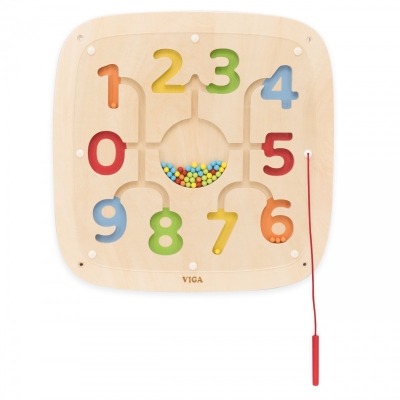
The Wooden Sensory Activity Board – Numbers and Learning to Count uses a magnetic pen and colourful beads that the child matches to numbers and paths. It is an example of a board that combines hands-on activity with colour recognition and counting. Children do not need to master everything at once with educational elements: starting with one number, colour or path at a time is often enough.
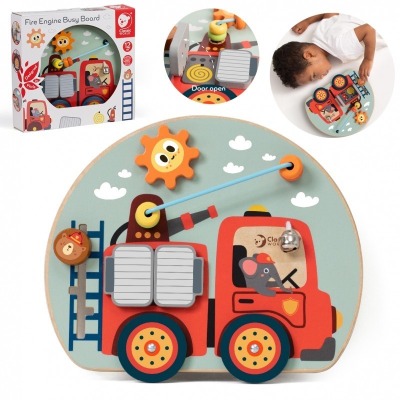
Simpler 6in1 models may suit a younger child or one who prefers play with a specific theme. The Wooden Activity Board 6in1 Firefighter includes an opening door, beads and loops, a rotating wheel, a ladder, a clock and a button. Instead of the rocket with the same combination of activities, the firefighter design may be more suitable for a child who is already familiar with rescue themes in play.
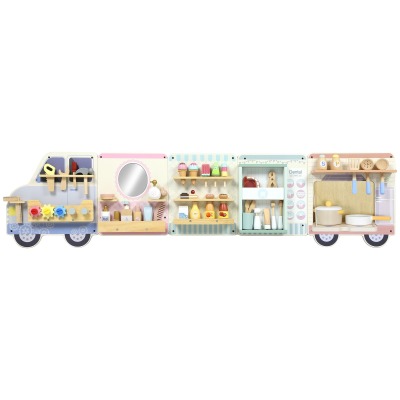
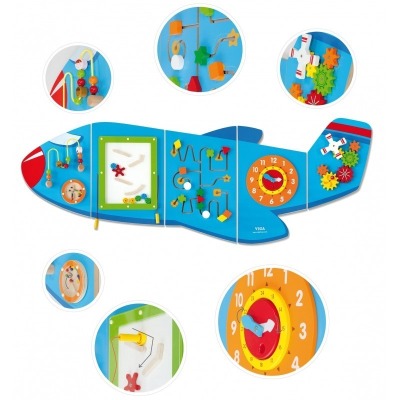
The Montessori truck-design sensory activity board, wall-mounted from 3 years of age, is described as a larger sensory board with five themed areas and may encourage several children to play together. The Educational Montessori Wooden Aeroplane Activity Board consists of five elements featuring a maze, interlocking parts, a mini slide, a clock with moving hands and colourful moving gears. For both, consider the available space, the child's age and whether shared use is important to you.
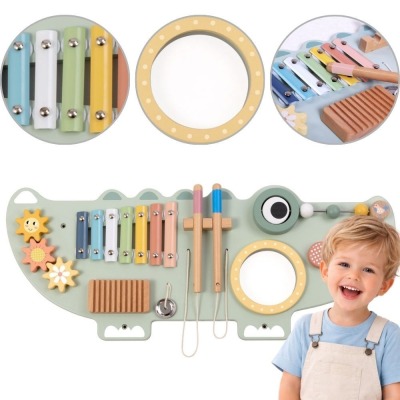
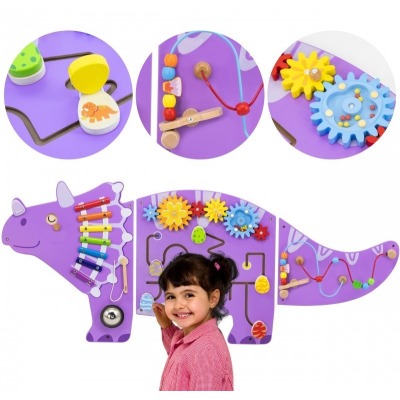
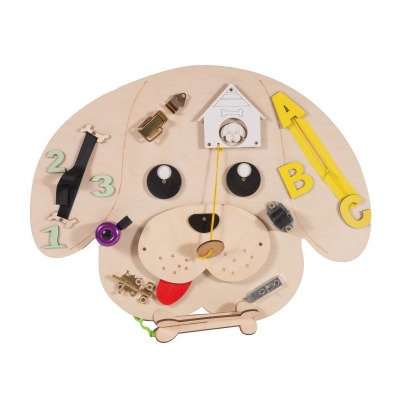
The Educational Montessori Wooden Dinosaur Activity Board includes gears, a motor loop with a bead maze, a maze with eggs, a xylophone, a gong and rotating dinosaur eyes. The Wooden Activity Board, measuring 49 × 37 × 6,5 cm, brings together a variety of hands-on elements, including movable eyes, wooden numbers and a letter, a suitcase lock, a zip, a hook-and-loop fastener, a slider, a furniture wheel, an opening kennel with a dog and locks.
The Wooden Activity Board 6in1 travelling is described as being designed for long journeys and includes a maze, beads, a rotating wheel, a roller, a mirror and buttons. It is a different option from a large wall panel, as portability and a suitable activity setting for the child should be considered when using it on the go. After looking through the images, check the specific dimensions, fastening and age recommendation for each model once more.
Which Activity Board Is Right for Your Child?
A single-focus model may be a good starting point if a child is just learning to use an activity board or enjoys a particular repeated movement. A gear board focuses on turning and watching movement, a pinball board on guiding a ball, and a panel with swirling patterns on visual change and repeating hand movements. These models may make the activity easier to understand, as the child does not have to choose between dozens of options at once.
A multi-activity 6in1, 7-piece or 13-in-one activity board is better suited when you want one play surface to return to on different days for different tasks. The same board may have a maze, matching activities, gears, a clock and music. At the same time, bear in mind that more activities also mean more to check: see whether all the elements are manageable for the child and whether the board is the right size for the wall.
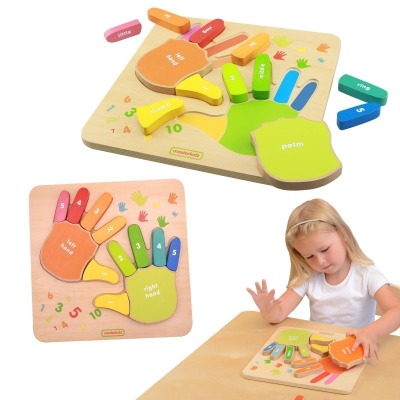
Models with an educational focus, such as a calendar, a number board or a finger-counting board, are suited to conversation and everyday repetition. Animal, vehicle, train, rocket and dinosaur designs may help connect play with a child's interests, but the design alone does not determine its educational value. If you are looking more generally for learning activities, explore our selection of Wooden Educational Toys; if your child is interested in vehicles, the wooden cars and trains category may be a good fit.
Installing and Using an Activity Board Every Day
A wall-mounted activity board should be positioned at a comfortable height for the child, so they do not have to stretch awkwardly or climb to use the activities. Before installation, measure the board and the available wall space, and make sure there is enough room around it. Choose a fastening method to suit the type of wall and always follow the instructions supplied with the specific product; do not assume that one fastening solution will suit every surface.
Before the first play session, check:
- that the board is securely fastened and the screws or connections do not move;
- that the moving parts work without catching;
- that no parts are loose or damaged;
- that the activities are suitable for the child's age and abilities;
- that the child can comfortably reach the board and the surrounding play area is clear.
An adult can start by showing one activity at a time: how to turn a wheel, move beads, match a shape or use the calendar. Then it is worth giving the child time to try for themselves. If the board has a clock, calendar, numbers or colours, these can be linked to everyday life: count the stairs, name the day, look for an object of the same colour or talk about what the hands on the clock show. This turns the activity board into a playful place to learn, rather than a task to complete.
A wall-mounted option helps keep the play area tidy, but does not replace adult supervision. Especially at first, watch how the child uses buckles, laces, magnets or other moving parts, and check the board regularly.
Common Mistakes When Buying a Wooden Activity Board
- Choosing by appearance alone. A design featuring an animal or vehicle may appeal to the child, but before buying, check which activities are actually included and whether they suit the child’s abilities.
- Treating the number of activities as the most important factor. A 13-in-1 board is not always better than a model with one main focus. If the child needs calm repetition, a simpler activity may be more useful.
- Choosing activities without considering the child’s abilities. Buckles, laces and rotating elements can help practise fine motor skills, while matching activities, counting or a clock may offer more of a challenge. Start with what the child is already trying and what they can practise at a manageable level.
- Not checking the age recommendation. A general category description does not determine whether a specific product is suitable. Check the age information on the product page, the nature of its components and whether adult guidance is needed.
- Mounting the board too high or insecurely. The child should not have to climb or stretch uncomfortably to reach the activities. Check the wall, fixings and the manufacturer’s instructions. After installation, also make sure that moving parts, screws and connections are securely in place.
- Interpreting Montessori or sensory labels as a guarantee. These words describe an approach or type of activity, not a guaranteed result or universal suitability.
- Making too many developmental promises. An activity board offers the opportunity to practise grasping, turning, matching, concentration and coordination, but a child’s development depends on many factors, and no toy can guarantee a particular outcome.
- Assuming supervision is unnecessary. Especially with a new board, show the child how to use the activities at first and check that the components are suitable for their age. The child can then use it more independently, provided the location and board are safe.
Frequently asked questions
What Age Is a Wooden Activity Board Suitable For?
Suitability depends on the specific model, the difficulty of its activities and the manufacturer’s age recommendation. Don’t assume that all wooden activity boards are suitable for babies or toddlers; always check the product page instructions and the nature of the components.
What Can an Activity Board Help a Toddler Practise?
Depending on the activities, children can practise grasping, turning, sliding, matching, finger coordination, hand-eye coordination and concentration. Learning elements can link play with colours, numbers, a clock or a calendar.
Which Activity Board Is Suitable for Developing Fine Motor Skills?
Look for models with buckles, laces, buttons, beads, mazes or other components that require precise hand movements. Activity boards for motor skills are one option, but the right choice depends on the child’s existing abilities.
What Is a Montessori Activity Board?
This term usually refers to an option that encourages independent discovery and hands-on activity. It does not automatically mean that every model fully follows the Montessori method or is equally suitable for every child.
Should an Activity Board Be Wall-Mounted?
A wall-mounted model helps keep the floor space clearer and creates a dedicated play area. The fixing must be suitable for the wall and comply with the instructions supplied with the product; don’t assume that every wall or fixing method is suitable.
Should You Choose a Board with One Activity or Several?
A model with one main focus may be clearer and calmer, while a board with several activities offers more variety. Consider the child’s attention span and abilities, where the board will be used, and whether having more elements will enrich play or make it too complicated.
Does an Adult Need to Be Present During Play?
Guidance is useful at first, as an adult can show how to use an activity and notice whether the child needs help. The need for supervision depends on the child’s age, the manufacturer’s instructions and the board’s moving parts and any small components.
Is an Activity Board Suitable for Kindergarten or a Playroom?
Yes, descriptions indicate that several wall-mounted models are also intended for kindergartens, playrooms or other shared spaces. In this case, check the strength of the fixings, mounting height, room size and whether the activities are suitable for several users particularly carefully.
Summary
When choosing a wooden activity board, consider four key things: the child’s current abilities, the type of activities, the board’s size and where it will be installed. Buckles and laces offer precise hand activities, mazes and beads encourage tracking movement, gears invite children to explore cause and effect, while a calendar, clock and numbers offer ways to link play with everyday concepts.
The best model is not necessarily the one with the most elements, but one that suits the child’s abilities and the space. Before buying, check the specific product’s age recommendation, dimensions, mounting options and moving parts. You can then compare carefully selected models in the Wooden Activity Boards selection and find a developmental activity board that invites the child to turn, slide, match and explore independently.