A musical instrument gives a child the opportunity to explore sounds, rhythms or melodies for themselves. The right choice depends primarily on the child's age, interests, how it will be used, and whether the aim is simply to play or to try learning music. A simple, manageable instrument suits a toddler; a child interested in rhythm might enjoy a drum or another percussion instrument, a singer a microphone or karaoke set, and a child interested in melodies a keyboard or guitar.
The Kids' Musical Instruments category includes wooden instruments, activity tables and music boxes, as well as electronic keyboards, guitars, speakers and microphones. Before buying, it is worth checking the age recommendation, how easy the instrument is to handle, the volume, whether it can be switched off, the power source and what the set actually includes.
In the following guide, we'll look at the options by use: practising rhythm, singing and karaoke, trying out melodies, free play, movement, quiet listening and finding a gift. This makes it easier to distinguish between a musical toy, a percussion instrument and an instrument suited to playful learning.
This article focuses on the Kids' Musical Instruments category and looks at the options in terms of use, suitability and practical comparison criteria.
How to choose a musical instrument by age and use?
The first question shouldn't be “which instrument looks most impressive?” but “what does the child want to do with it?”. Do they want to beat out a rhythm, sing, move, press keys, pluck strings or simply explore sounds? If the activity is familiar and manageable for the child, they are more likely to keep playing the instrument after the first try instead of leaving it on a shelf.
Toddlers and their first exploration of sounds
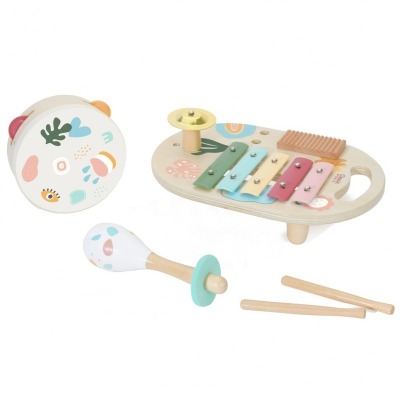
For a young child, ease of use is important: an instrument or musical toy should be easy to understand without lengthy instructions and let the child make sounds themselves. At this age, a maraca, xylophone, harmonica, music box or activity table may be suitable. However, check the age suitability for each product separately, as age limits are not listed in the source information for every product.
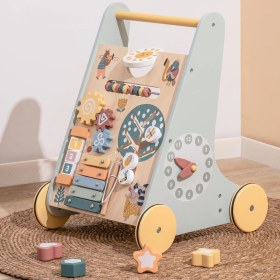
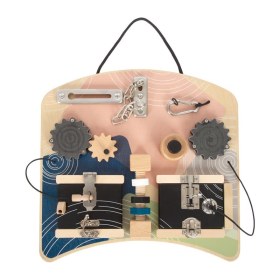
For a calm first introduction, wooden music boxes can be a good choice, with their simple operation and sounds produced in a specific way. Activity and educational tables offer more moving parts, but need a suitable place to use them and, depending on the home situation, supervision of the child.
2–3 years: rhythm, repetition and movement
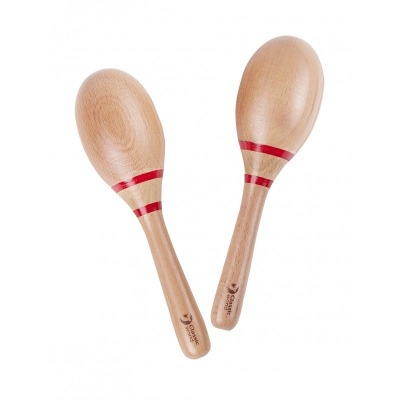
At this stage, you can choose a percussion instrument that lets the child imitate an adult or the beat of a song. Maracas, simple drums and other easy-to-grip instruments are suitable options. Play doesn't have to be about getting a performance right or wrong: it's enough for the child to hear the difference between slow and fast, and between one and several beats.
If the child prefers moving around to sitting and playing, a musical dance mat may be a better choice than a small instrument. If so, check the floor space needed for the mat before buying, as well as the power source specified in the description.
3–5 years and older
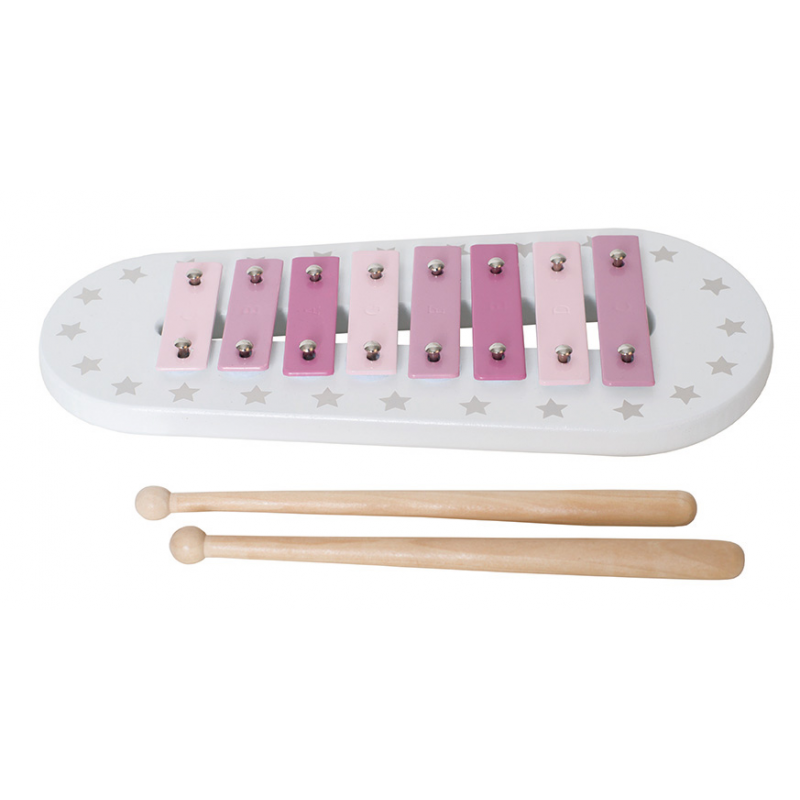
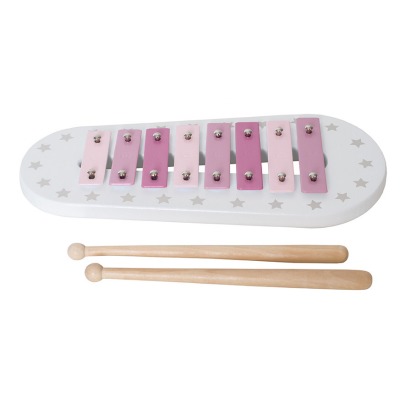
If the child can follow instructions and is interested in melodies or performing, consider keyboards, guitars, flutes, harmonicas or a larger drum. The age recommendation in the product description is important here: for example, the kids' keyboard with 37 keys, a stool and microphone is described as suitable for ages 3–6, while the wooden harmonica and pink xylophone are marked as suitable from age 3.
An older child may appreciate a wider range of options, such as recording, rhythms, singing with a microphone or plucking strings. This does not automatically mean that a feature-rich toy replaces an instructor or an instrument intended for learning. Instead, it gives the child a chance to try out which activities they are really interested in.
Wooden or electronic musical instrument?
Wooden musical instruments and music boxes often feel calmer because of their simple way of playing: a child makes one movement and hears the result. An electronic instrument may offer more modes, light effects, recording, backing rhythms or connectivity options, but before buying, check the volume controls, how to switch it off and the power supply.
The material alone does not determine whether an instrument is right for your home or child. More important are the specific product’s intended use, dimensions, accessories, ease of cleaning and whether the child can use it independently. For example, a wooden xylophone can be an active play instrument, while a wooden music box is intended more for listening to one melody and repeated use.
Volume and use in a flat
Kids' musical instruments do not all have the same volume, and product descriptions may not always provide an exact figure. In a flat or shared children's room, choose an option with a confirmed off switch or volume control. The Educational Music and Sound Activity Table is described as having a complete shut-off function and a two-stage volume control.
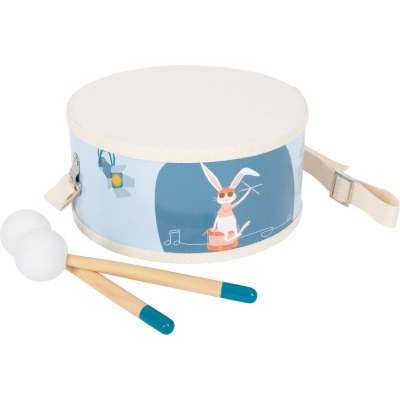
With a drum or an acoustic-style instrument, bear in mind that sound is produced by striking it, and the nature of the play may depend on how hard it is hit. The “Groovy Beats” drum is described as having drumsticks with sound-dampening covers, but this does not justify a general conclusion that all drums are suitable for quiet play in a flat.
Power supply and what is actually included
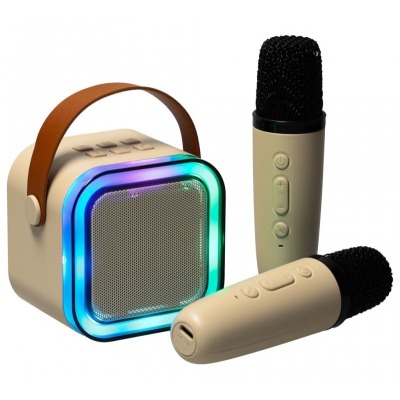
For an electronic musical instrument, always check whether it runs on batteries or a rechargeable battery, and whether batteries are included. The 37-key children's keyboard runs on four AA batteries, but batteries are not included. The beige karaoke set has a rechargeable battery in the speaker and microphone, and the description separately specifies the speaker and microphone operating times.
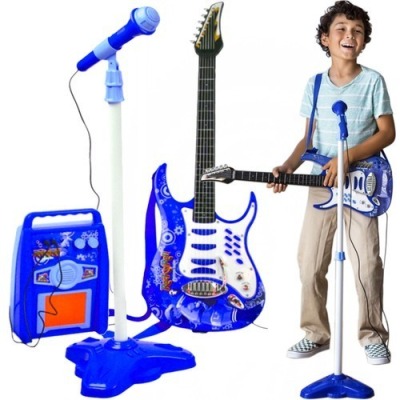
A set's name does not mean that all the necessary accessories are included. The children's keyboard description lists a stool and microphone; the blue electric guitar set includes a guitar, amplifier and microphone. Before buying, also check for USB or MP3 functionality, a speaker, cable and other connections, as these cannot be assumed across the whole category based on one product.
Kids' Musical Instruments
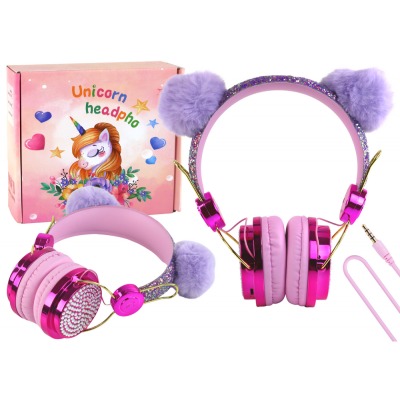
The Kids' Musical Instruments category includes products with very different ways of playing. If your child wants to perform and sing, look at karaoke or microphone options; if they enjoy trying out melodies, keys or strings may suit them; for rhythm, there are drums and smaller percussion instruments. For a toddler, an activity table or a simple wooden instrument may be easier to manage than an electronic device with lots of buttons and modes.
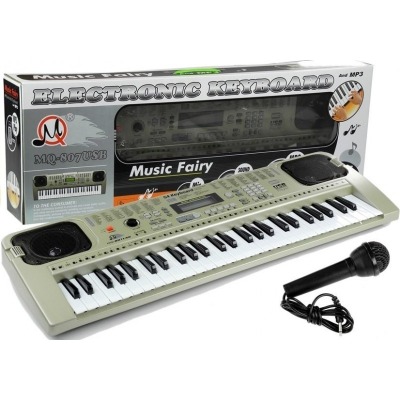
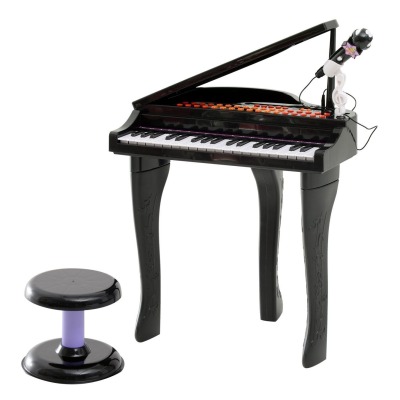
The beige karaoke set includes a portable speaker and two microphones. According to the description, the speaker power is 6 W, the speaker operating time is 2,5 hours and the microphones' operating time is 3,5–4 hours; it also has five lighting modes and six voice-changing modes. The children's keyboard has 37 keys, a microphone and a stool, and is described as having eight rhythms, eight instrument types, four drum functions, 22 demo songs, and recording and playback options.
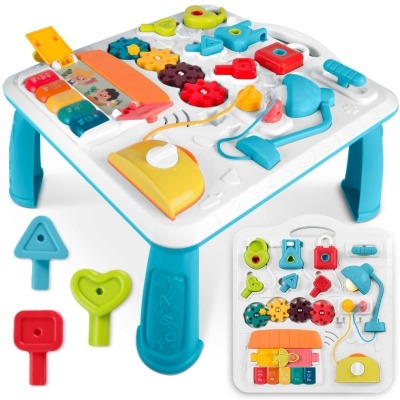
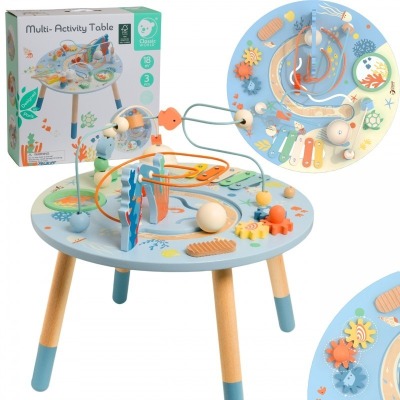
If the aim is to explore sounds while moving, consider the Sea Life musical activity table. This wooden table features, among other things, a motor loop, gears, cymbals and a drum, and the description highlights support for manual skills, logical thinking and dexterity. It is a different option from a keyboard: the child does not focus solely on playing melodies, but can explore several activity elements.
Choose between these three options based on your child's actual interests. A child who is focused on singing may prefer a microphone, a child who likes experimenting with melodies may prefer keys, and a curious toddler may prefer an activity table. It is also worth considering the space first: whether play will take place sitting down, on the floor or standing up, and whether the light and sound features fit in with the family's daily routine.

When comparing the selection of kids' musical instruments, open the pages of the products that interest you after reviewing the product cards, and check the specific features listed for each model. This keeps the comparison fact-based and ensures the choice meets actual needs.
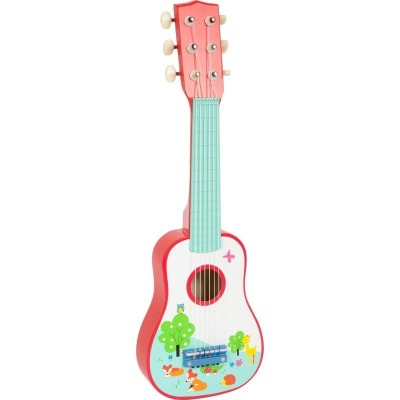
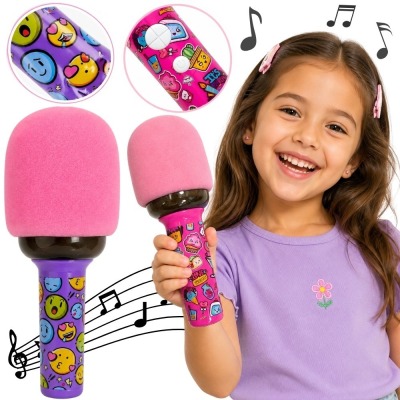
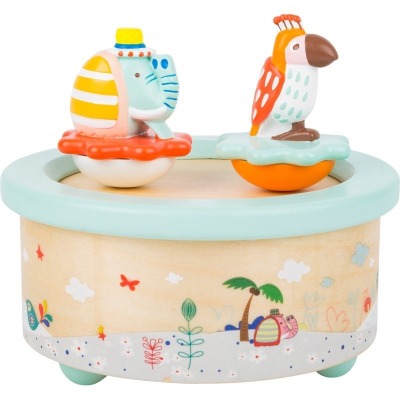
When comparing the selection of kids' musical instruments, open the pages of the products that interest you after reviewing the product cards, and check the specific features listed for each model. This keeps the comparison fact-based and ensures the choice meets actual needs.
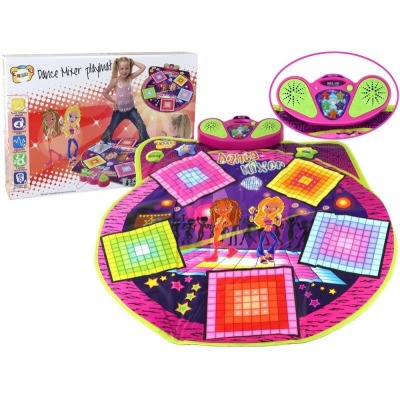
When comparing the selection of kids' musical instruments, open the pages of the products that interest you after reviewing the product cards, and check the specific features listed for each model. This keeps the comparison fact-based and ensures the choice meets actual needs.
Which instrument suits which use?
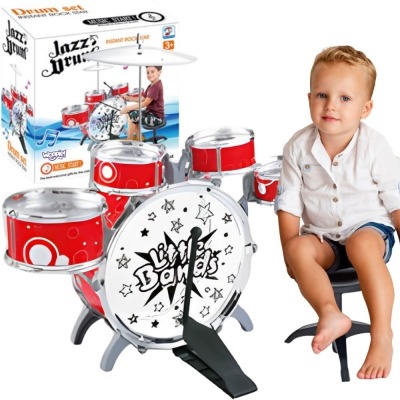
Rhythm and percussion. Drums, maracas and xylophones suit a child who wants to respond to sound with movement. The Woopie children's drum set is described as suitable from 3 years of age, with the aim of practising a sense of rhythm and motor coordination. A synthesiser, keyboard or children's piano is more suited to a child interested in pitches, melodies or different rhythms.
Singing and karaoke. A karaoke set, wireless karaoke microphone and guitars with microphones turn music into role play and performance. The pink wireless karaoke microphone combines microphone and speaker functions in one device and has Bluetooth connectivity for a smartphone or another mobile device. The blue electric guitar set description confirms an MP3 input, flashing lights, a microphone with an on/off button and battery power.
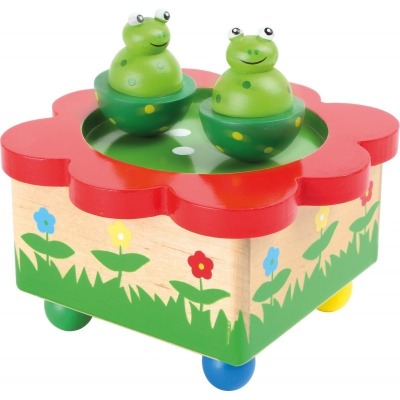
Calm listening and free play. The Music Box Frog Pond plays the melody “Merrily We Roll Along”, while its two magnetic frogs move along to the tune. The music box Parrot and Elephant plays the melody “What a Wonderful World” and is described as a sleep aid for a bedside table. These are not the same type of option as a keyboard intended for learning, but rather musical toys that are simple to use.
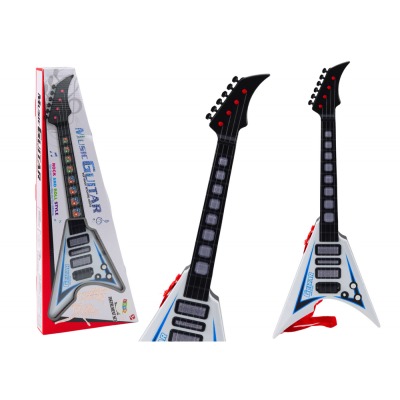
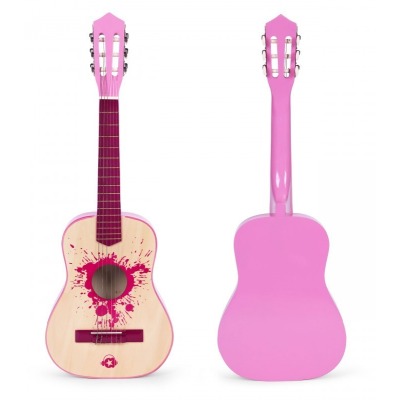
Play Instrument or the Start of Learning? Some products are primarily for play, while others allow more musical experimentation. 37 keys, rhythms, demo songs and a recording function give children different ways to play, but these features alone do not prove that an instrument is suitable for systematic music learning. The same applies to kids' guitars: they can introduce strings and rhythm, but if the aim is learning, the construction and ease of use of the specific instrument should be assessed using the product page details.
Practical Play Ideas and Pre-Purchase Checks
A musical instrument becomes more valuable when used with simple games. An adult can tap twice and ask the child to repeat the same rhythm, take turns playing at a fast and slow tempo, or try alternating quieter and louder sounds. A child can play along to a song with one repeated rhythm without needing to know a melody or musical notation straight away.
Role-play works well with guitars and keyboards: one player is the singer, the other the accompanist, and then they swap roles. A karaoke or electric guitar set with a microphone can encourage performance play, while a dance mat offers a way to combine sound with movement. With an activity table or an educational table with music and sounds, a child can explore one feature at a time and say which sound or movement they find interesting.
Pre-Purchase Checklist
- Age: Does the product page give an age recommendation, and can the child manage the instrument's size and way of use?
- Purpose: Are you buying it for rhythm, singing, melody, movement, quiet listening or free play?
- Sound: Does the description mention a way to switch it off or adjust the volume? If not, do not assume it has one.
- Power: Does it require AA batteries, a rechargeable battery or another connection? Are batteries included?
- What's included: Are a microphone, speaker, amplifier or stool included, or are they only mentioned in the product title and not specified separately in the description?
- Space: Will the instrument fit in the planned play area, and can the child store and use it there safely?
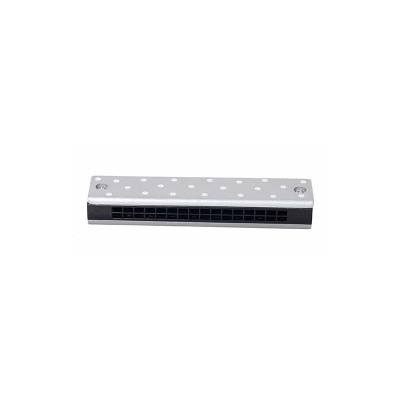
Product dimensions help with planning a space when they are provided in the description. For example, the pink kids' dance mat measures 91 × 93 cm, the flute is 33 cm long, the xylophone measures 29 × 13 × 2 cm, and the wooden harmonica is 13 cm long. For other products, check the dimensions and storage requirements on the specific product page rather than assuming them from the category.
Common Mistakes When Buying a Musical Instrument for Children
- Choosing by appearance alone. A bright colour or light effect may appeal to a child, but first check what the instrument lets them do and whether they can use it. Compare their interests, age and where it will be used.
- Assuming more features mean better learning. Rhythms, demo songs and recording make play more varied, but do not automatically mean that an instrument is suitable for systematic music learning. Set a realistic goal for the purchase: exploration, role-play or trying out learning.
- Not checking the volume. Not all electronic instruments can be described as quiet, nor are all drums suitable for an apartment. Look for information about switching the instrument off or adjusting the volume, and consider the space at home.
- Assuming what's included from the name. “Set” can mean different things for different products. Check whether a microphone, amplifier, speaker, stool or other accessories are included, and whether the required batteries come with it.
- Generalising an age recommendation to the whole category. An “age 3+” label on one product does not automatically apply to other children's instruments. Use an age recommendation only for the product it is given for.
- Comparing wooden and electronic instruments too broadly. Material alone does not tell you which product is better. Consider the specific way of playing, sound features, dimensions, power supply and whether the child prefers active or calmer play.
Frequently asked questions
Which Musical Instrument Is Suitable as a Child's First Instrument?
A first instrument should be manageable for the child and match their interests. A child who loves rhythm might enjoy maracas, a drum or a xylophone; one who is interested in melody might prefer a keyboard or kids' guitar, while a singer might like a microphone or karaoke toy.
Which Instrument Is Suitable for a Toddler?
A musical toy with a simple way of playing, such as an activity table, music box or easy-to-grasp rhythm instrument, is suitable for a toddler. Check the age recommendation for the specific product, as not every product in the category has the same age label.
Is a Wooden or Electronic Musical Instrument Better?
There is no universally better option. A wooden instrument or music box may offer simple, direct play, while an electronic instrument may have more modes, light effects or connectivity options. The choice depends on the child's interests and how it will be used at home.
Can Children Learn Music with a Kids' Piano or Synthesiser?
They can be used to try out keys, rhythms, sounds and melodies, and some models also offer recording or demo songs. This does not automatically mean they are instruments designed for systematic learning; the details of the specific product and the learning goal should be considered.
How Do You Choose a Suitable Drum Kit for Home?
Check the age recommendation, what's included and whether the description mentions features that reduce sound. The “Groovy Beats” drum includes drumsticks with sound-dampening covers, but the features of each drum should be checked separately.
What Should You Check in a Kids' Guitar Set?
Check whether the set includes a microphone, amplifier or other accessories in addition to the guitar. The description of the blue electric guitar set confirms that it includes a guitar, amplifier and microphone; do not assume these accessories come with other kids' guitars.
Does a Karaoke Microphone Need a Separate Speaker?
It depends on the product. The beige karaoke set includes a speaker and two microphones, while the pink wireless karaoke microphone combines the functions of a microphone and a speaker. Before buying, always check the specific product description to see what is included in the set.
Which musical instrument makes a suitable gift?
A suitable gift is an instrument that matches the child’s interests: a rhythm instrument for keeping a beat, a microphone for singing, a dance mat for movement, or a music box for quiet listening. If you do not know what the child is interested in, a set of Kids' Musical Instruments with several small instruments may offer more opportunities to explore, but be sure to check its age recommendation and contents too.
Summary
When choosing a musical instrument for a child, start with their age, interests and intended use. Rhythm instruments and drums are suitable for experimenting with beats and tempo, keyboards for trying out melodies and sounds, guitars for exploring strings, and microphones for singing and role play. Music boxes, activity tables and dance mats, on the other hand, offer quiet listening, exploring or movement.
Before buying, check the volume, how to switch it off, power source, dimensions, age recommendation and the actual contents of the set. In the Kids' Musical Instruments category, you can compare different children's instruments and music toys based on whether the child wants to make rhythms, sing, play melodies, move or simply explore new sounds.