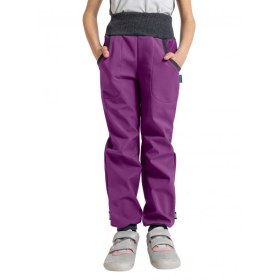
Fleece-Lined Softshell Trousers are a practical choice for kids’ outdoor clothing when they are outside in changeable weather, chilly winds and damp conditions. They are not simply ‘warm trousers’, but a garment for which you need to consider the fleece lining, softshell fabric, fit, waistband and how the child actually moves.
The fleece lining adds softness and warmth to the inside of the trousers, while the softshell fabric helps keep the wind out and breathability may make them more comfortable to wear during active play. However, the exact suitability depends on the weather, layering and the child’s activity. Before buying, consider whether you need straight-cut everyday trousers, a more fitted STREET model, an option with a stronger knee area or the SIMPLE model with a classic fit and extra details.
This guide focuses on children’s trousers, not softshell clothing in general. First, we provide a framework for choosing, then help you compare different fits, waistband designs and knee-area details, so that choosing [fleece-lined softshell trousers](/179-softshell-pueksid-fliisvoodriga) becomes more informed.
This article focuses on the Fleece-Lined Softshell Trousers category and explores the options based on needs, fit and practical comparison criteria.
How to choose fleece-lined softshell trousers for kids?
Start with the intended use, not the colour or model name. The same pair may be a sensible choice for the nursery run, time at the playground, a walk or a car journey, but the importance of the fit and details varies depending on how much the child moves and the positions they spend time in during the day.
1. Think about the child’s typical day outdoors
If the trousers are mainly worn on the way to school or nursery, while travelling and on more leisurely walks, a straight fit, easy pairing and a comfortable waistband may be more important. If the child runs, climbs, squats and spends a lot of time on their knees, pay closer attention to freedom of movement at the knees, the lower legs and whether the trousers stay in place in different positions.
Fleece-lined models are particularly suitable as part of autumn and spring outdoor clothing and for windier days when a regular thin layer may not be enough. There is no universal temperature limit for trousers, as suitability also depends on what the child wears underneath and how actively they move.
2. Choose the fit according to the child’s movement and fit preferences
BASIC has a simple, straight-cut design and may be considered for everyday wear if you want a relaxed fit. STREET is more fitted and modern in shape, with attention paid to freedom of movement at the knees. STREET strong is intended for situations where greater durability in the knee area is important. SIMPLE is worth considering if you prefer a classic fit and value practical extra details such as pockets and reflective details.
3. Check the waistband and whether the trousers stay in place
Children’s trousers need to be comfortable when standing, sitting, squatting and running. Check the waistband: some models have a high, stretchy ribbed waistband, some have a comfortable waist, and some products let you adjust the fit with a drawstring or elastic. These designs are not interchangeable, and you should not automatically assume that a detail found on one model is present on all the others.
For toddlers, it is especially important that the trousers do not slip down during play or become uncomfortably tight around the tummy. For an older child, it may be more important that the waistband suits their shape and that they can put the trousers on comfortably by themselves.
4. Look at the knee and lower-leg areas
Knee darts can provide extra room for movement and reduce the chance of the trouser legs riding up during active movement. Reinforced knee fabric is worth considering for a child who often plays on their knees or is exposed to greater wear outdoors. For the leg openings, consider how they fit over shoes and whether the length allows your child to move freely.
5. Consider the small but practical details
Pockets may matter to a child who wants to carry small items, but check whether a particular product has them. Reflective details may be useful when a child is out in low light, but they are not a feature shared by every model in this category. Colour and pattern mainly affect whether a child wants to wear the trousers and how well they go with the rest of their outdoor clothing.
If you’re looking for a complete outfit, you could also consider fleece-lined softshell jackets to go with the trousers, or a fleece-lined softshell snowsuit for a younger child. The choice of trousers often depends on whether the rest of the outfit is also warmer or whether you prefer a more layered approach.
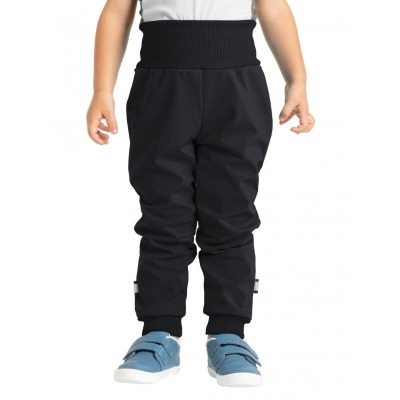
Fleece-Lined Softshell Trousers
Fleece-lined kids’ softshell trousers are designed for situations where outdoor clothing needs to provide warmth while allowing active movement. The outer layer of softshell fabric helps block the wind, while the fleece lining on the inside makes it softer and warmer. This combination works well on changeable autumn and spring days, on windier walks and for outdoor play, but how well the trousers suit your child always also depends on layering and their level of activity.
When choosing, consider whether your child will mainly wear the trousers at nursery, on the way to school, at the playground or on longer walks. The cut, knee construction and waistband all affect freedom of movement. BASIC styles are straighter and suited to everyday wear, STREET styles are slimmer and more shaped for active movement, STREET strong styles focus more on a hard-wearing knee area, and SIMPLE styles bring together a classic cut and specific extra details.
Before exploring the category, decide on three main requirements: whether the trousers need to fit a toddler, how active your child is and what fit they prefer. It will then be easier to compare colours, patterns and product details rather than making a decision based only on the picture or name.
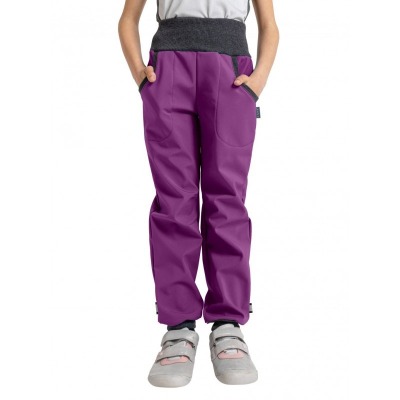
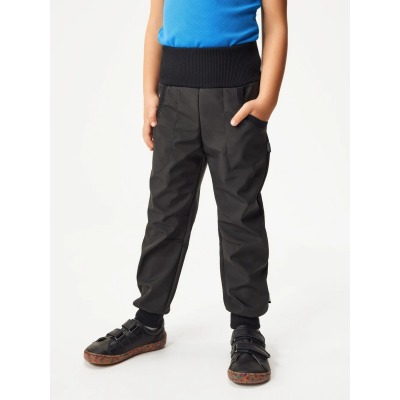
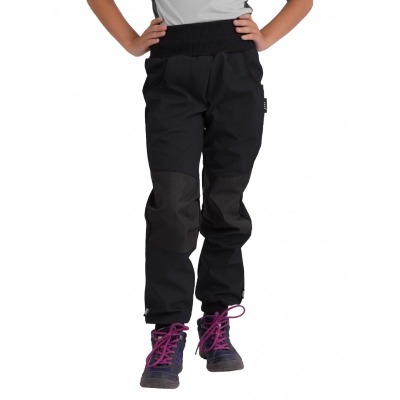
STREET styles have a slimmer cut and a more modern shape. Their descriptions mention knee darts, which help make the trousers more flexible and support comfortable movement. These styles also have ribbed cuffs to help keep the trousers in place in different positions. This style may suit a child who moves around a lot but prefers a more defined shape.
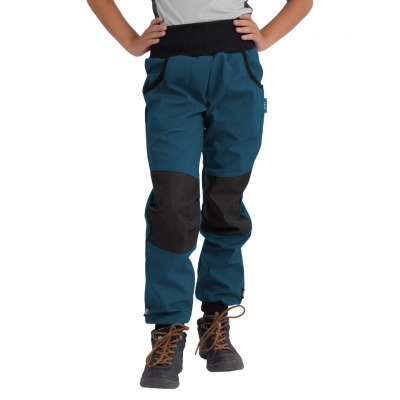
STREET strong styles are a good choice when it’s important to pay particular attention to knee protection as well as the regular cut. Their product descriptions specify stronger, more durable fabric around the knees and a comfortable waistband. The braid at the hem is also a detail specific to this style. This does not mean a strong style is necessary in every situation, but it is worth considering this construction for a child who actively plays on their knees.
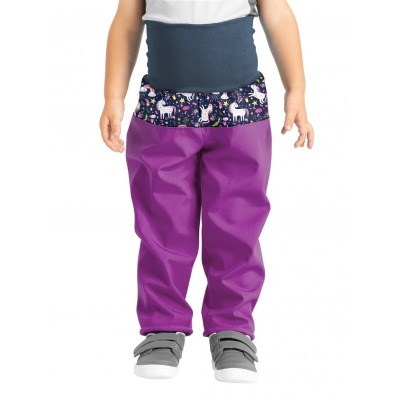
BASIC styles follow a different approach. Their simple, straighter cut works well for everyday wear, and some BASIC styles have an adjustable waist. The toddler styles are described as having a high, flexible and stretchy waist with ribbing. Other BASIC styles have an elastic waistband with a drawstring that can be tightened or removed if needed. So before buying, check the description of the specific style rather than assuming all BASIC trousers fit the same way.
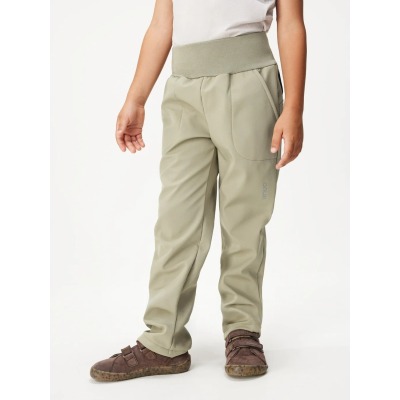
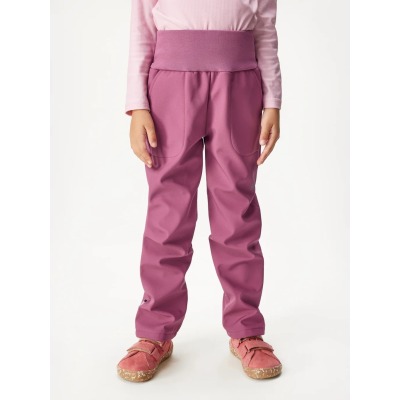
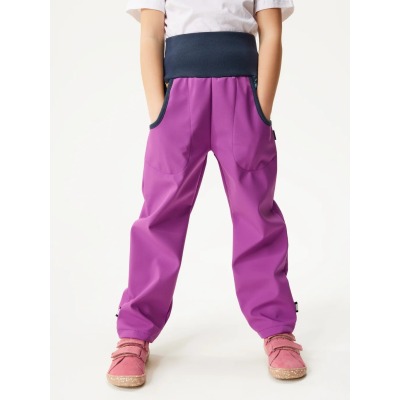
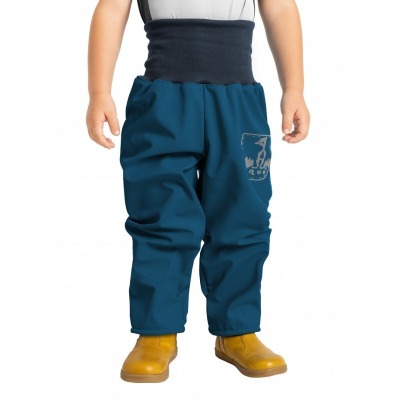
When choosing trousers for a toddler, a comfortable waistband and freedom to sit, squat and move are essential. A high, stretchy waistband with ribbing can be practical when the trousers need to stay in place in different positions. At the same time, make sure the trousers are not too long or uncomfortably tight during movement. Age is only a general guide; for the right size, use the measurements for the specific product and check how it actually fits your child.
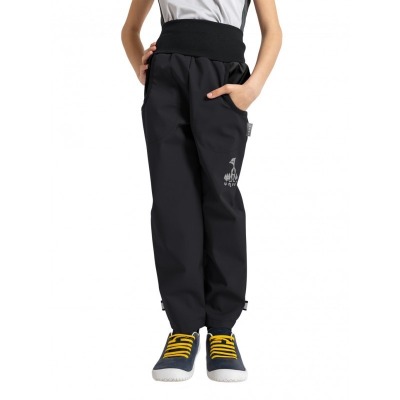
SIMPLE styles differ from BASIC and STREET styles mainly in that their descriptions specify a classic cut, a smooth-woven waistband and pockets. These products are also described as having a warm fleece lining, stitched leg openings and reflective details. These features may matter to a child who needs trousers for everyday activities and whose needs include pockets or reflective details as well as warmth.
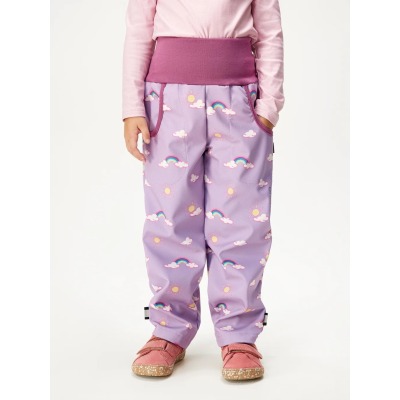
Where possible, let your child have a say in the colour and pattern. Purple, black, cobalt, light purple, khaki and plum offer different options for coordinating, while unicorn, rainbow and floral patterns add character to the garment. When narrowing down the category, compare the cut and required details first, then the size and finally the colour or pattern. If a fleece lining is not needed for the situation, you could also look at unlined softshell trousers for a different layering option.
Which cut should you choose: BASIC, STREET, STREET strong or SIMPLE?
If you’re looking for a simple everyday option for your child, start with BASIC styles. Their straighter cut and comfortable waistband may suit nursery, the school run, travel and everyday outdoor activities. Toddler BASIC styles are described as having a high, stretchy waistband and ribbing, while some other BASIC styles have an adjustable elastic waistband. Always check the specific product.
STREET has a slightly narrower fit and is worth considering if your child prefers trousers with a more defined shape and is active. The knee pleats are an important feature of this style, as they are designed to support flexibility and help the trousers fit more comfortably during movement. STREET strong follows the same style, but with a more durable knee area, making it worth considering for a child who spends a lot of time playing on their knees.
SIMPLE may be the right choice if you want a classic fit without specific extra details. According to the model description, pockets, a smooth-knit waistband, stitched hems and reflective details are distinctive features of this style. No fit is universally best: the right choice depends on whether your priority is a waistband that stays in place, a narrower fit, durability around the knees or extra details.
- Everyday, straighter fit: see the BASIC models.
- Narrower fit designed for active movement: see the STREET models.
- Extra focus on durability around the knees: see the STREET strong models.
- Classic fit with pockets and reflective details: see the SIMPLE models.
Practical fit and use
Fleece-lined softshell trousers work best when they suit your child’s day and the rest of their outfit. If your child is very active, a layer that is too thick underneath may reduce comfort; for quieter activities or windier weather, layering may be different. The trousers alone do not determine how warm your child will be outdoors, so always consider the whole outfit: base layer, outer layer, footwear and your child’s activity level.
Check these four things before buying
- Waist: make sure it stays in place without pressing on the tummy. Ribbing, a waistband, elastic or a drawstring can fit differently from one model to another.
- Knees: if possible, let your child sit and squat. If they often move around on their knees, pay attention to the pleats or the stronger knee fabric on a particular model.
- Legs: check that the trouser legs work with your child’s footwear and are not too long for comfortable movement. Excessively long legs may create a risk of tripping or uncomfortable bunching.
- Size: compare the product size chart with your child’s actual measurements. Choosing by age is only a starting point, not a guarantee of a good fit.
Follow the care instructions for the specific product and avoid assumptions that are not confirmed on the product page. In general, it is worth airing outdoor clothing after use and letting wet garments dry before storing them, but the washing temperature, drying method and other specific care steps should be taken from the product instructions.
If the trousers are part of a larger outfit, you can pair them with fleece-lined softshell jackets or fleece-lined softshell snowsuits for younger children. If your child needs a lighter lower layer or wears warmer clothing underneath the trousers, consider unlined softshell trousers as an alternative.
Common mistakes when choosing kids' softshell trousers
- Choosing a model based only on colour. Your child may like the colour and pattern, but you should also check the fit, waistband and intended use before buying. The solution is to compare the practical features first and make the final colour choice afterwards.
- Assuming the same fit name always means the same fit. BASIC, STREET and SIMPLE indicate a general style, but the details of individual products may differ. Check each product description separately.
- Choosing trousers that are too tight. The narrower STREET fit may not suit a child who needs more room for layers or moves in a way that calls for a roomier fit. Check the trousers while sitting, squatting and walking.
- Choosing a model that is too large in the hope that your child will grow into it. Legs that are too long or a waistband that fits too loosely may restrict freedom of movement and make the trousers uncomfortable. Assess room to grow using measurements, not age alone.
- Treating fleece lining as a guarantee of suitability for particular weather or temperatures. The lining adds warmth to the inside, but your child’s comfort is also affected by the base layer, wind, moisture, activity level and other clothing. A specific temperature range cannot be promised in general.
- Assuming details of one model apply to the whole category. Pockets, reflective details, knee pleats, stronger knee fabric, ribbing and adjustable elastic are not features shared by all trousers. Always check the description of the product you have chosen.
- Not checking the size chart and availability. Before adding the trousers to your basket, compare your child’s measurements with the specific product information and check which colour, pattern and size are currently available.
Frequently asked questions
What is the main benefit of fleece-lined softshell trousers?
The fleece lining makes the inside of the trousers softer and adds warmth, while the softshell fabric helps keep out the wind. This makes the trousers suitable for many cooler and windier outdoor conditions, but their suitability also depends on layering and your child’s activity level.
Are fleece-lined softshell trousers suitable for children in autumn and spring?
Yes, they can be considered as part of an outdoor outfit for autumn and spring, especially when the weather is changeable or wind makes it feel colder outdoors. There is no specific temperature limit, as the same weather can feel different to a child depending on their activity and layers.
What is the difference between the BASIC, STREET, STREET strong and SIMPLE fits?
BASIC is generally a simpler, straighter everyday fit. STREET is slightly narrower, and according to the descriptions, its knee pleats support more flexible movement. STREET strong adds stronger fabric to the knee protection area, while SIMPLE has a classic fit and its product descriptions mention pockets and reflective details.
Which softshell trousers are suitable for a toddler?
For a toddler, it is worth first assessing the waistband and freedom of movement. Toddler BASIC models are described as having a high, flexible, stretchy waistband and ribbing, while toddler STREET models have ribbing and knee pleats. However, the fit should still be checked against the specific product size and the child’s measurements.
Is it comfortable for a child to play actively in fleece-lined trousers?
It depends on the cut, size, how the child moves and what is worn underneath. Knee darts can support flexibility, while a well-fitting waistband helps keep the trousers in place in different positions. A style that is too tight or too long may reduce comfort.
What are knee darts, and what does the stronger knee fabric on the STREET strong model mean?
Knee darts are a construction detail described as being designed to improve the trousers’ flexibility and reduce riding up during movement. STREET strong models are described as having highly durable fabric in the knee protection area, which may be worth considering if a child often plays on their knees or the trousers are subject to more wear during active use.
What should you look for in the waistband of softshell trousers?
Check whether the waistband is comfortable for the child and whether the trousers stay in place while walking, sitting and squatting. Depending on the model, the waistband may be ribbed, stretchy, fitted with a waistband or have elastic with an adjustable drawstring. Always check these features in the specific product description.
When should you choose fleece-lined softshell trousers, and when should you choose an unlined pair?
Fleece lining may be a good choice if you want more warmth and softness on the inside of the trousers. An unlined style may suit you if you use the trousers as a lighter outer layer or want to adjust the warmth with another layer. The decision depends on the weather, the child’s activity level and the rest of their clothing.
Could a style with reflective details be a suitable choice for darker conditions?
Reflective details can be practical when a child is out in the dark or at dusk, as they add a detail to the garment that helps with visibility. However, reflective details are not a feature shared by all softshell trousers, so check for them in the description of the specific SIMPLE model or other product.
How do you choose the right size for a child?
Compare the child’s actual measurements with the size chart for the specific product and check whether the trousers leave enough room to move. Do not choose a size based only on age or assume that the same cut will fit children of different ages and body shapes in the same way.
Summary
When choosing fleece-lined softshell trousers for a child, first consider how they will be used and the child’s movement habits. BASIC is worth considering for a straighter everyday cut, STREET for a narrower, more active fit, STREET strong when greater durability in the knee area is important, and SIMPLE if you prefer a classic cut with pockets and reflective details.
The most important points to check are waistband comfort, room for the knees to move, the leg opening, details specific to the product and the right size. Browse the available styles in the category and compare their cut, colour, pattern and product information in light of what the child’s actual day outdoors will be like. If fleece lining does not suit your needs, an alternative could be unlined softshell trousers or a different layered softshell outfit.