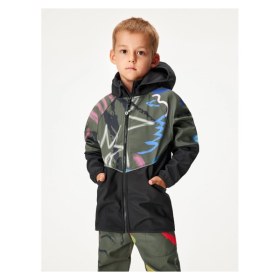
A Fleece-Lined Softshell Jacket is designed for children who spend a lot of time outdoors in cooler, windier or changeable weather—at nursery, on the way to school and in the playground. The fleece lining adds softness and warmth, the softshell fabric helps reduce the effect of wind, and a suitable cut leaves room to move. Before buying, it is worth comparing at least five things: warmth, wind and water resistance, breathability, the jacket's cut and whether a thin extra layer will be needed underneath.
A fleece-lined jacket is not automatically the right choice for every temperature and type of weather. Suitability depends on the child's activity, how the jacket will be used, the base layers and how long they spend outdoors. Below, we help you assess whether a fleece-lined softshell jacket is right for your child, when to consider an unlined model or another type of clothing, and what you can actually compare across the Basic, Slim and Street models available at MIU.
The focus is not just on pattern or colour, but on the buying decision: which jacket supports active outdoor play, which is better suited to layering, and which technical specifications make a meaningful difference between products.
This article focuses on the Fleece-Lined Softshell Jackets category and looks at the selection in terms of intended use, fit and practical comparison criteria.
How to choose a fleece-lined softshell jacket for a child
Start with how the jacket will be used, not its product name. If your child spends much of their time outdoors running, climbing and playing, freedom of movement and breathability are important. If the jacket is mainly for the school run or short outings, the extra warmth of a fleece lining may matter more than the highest possible breathability rating. For a long day outdoors, consider the whole picture: the weather, your child's activity, the base layer and the jacket's own features all affect comfort.
The fleece lining provides warmth, but layers still matter
The fleece lining is the warm, soft inner layer of the jacket. It helps reduce the feeling of cold and can make the jacket suitable when an unlined outer layer alone would not be enough. However, no jacket can be said to suit a specific temperature range: children feel the cold differently, and active movement generates more warmth than standing around.
Layering means wearing a suitable base layer next to the child's body, with a thin mid-layer added if needed. A child's fleece-lined softshell jacket does not always need a thick layer underneath. Too many layers can restrict arm movement and make the jacket uncomfortable. Before buying, check whether your child will mainly wear the jacket over one thin layer or whether there needs to be room for an extra warm layer too.
What do water resistance and breathability ratings tell you?
Softshell fabric specifications help you compare products, but they should not be interpreted as an absolute guarantee. A water-resistance rating, such as 10 000 mm or 15 000 mm/H2O, describes the material's resistance to water pressure under test conditions. It does not mean the jacket will always keep your child dry in every rain shower, puddle or prolonged wet activity. The actual result also depends on the seams, how the jacket is used and how water reaches the garment.
Breathability indicates how much water vapour passes through the material over a given period. The 3000 or 10 000 g/m2/24 h figures shown in product details help you compare different models for more active use. A higher rating may be an important selection criterion, but your child's comfort still depends on the base layer, activity level and outside temperature. For models with a TPU membrane, always check the specifications given for the individual product rather than assuming that one model's figures apply to the whole category.
Cut, size and everyday details
A jacket should allow room for movement around the shoulders and elbows, but it should not simply be several sizes too large. An overly loose fit can get in the way when a child runs, and the sleeves may cover their hands. Measure your child’s height and, if needed, their girth according to the manufacturer’s size chart, then allow modest room for growth. Also think about what will actually be worn underneath the jacket – a thin base layer needs less extra room than a thick jumper.
A longer back is practical because it covers the child’s back better when they bend over or move around. Cuffs that help reduce draughts also support comfort. A hood can be useful in a cool wind or light rain, but try it on with other clothes: it should not obstruct vision or restrict movement. Pockets are useful when a child carries small items or wants to shield their hands from the wind.
Visibility and alternative types of clothing
A reflective detail or a hanging loop with a reflector helps make a child more visible in the dark. It is a practical addition for the school run and evening outings, but no detail replaces adult supervision, appropriate road behaviour or other visibility aids.
If your child needs more room for their legs and a full-body option, also take a look at fleece-lined softshell suits. For milder weather or if you want more control over the layers, an unlined softshell jacket may be suitable. If you are looking for longer coverage, consider fleece-lined softshell coats; for separate protection of the lower body, there are also fleece-lined softshell trousers and, for a lighter layered option, unlined softshell trousers.
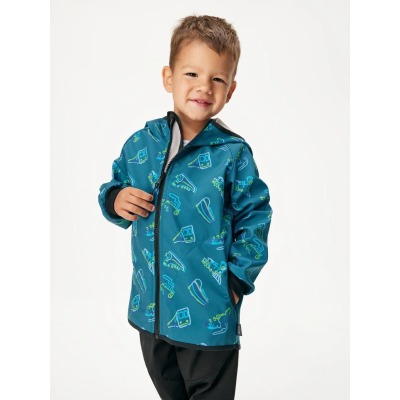
Fleece-Lined Softshell Jackets
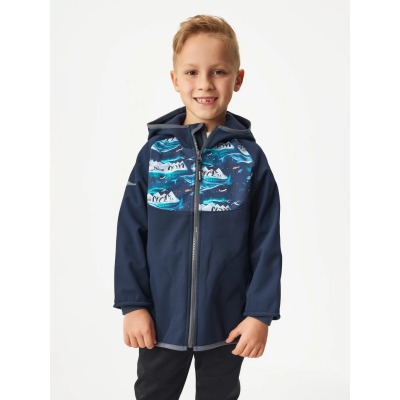
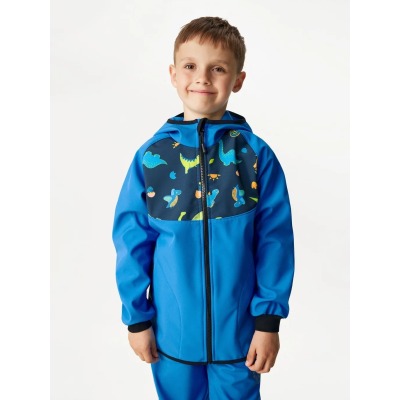
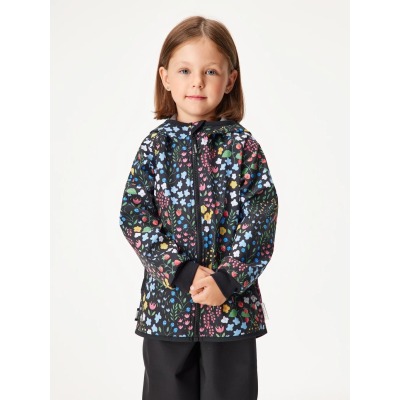
Kids' fleece-lined softshell jackets are a sensible starting point when a child needs an everyday outdoor layer that combines a soft inner surface with an outer fabric that protects against the wind. The description for every model in this selection mentions a reflective hanging loop on the hood, a longer back, warm fleece, two pockets and cuffs that help reduce wind getting in. These details are useful at nursery and on the school run, where a jacket needs to withstand being put on repeatedly and active movement.
For the Basic models, the stated material is 100% polyester with a TPU membrane, with 10 000 mm water resistance and 3000 breathability. This gives parents looking for a windproof kids' jacket a specific point of comparison, alongside the material specifications. The model names here mainly differ in colour and pattern, so you can choose a look your child likes while keeping the practical core features.
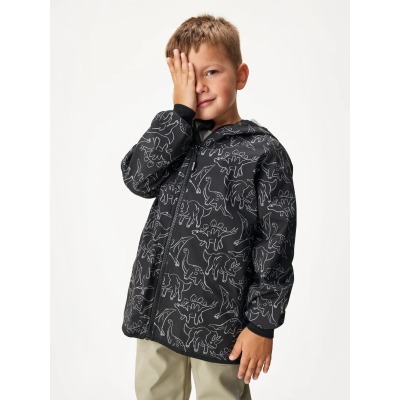
The first Basic options are the dark blue Basic softshell jacket with penguins, the blue Basic model with dinosaurs and the Basic jacket in the cobalt-trains pattern. They are worth comparing if you want the same type of design but a different pattern or colour for your child.
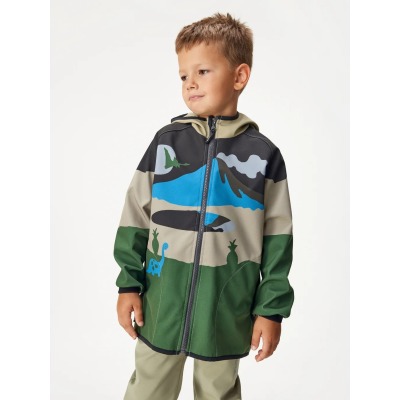
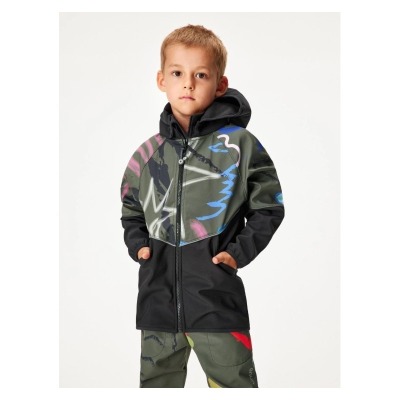
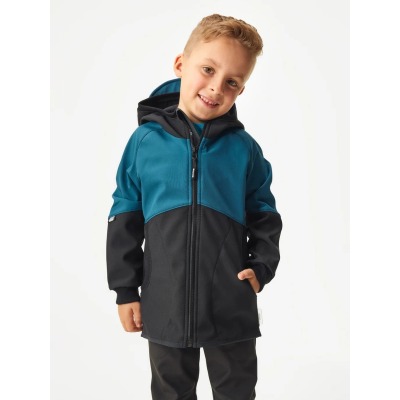
According to the source descriptions, the next Basic models also have fleece lining, a reflective hanging loop on the hood, a longer back, two pockets and wind-protective cuffs. The khaki Basic softshell jacket suits a child who prefers a more neutral colour. The black Basic with a garden pattern and black-dino Basic offer a darker base, while keeping the pattern clearly visible.
These products are also listed with 10 000 mm water resistance and 3000 breathability, and a material of 100% polyester with a TPU membrane. Consider the figures alongside how the jacket will be used: they help you compare the products’ technical information, but do not by themselves tell you whether a child will be too warm or cold in a particular situation. The base layer, level of activity and time spent outdoors also matter.
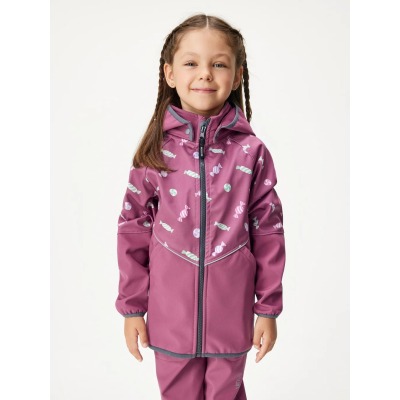
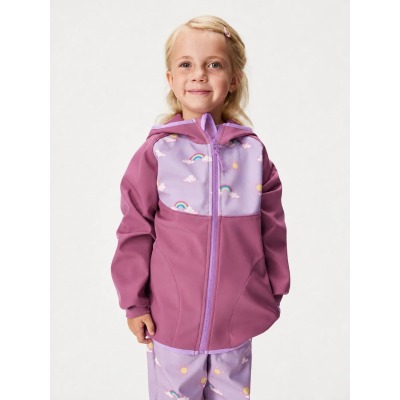
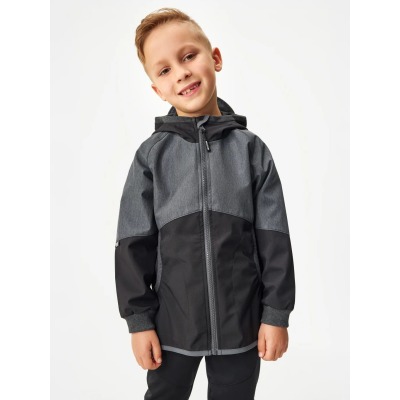
If you are looking for a more colourful Basic option, there is the Basic softshell jacket in a volcano pattern. Its description also lists warm fleece, two pockets, a reflective hanging loop on the hood and a longer back. With the Basic range, it is easy to decide first on the practical features and then choose a pattern your child will be happier to wear.
The Slim models have different technical specifications: 15 000 mm/H2O water resistance and 10 000 g/m2/24 h breathability. The options are black fantasy Slim and plum-bonbons Slim. As the product description does not provide more specific measurements or information about the cut of these models, check the size and size chart on the product page before ordering, rather than assuming a particular fit from the model name.
The Street range includes black/cobalt Street and black/grey Street. Their descriptions also list warm fleece, a hood with a reflective hanging loop, a longer back, two pockets and wind-protective cuffs, as well as 10 000 mm water resistance and 3000 breathability. You can therefore choose between the Street models mainly by colour combination and your child’s preferences, based on the features confirmed in the descriptions.
Basic, Slim or Street – which model should you choose?
Comparing the Basic, Slim and Street models starts with what the product descriptions actually tell you. The Basic models list 10 000 mm water resistance, 3000 breathability, a combination of 100% polyester and a TPU membrane, and recurring everyday details: warm fleece, two pockets, a longer back, a reflective hanging loop on the hood and wind-protective cuffs. If you want an option with clearly described core features, the main practical difference between the products in the Basic range is the colour and pattern.
For Slim models, higher figures are given – 15 000 mm/H2O water resistance and 10 000 g/m2/24 h breathability. This may be a useful starting point for parents comparing material test figures and looking for a model with specific numbers for active use. However, the product description does not provide enough information to claim an exact difference in cut or fit between Slim models, so assess the size using the information on the product page.
Street models share several practical features with Basic models in the description, and are listed with 10 000 mm water resistance and 3000 breathability. The choice between them is primarily about the black and cobalt or black and grey colour combinations. No group is automatically warmer or more comfortable based on its name alone: compare the figures and cut, consider your child’s activity level, and think about which layers you plan to put under the jacket.
Practical checks before buying and using
Before choosing a softshell jacket for your child, picture a typical day outdoors. For a child who actively plays outside, it is important that their arms can move freely and that the jacket is not too heavily layered. In cooler weather, the fleece lining provides a warm inner layer, though a suitable base layer may still be needed underneath. If your child moves very little or has to wait outside for a long time, the same outfit may not feel as warm as it does on a child who is running and playing.
Seven-question checklist
- Does the size selected using the size chart allow enough room to move without being unreasonably loose?
- Will your child’s usual base layer and any additional layer fit under the jacket without restricting movement at the shoulders or elbows?
- Is the fleece lining suitable for the weather and the length of time your child will wear the jacket?
- What are the water-resistance and breathability figures for this specific model?
- Does the hood fit comfortably without obstructing your child’s vision or movement?
- Are the number and placement of the pockets suitable for your child’s everyday use?
- Will the reflective detail be useful on your child’s usual journey to school or when they are out in the evening?
Always follow the care label on the specific product and the instructions on the product page. In general, garments with technical outer fabrics should be handled according to the manufacturer’s recommendations; avoid unapproved treatments and check before the next season that zips, sleeve cuffs and other practical details are in working order. If the jacket gets wet, let it dry completely before putting it in the wardrobe.
If a fleece-lined jacket seems too warm for your needs, browse the category of unlined softshell jackets. If you want to cover both the legs and the whole body at once, a fleece-lined softshell suit may be a better starting point. If you are looking for a longer style, compare coats; for the lower body, there are softshell trousers with and without fleece lining.
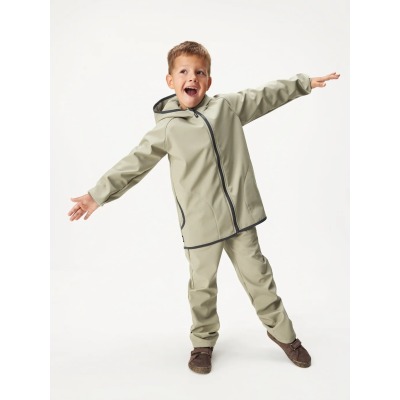
Common mistakes when buying a fleece-lined softshell jacket
- Choosing the option that seems warmest without considering how it will be used. A fleece lining adds warmth, but an active child may need more breathability and fewer layers than a child spending time outdoors quietly. Choose based on your child’s day, not just the word “warm”.
- Treating the water-resistance figure as a guarantee of rain protection. The figure is a point of comparison under test conditions, not a promise that the jacket will keep out water in every situation. Consider the number alongside the intended use and the other product information.
- Buying a jacket that is too large to allow room for growth. Excessive length and width can restrict movement, affect the fit of the sleeves and make the jacket uncomfortable for your child to wear. Choose a size using the size chart, allowing room only for the layer that will actually be worn underneath.
- Assuming that the features of one model apply to the entire category. Basic and Street models are listed with 10 000 mm water resistance and 3000 breathability, while Slim models have 15 000 mm/H2O and 10 000 g/m2/24 h. Always check the description of the specific product.
- Assuming the jacket is automatically suitable for all weather. A fleece-lined softshell jacket is useful in changeable and cooler weather, but it does not automatically replace all other outdoor clothing. Weather, layers and your child’s activity affect comfort.
- Treating the reflective detail as a guarantee of full visibility. The reflective hook supports visibility, but does not replace careful behaviour in traffic or other visibility-enhancing options where needed.
Frequently asked questions
Is a fleece-lined softshell jacket suitable for a child in autumn and spring?
Yes, this type of jacket is designed primarily for outdoor wear in changeable and cooler weather, and may be suitable in both autumn and spring. Exact suitability depends on the weather, your child’s activity level and the layers worn under the jacket.
How warm is a fleece-lined softshell jacket?
The fleece lining adds softness and warmth compared with an unlined outer layer, but the product descriptions do not provide a basis for associating the jackets with one specific temperature. Warmth is also affected by the base layer, wind, time spent outdoors and your child’s activity.
Is a softshell jacket waterproof and windproof?
Softshell fabric helps reduce the effect of wind, and the water-resistance figures given for the products describe how the material resists water pressure under test conditions. This does not mean absolute protection during prolonged rain, heavy wetting or every situation in which the jacket is used.
What do the water-resistance and breathability figures for a softshell jacket mean?
Water resistance, for example 10 000 mm or 15 000 mm/H2O, indicates the material’s resistance to water pressure. Breathability, for example 3000 or 10 000 g/m2/24 h, describes the movement of water vapour through the material over a set period. Compare these figures for the specific model and consider your child’s needs.
How do I choose the right softshell jacket size for my child?
Start with your child’s measurements and the manufacturer’s size chart. Consider which layer will be worn under the jacket, but do not choose an unnecessarily large jacket just to allow room for growth. The right size allows room to move and for a necessary thin layer, without restricting the sleeves or shoulders.
Should I choose a Basic, Slim or Street model for my child?
Basic models are described as having 10 000 mm waterproofing and 3000 breathability, along with several practical features they have in common. Slim models are listed with 15 000 mm/H2O waterproofing and 10 000 g/m2/24 h breathability. Street models have figures comparable to Basic: 10 000 mm and 3000. Choose the colour and pattern based on the child’s preference, and check the specific product information for size and fit.
Do you need another layer under a fleece-lined jacket?
Not always. A thin base or mid-layer may be enough in one situation, while in another the child may need an extra layer. The decision depends on the weather, activity and how the child feels. A combination that is too thick can restrict freedom of movement.
When should you choose an unlined jacket, snowsuit or coat instead of a fleece-lined jacket?
An unlined jacket may be suitable if you want to adjust layers more flexibly yourself or the weather is milder. A snowsuit is a logical choice if you need an all-over solution, while a coat is for when you prefer longer coverage. If the jacket does not provide enough coverage for your lower body in your situation, also consider softshell trousers.
Summary
A Fleece-Lined Softshell Jacket for kids is a practical choice for nursery, the school run and outdoor play on chilly, windy and changeable days. The right choice depends not only on the fleece lining or a single technical specification, but also on the child’s activity, layering, size, fit, hood, pockets and visibility-enhancing details.
In MIU’s fleece-lined softshell jacket category, you can compare the Basic, Slim and Street models available and choose a suitable colour or pattern. If you need different layering or an all-over solution, also compare unlined jackets, softshell snowsuits, coats and trousers.