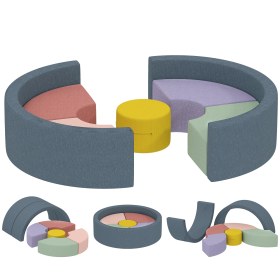
Soft Building Bricks for Kids are ideal for families looking for active, varied play indoors. They are not toys with just one specific function: depending on the shapes and number of pieces in the set, children can build, climb, crawl, practise balancing, slide or, with some models, make a table and chair. Choosing can be difficult, however, as foam play blocks for kids that look similar at first glance can differ in how they are used, their dimensions, cover material and care requirements.
When choosing a suitable set, consider first how your child actually plays, the available floor space, the number and shapes of the pieces, how the cover can be cleaned and the stability of the base. This guide provides a practical framework for comparing the selection in the Foam Play Blocks category. If you would like to compare products side by side after reading, you can find them in the [Foam Play Blocks category](/667-vahtkuubikud); if your child prefers ball play, [ball pit and soft block combinations](/665-pallimeripehmed-klotsid) may also be useful.
This article focuses on the Foam Play Blocks category and explores the selection by use, suitability and practical comparison criteria.
How to choose soft building bricks to suit your child and play space
The first question is not “how many blocks are in the set?” but “what is your child most likely to want to do with them?” If the aim is building and arranging shapes, foam building bricks in different shapes may be suitable. If your child needs more active play, look for modules described as supporting climbing, crawling, balancing or sliding. Some sets can also be made into a table and chair, offering a different kind of play from simply stacking cubes.
The number of pieces alone does not show which set is suitable
A two-piece set is a more compact starting point, but its strength may lie in its versatility: with a specific 2-piece model, you can make a slide or a table and chair set. A four-piece set may be more interesting for more active climbing and sliding play if its shapes are well suited to play. Seven- and eight-piece sets offer more modules for building, stacking and rearranging. A twelve- or fifteen-piece set will usually need more floor space and, after play, more storage space too.
A higher number of pieces does not automatically mean a better purchase. It offers more ways to combine them, but a smaller set may be more practical in a small play area. Before buying, measure the area where the blocks will be used and allow room for your child to move around. For products with published dimensions, check the measurements separately: for example, one set measures 40 × 40 × 20 cm and one climbing and sliding toy measures 86 × 49 × 47 cm. These are not dimensions for the whole category.
Look at the shapes and how they can be used, not just the colour
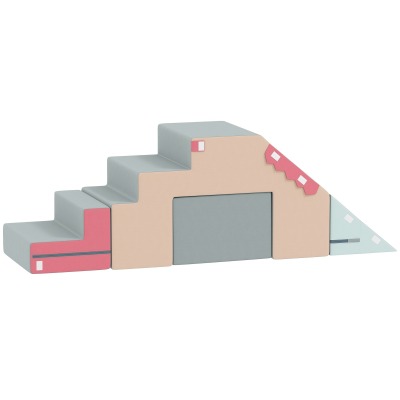
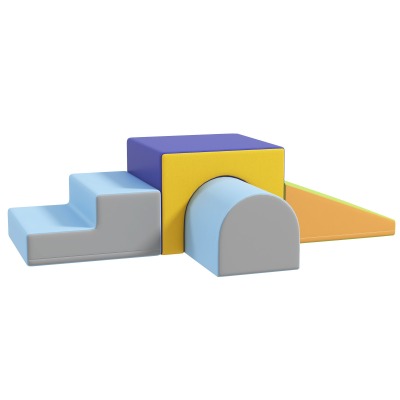
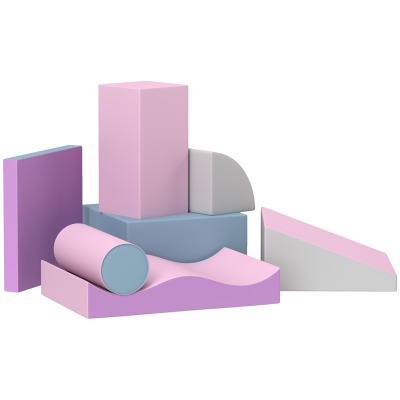
If the product description specifies the shapes, you can use them to better picture possible play scenarios. A four-piece climbing and sliding blocks set contains a ramp, stairs, a tunnel and a half-cylinder. This set encourages play focused more on climbing, crawling through and sliding. For other products, rely only on functions confirmed in the description: for example, modules may support climbing, crawling, balancing, stacking or building, but you cannot automatically assume that every set is suited to all these activities.
Cover and cleaning checklist
The material primarily affects how the product is cared for day to day. The selection includes models with faux leather, velvet and velour covers, and one set is described as having PU foam and an EPE filling. Several products describe the faux leather surface as easy to clean, but that does not mean all faux leather products have the same care requirements. Textile-covered products do not all have the same cleaning method either.
When searching, distinguish between three claims: removable cover, machine-washable cover and cleaning with a damp cloth. If the product description states that the covers are removable and machine washable, this is an important practical advantage for that particular model. If cleaning with a damp cloth is recommended, follow that instruction and do not automatically assume the cover can be washed. Always check the description of the specific product you have chosen before buying.
Stability and placement
Foam blocks with a non-slip base may provide additional stability on a hard floor, but the floor surface, the arrangement of the blocks and the play situation still affect the result. A non-slip base does not make the product a stand-alone safety solution. Place the modules on a level surface, remove unnecessary obstacles from the play area and supervise active climbing or sliding play.
Before ordering, check these seven key points: your child’s preferred way to play, the number of pieces in the set, the confirmed shapes and functions, dimensions, cover material, cleaning method, and floor and storage options. This will help you move from a general wish for “soft play blocks for kids” to a more specific solution.
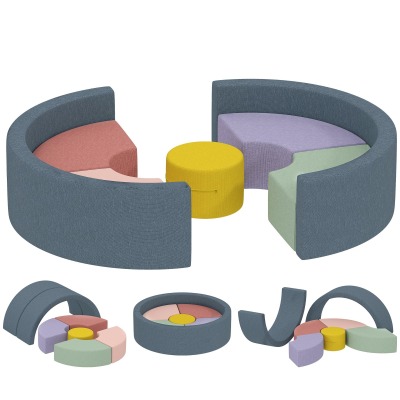
Foam Play Blocks
The foam cube category includes soft building, climbing, crawling and sliding modules in different sizes and configurations. They are suitable for indoor use when you want to combine free building with active movement, but choose a set based on the description of the specific product. Not all models offer the same shapes or play options.
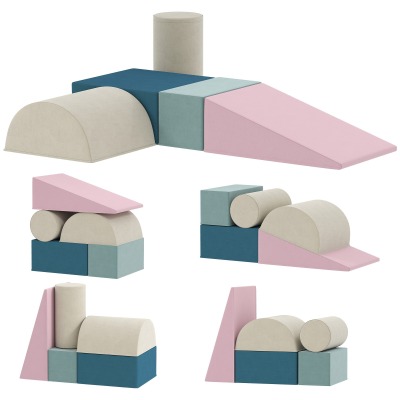
For active climbing play, first look at sets whose descriptions mention climbing, crawling or sliding. The four-piece set includes a ramp, steps, a tunnel and a half-cylinder, allowing children to move between different shapes and use them as parts of a play route. The indoor climbing and slide set for toddlers consists of five foam building blocks in different shapes; its features include soft velvet and removable, machine-washable covers. Another climbing and sliding toy measures 86 × 49 × 47 cm and has a faux leather cover; according to its description, its modules can be combined for climbing, crawling and sliding.
For this type of use, measure the play area before buying and consider whether there is enough clear space in the room both to arrange the modules and for your child to move around. The product dimensions do not indicate the total play area required, as combining modules may take up more space than using a single module on its own.
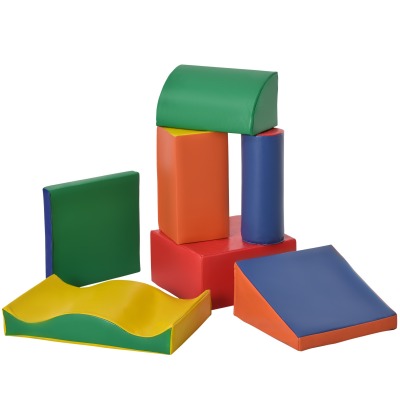
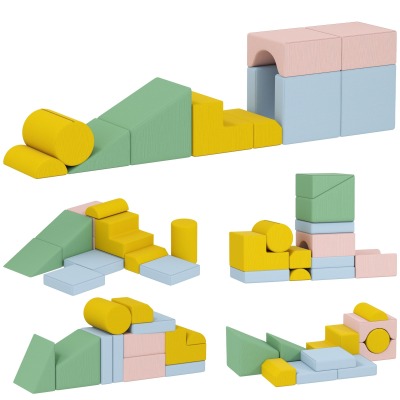
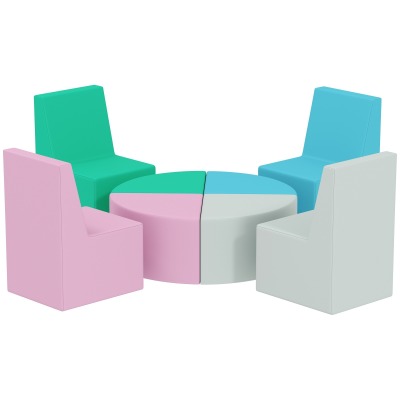
The difference between smaller and larger sets is clearest in how many ways they can be rearranged. The two-piece soft building block set for toddlers is described as a solution that can be arranged as a slide or a table and chair set. The age range 0.5–3 years is specified for this product; this information applies only to this particular model, not as a recommendation for the whole category. The set is lightweight and foldable, and its cover is described as removable and machine-washable.
Seven-piece sets offer more options for arranging different shapes. One model has seven unique blocks, a high-density foam core and removable velvet covers with zips. For another seven-piece set, a non-slip base, soft velvet cover and dark blue colour are specifically highlighted. If play takes place on a hard floor, the base may be one comparison criterion, but arrangement and supervision remain important.
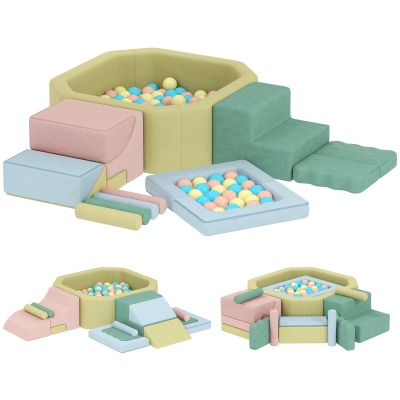
The fifteen-piece set with 200 Balls is a different choice for a family who wants ball play alongside building. Its fifteen foam-filled building blocks and balls create more activities than a standard set without balls, but they will probably also need more space and more careful tidying up after play.
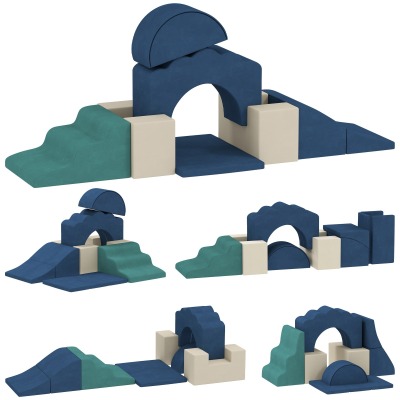
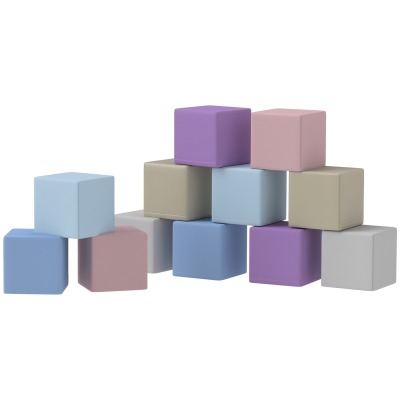
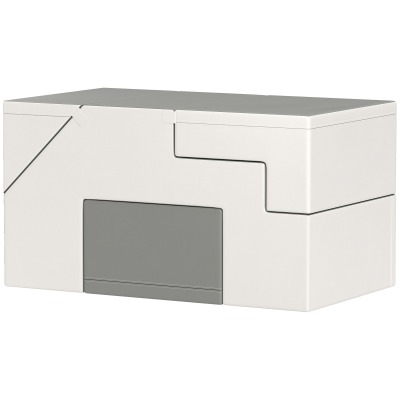
When comparing the other options, focus above all on the cover, dimensions and how open-ended the play scenario is. The 12-cube set with a faux leather cover is designed for play that practises balance and coordination, but whether it is suitable in practice depends on the child’s abilities, the space available and an adult’s assessment of the play situation.A 12-piece washable set in pastel shades encourages climbing and crawling, according to the descriptions, and is designed for active indoor play.
The colourful seven-piece foam set highlights learning about colours and shapes, creativity and cleaning with a damp cloth. The eight-piece PU foam building block set differs from the others in that its eight modular pieces can be arranged as tables, stools or stacked structures. It is described as having a PU cover, elastic EPE filling and non-slip bases. These features apply only to this specific product.
If easy care matters to you, check whether the description mentions a removable, machine-washable or wipe-clean cover. If stability on a hard floor is your main priority, check separately whether the base is non-slip. If you would like more ball play, also compare [the Ball Pits category](/146-pallimeri) and soft block options with balls. You can find the right kind of foam cubes by matching their features to your space and your child's way of playing, rather than choosing only by set colour or number of pieces.
Which soft building block set should you choose?
A two-piece set is a sensible starting point if you want a compact, reconfigurable option and the possibility of making a table, chair or slide is important to you. A four-piece set is a better fit if you want an active climbing and sliding route with a clearly described ramp, steps, tunnel and half-cylinder. The five-piece climbing and slide set also adds modules in different shapes, as well as the benefit of removable, machine-washable covers.
Seven-piece sets sit in the middle of the range: they may suit a child who wants to build, stack and rearrange modules without the set becoming very large. One has removable velvet covers, while the other has a non-slip base and a velour cover.The eight-piece set is a good choice if you want modularity that lets you create a table, stools or stacked structures. The twelve-piece models provide more pieces for active building and crawling, but require more storage space.
The 15-piece set with 200 balls is an option for families looking to combine Building Bricks and ball play. Rather than searching for one product that is best for everyone, ask: does your child need a movement track, repositionable modules, a table-and-chair solution, a washable cover, a non-slip base or balls? The answer can help you find the right product range.
Using and caring for soft building blocks at home
In a small play corner, start with a set whose dimensions and number of pieces fit easily into the available space. Leave enough clear space around the modules so your child does not bump into furniture while climbing or crawling. For a larger set, plan not only for the play area but also for a place to gather all the pieces after use. A lightweight or foldable option may be practical to store only if this feature is stated in the specific product description.
For active climbing, place the blocks on a level floor and check that the modules are in the desired positions before play. A non-slip base may reduce movement, but its effect depends on the floor surface and arrangement. Always check the overall condition of the set before use: covers, seams, zips, bases and foam should show no visible damage. Active play should be supervised, and no product description can replace an adult’s judgement of the specific situation.
Five practical play scenarios
- Small play corner: choose a smaller set or an option whose modules can be gathered up after play.
- Climbing and sliding: look for a ramp, steps, tunnel, half-cylinder or other relevant feature in the description; do not assume it is included based on the shape alone.
- Building and stacking: a larger number of pieces and different modules may offer more ways to rearrange them, but they need more space.
- Making a table and chair: choose only a model whose description specifically lists this use.
- Playing with balls: a set with 200 balls may suit a family looking to combine building and ball play; if a ball pit is the main aim, compare [ball pit options](/146-pallimeri) too.
Care depends on the cover. For products with removable, machine-washable covers, follow the manufacturer’s washing instructions. Clean faux leather only as permitted in the product description, and use a damp cloth only where this is specifically stated. After play, gather the balls and modules and check that the covers and bases are intact. In the [Foam Play Blocks category](/667-vahtkuubikud), you can compare not only appearance but also the features that matter for use in your home.
Common mistakes when buying soft building blocks
- Choosing a set based only on the number of pieces or colour. A larger set may not suit a small play corner, and the colour does not tell you whether it includes a ramp, tunnel, removable cover or non-slip base. Instead, start with the type of play you want and then check the specifications.
- Assuming all blocks are suitable for climbing and sliding. Some models clearly list these features in their descriptions, while others are described more in terms of building, stacking or learning about shapes. Read the description for each set separately.
- Assuming care features apply to the whole category. Faux leather, velvet and velour covers do not automatically require the same cleaning method. Check whether the cover is removable, machine-washable or suitable for cleaning with a damp cloth.
- Putting a large set in an area that is too small. In addition to the block dimensions, allow for your child’s movement and rearranging the modules. Measure the available floor space before buying.
- Treating a non-slip base as a complete safety solution. A base may help keep the set more stable, but the result is also affected by the floor, the position of the modules and supervision during play.
- Applying one product’s age or material information to all models. For example, the age range of 0.5–3 years is given for one two-piece product. Likewise, PU foam, EPE filling or a machine-washable cover is specified only for the relevant products.
- Forgetting to plan for storage. There needs to be somewhere to put the modules and balls after play. If a set is vacuum-packed, lightweight or foldable, check that this feature is indeed stated in the description of the product you choose.
Frequently asked questions
Which children are soft building blocks suitable for?
Suitability depends on the specific set, your child’s abilities, the type of play and the available space. Check whether the description mentions building, crawling, climbing, balance, sliding or making a table and chair. The age information for one product does not automatically apply to the whole category.
Are soft building blocks suitable for climbing and sliding?
For some sets, these features are clearly listed in the product description. For example, a four-piece set includes a ramp, steps, tunnel and half-cylinder, and climbing or sliding is described for several products. For other models, rely only on the stated uses.
What should I choose if there is little room for play at home?
Consider options with fewer pieces or a foldable design, if this feature is specified in the product information. Before ordering, measure the available floor space and allow for your child’s movement, not just the dimensions of the blocks when grouped together.
Does a larger number of pieces always mean a better set?
No. A 12- or 15-piece set may offer more combinations, but it also needs more space and storage. A two-, four-, seven- or eight-piece set may be more practical if you want a particular play scenario or a smaller option.
Which cover is easiest to care for?
Assess this using the information for the specific product. Cleaning is described as easy for some models with faux-leather surfaces; some sets have removable, machine-washable covers; and cleaning with a damp cloth is specified for one foam set. Do not assume that all products require the same care based on the cover material alone.
What does a non-slip base do?
A non-slip base may help keep a module more stable on the floor, especially during play on a hard surface. However, the effect depends on the floor, arrangement and conditions of use, and it does not remove the need for supervision during play.
How do I compare sets with and without balls?
A set without balls is mostly focused on building, climbing, crawling or sliding. The 15-piece set with 200 balls combines these activities with ball play and is suitable for families who want both. If a ball pit is your main priority, it is also worth comparing the selection in the [Ball Pits category](/146-pallimeri).
Can soft blocks be used as a table or chair?
For some models, this is specifically allowed in the description. A two-piece set can be arranged as a slide or as a table and chair set, while the pieces in an eight-piece PU foam set can be made into tables and stools. This use should not be generalised to all soft blocks.
Summary
Choosing soft building blocks starts with the kind of play you want and the space available at home. If you are looking for active climbing and sliding play, check the described ramps, stairs, tunnels and other modules. If building or rearranging is important, compare the number of pieces, their shapes and whether they can be arranged into a table, chairs or stools. If you want ball play, choose a set that specifically lists balls as included.
Before buying, check at least five things: the number of pieces, the function of the shapes, dimensions, the cover and cleaning solution, and the stability of the base. Then consider storage and play area too. If your main interest is soft building blocks for kids, start with the [Foam Play Blocks category](/667-vahtkuubikud); for ball play, also compare the [combination of a ball pit and soft blocks](/665-pallimeripehmed-klotsid). This keeps your final choice tied to a specific use, rather than a general promise that one set suits everyone.