Kids' Room Shelves give books, toys and other everyday items a place of their own. A well-chosen shelf is more than a decorative piece of furniture: it makes it easier to find and put away things, and helps prevent the floor from becoming covered in toys.
The right shelf for a child's room depends on the layout, dimensions, storage needs and how your child will use it. A low, open children's bookcase may be the most practical choice for one room, while another may call for a solution with drawers or a cupboard. Below, we look at when to choose a floor or wall shelf, how to divide open and closed storage, and what to check before buying and installing.
To compare specific options, browse the Kids' Room Shelves category. The selection includes hanging storage shelves, smaller wall shelves, book and toy shelves, and house-shaped models or designs with several storage compartments.
This article focuses on the Kids' Room Shelves category and looks at the selection in terms of use, suitability and practical comparison criteria.
How do you choose the right shelf for a child's room?
Start by asking what needs to be stored. Books usually need a visible, easy-to-reach place, while small building blocks, art supplies and other little items are better kept in a drawer or container. Larger toys need more spacious shelves, while dolls and decorative items can also fit on the different levels of a house-shaped shelf. If you need several types of storage at once, choose a combination shelf with open shelves, drawers or a cupboard.
Open shelves, drawers and closed cupboards
The biggest advantage of open shelves is visibility. Children can see which books and toys are available, and parents do not have to open a cupboard every time. This layout is especially suitable for things used every day. However, leaving too many things on open surfaces can make the room look cluttered. A simple way to keep things tidy is to give each shelf one purpose, such as books, construction toys or soft toys.
Drawers and textile storage bins are useful for smaller or irregularly shaped items. They make it easy to gather toys quickly and put them out of sight. A closed cabinet is suitable for items used less often or that you do not want to keep on display all the time. For example, the children’s wardrobes and chests of drawers category offers an additional storage solution for clothes, while the shelf can be used for books and toys.
Floor-standing shelf or wall shelf?
A floor-standing shelf takes up some floor space, but is generally easier to position: measure the available area, leave enough room to move around it and follow the product assembly instructions. A floor-standing shelf may offer more storage space and be suitable if you want one central place for books, toys and other accessories.
A wall-mounted children’s shelf helps save floor space and may fit a smaller room or a narrow corner. Before buying, measure the available wall space and check which fixings are included with the product or what type of fixing the installation location requires. You cannot determine whether the fixing is suitable from the shelf’s appearance alone: consider the type of wall, the installation instructions and the weight of the items to be placed on the shelf.
Dimensions, height and the child’s reach
Before ordering, check the shelf’s width, depth and height. Measure both the floor and wall space, and note the positions of doors, windows, sockets and other furniture. In addition to the shelf’s own dimensions, allow for enough room to move around it so that the child does not have to manoeuvre awkwardly between pieces of furniture to reach a toy.
Items the child uses every day should be within comfortable reach. Less frequently needed items can be placed higher up or in a closed section, but the shelf’s intended use should remain clear. For example, with a 36 × 102 cm hanging storage shelf, it is important to check whether its vertical shape suits the chosen section of wall. The Tipi shelf measures 30 × 34 × 10 cm, making it more suitable for smaller items or when planning a solution for a limited space. These examples show why you should not choose a shelf based only on its picture or colour.
Stability and fixing
Before use, check whether the product is intended for the floor or the wall and follow the manufacturer’s installation instructions. For a wall-mounted solution, make sure the fixing is suitable for the specific wall. For a floor-standing shelf, check after assembly that all the connections are in place according to the instructions and that the shelf does not move awkwardly during use. If the product listing specifies an anti-tip feature or recommends wall mounting, follow this information for that particular model.
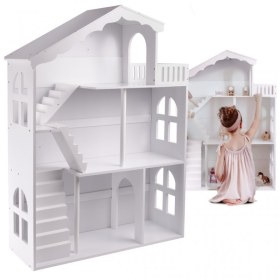
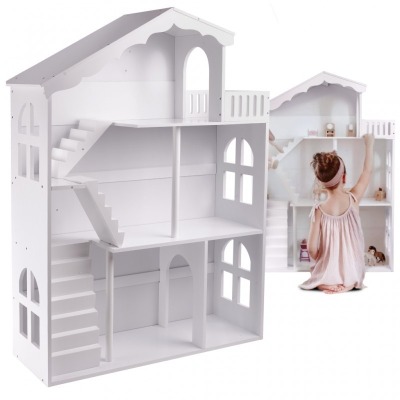
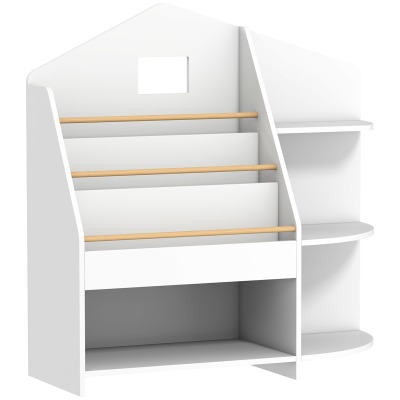
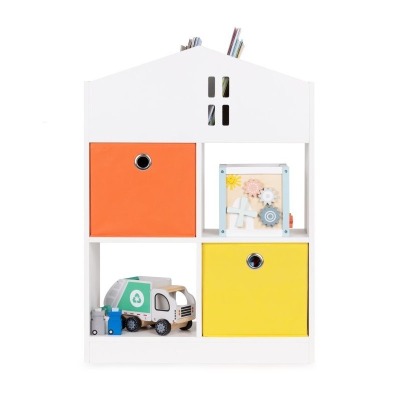
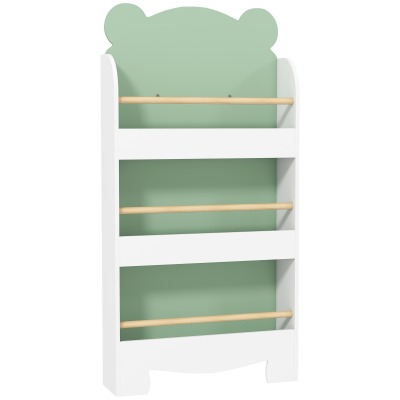
A house-shaped or bear-themed shelf can serve as both storage and decoration. However, its shape should also support practical use: check how much shelf space it actually provides, what size items will fit and whether the shelves the child will use are at a suitable height.
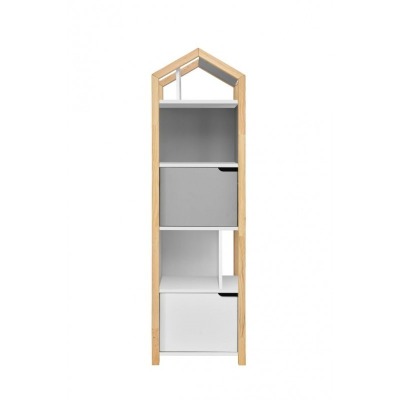
Kids' Room Shelves
In the Kids' Room Shelves category, it is worth first distinguishing between four main types: a hanging storage shelf, a wall-mounted shelf, a floor-standing book or toy shelf, and a larger house-shaped shelf or one with drawers and a cabinet. Each type has its own purpose. A hanging solution is suitable if you want to free up floor space and keep smaller items in one designated place. An open floor-standing shelf keeps books and toys visible, while a combined model helps divide items between different storage compartments.
Before choosing, consider the size of the room and how the shelf will be used. In a small children’s room, a narrower shelf or wall shelf can make use of wall space that would otherwise be left empty. If you need more storage, it makes sense to compare options with several levels, drawers and a cabinet. Also consider whether the shelf should serve one specific activity, such as reading, or be the room’s main storage unit.
A tall floor-standing shelf is not always necessary for smaller items. The Hanging Storage Shelf, Pink is a wall-hanging solution with three compartments and measures 36 × 102 cm. The product description specifies sturdy fabric, 100% cotton and machine washability at 40 degrees. This makes it an interesting option if you are looking for dedicated storage for small items and want to leave more floor space free.
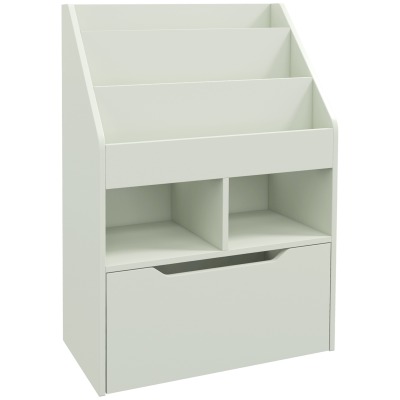
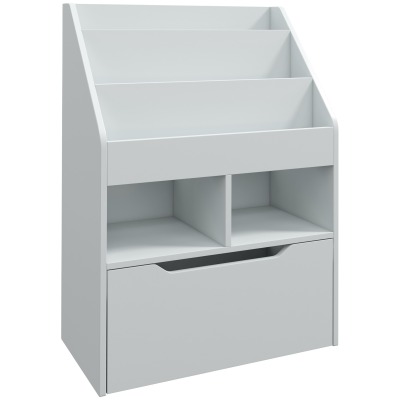
For different needs, consider floor-standing options. The Shelf for Children’s Room, White is a toy and book shelf with three shelves, or a floor-standing cabinet. The Tipi Shelf is a smaller shelf made of MDF, measuring 30 × 34 × 10 cm. Before ordering, it makes sense to think about exactly what you want to put on it, as a small shelf is better suited to a specific storage purpose than to serving as a spacious shelf for the whole room.
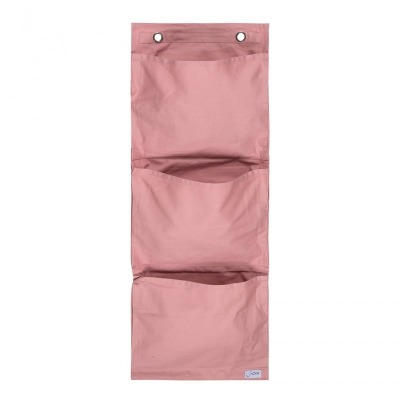
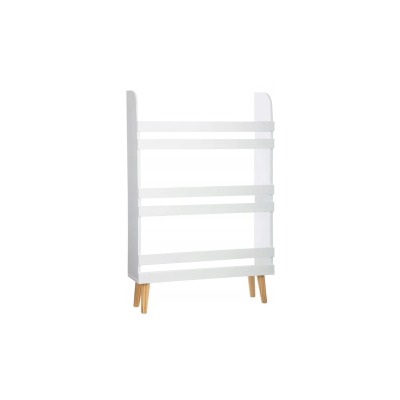
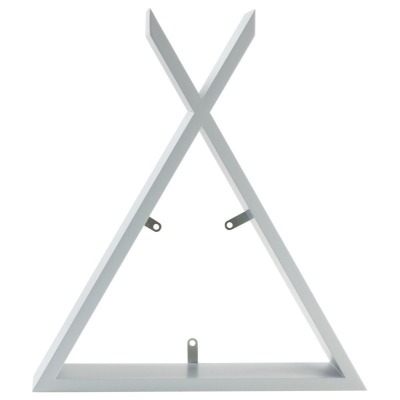
When comparing the Kids' Room Shelves selection, open the pages of the products that interest you after reviewing their listings and check the specific features given for each model. This keeps the comparison fact-based and helps you choose according to your actual needs.
Which children’s room shelf suits your space?
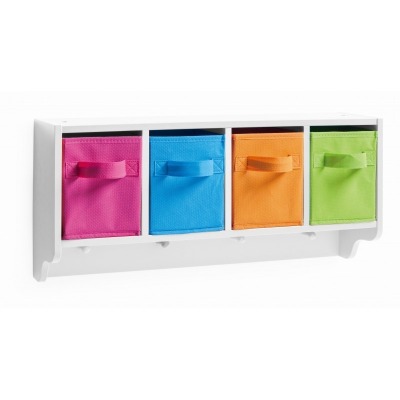
A hanging storage shelf and a children’s wall shelf are suitable if you want to save floor space or create a designated place for storing small items. The three compartments of the hanging storage shelf are practical for sorting, while the wall shelf with an MDF base and textile compartments offers a compact solution measuring 61 × 16 × 28 cm. In both cases, check the fixing and the suitability of the wall before installation.
An open book or toy shelf is more suitable if the child needs to see and find books and favourite toys independently. The three-tier bear-themed shelf makes use of a narrow vertical space and, according to its description, has specific anti-tip features and front safety rails. The white floor-standing cabinet with three shelves, the Tipi shelf and shelves with different storage compartments all provide open storage, but differ in their dimensions, shape and storage options.
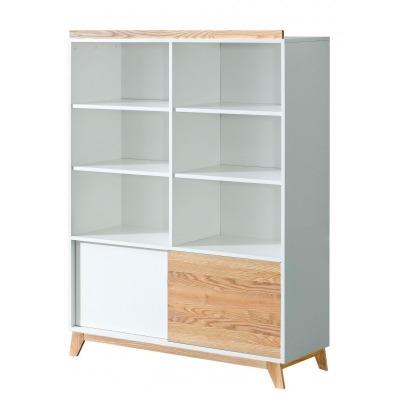
House-shaped shelves and storage combinations with cupboards suit rooms with greater storage needs. The different levels of the Calla house-shaped shelf, the white model with seven shelves, the grey or green shelf with a drawer and shelves, and NORDIK’s six shelves with a closed cupboard make it possible to divide storage into zones. Choose between them according to whether you need more visible shelf space, a drawer for small items, a closed cupboard, or a particular size and colour.
Practical placement and getting started
Before buying, measure the intended spot for the shelf: the available width, height and depth. For a freestanding shelf, also check that there is enough space in front for moving around, playing and opening drawers. For a wall shelf, measure the entire installation area and note any possible obstacles, such as the edge of a window, a door or other furniture. Don’t assume the shelf will fit on an empty wall if there isn’t enough comfortable space around it for use.
Sort the contents according to how often they are used. Favourite books and toys used every day should be on an open shelf and within the child’s reach. Put small building blocks, craft supplies and other small items in a drawer or container; this makes them easier to collect all at once. Items used less often can be placed in a closed cupboard or higher up, always following the product’s installation and use instructions.
Before using the shelf, check the following:
- whether the shelf’s dimensions match the actual available space;
- whether the layout leaves enough room to move around;
- whether the fittings for a wall-mounted shelf are suitable for the chosen wall and comply with the manufacturer’s instructions;
- whether the connections on a freestanding shelf are properly in place according to the instructions;
- whether the shelf’s edges and surfaces are suitable for the intended arrangement;
- whether the child can reach everyday items without uncomfortable climbing or pulling;
- whether information about the shelf’s load capacity is available on the product page or in the instructions.
To make tidying easier, use the shelf according to a set system: one level for books, another for frequently used toys, and a drawer for small items. If the room’s storage needs include clothes as well as toys, take a look at children’s wardrobes and dressers alongside the shelf. For a reading or craft corner, Kids' Desks or Kids' Tables and Chairs may also work well with a shelf. After considering the dimensions and how it will be used, the next step is to browse the available Children’s Room Shelves.
Common mistakes when choosing a shelf for a child’s room
- Choosing a shelf based only on its appearance. A house-shaped or colourful shelf may suit the room well, but before buying, check the shelf space, drawers, cupboard and dimensions. Solution: before choosing, work out what needs to be stored and how much of it there is.
- Not measuring the available space. A shelf may look compact in a picture, but its actual width, depth or height may not be suitable. Solution: measure the area and allow for room to move around and open drawers.
- Not considering the child’s everyday use. A shelf placed too high won’t help a child choose a book or toy independently. Solution: keep frequently used items within easy reach and place items used less often higher up.
- Mounting a wall shelf without checking first. The right dimensions alone don’t guarantee a suitable installation. Solution: check the wall type, whether the fittings are suitable, and the manufacturer’s instructions before installation.
- Leaving everything on open shelves. Small items can quickly make a shelf look untidy. Solution: use drawers, fabric storage containers or a closed cupboard for items that are easier to store together in a group.
- Assuming the load capacity. The technical specifications of one model do not automatically apply to another. Solution: check the load capacity information for the specific product and don’t overload the shelf beyond an unknown limit.
Frequently asked questions
How do you choose the right shelf size for a child’s room?
First measure the available wall or floor space and allow for the room needed to move around the shelf. Then compare the shelf’s width, depth and height with the items you want to store.
Is a low or high shelf better for a child?
Books and toys used every day should be easy for the child to find. A taller shelf may offer more storage, but its upper sections are better suited to items used less often; follow the manufacturer’s instructions when arranging it.
When should you choose a children’s wall shelf?
A wall shelf is a good choice if you want to save floor space or use a narrow section of wall. Before buying, be sure to check the installation method, wall suitability and the fittings required.
Which shelf is suitable for books, and which for toys?
An open children’s bookcase, where the contents are easy to see and reach, is suitable for books. Toys may call for larger shelf surfaces, drawers or containers, especially if the items being stored are small or irregularly shaped.
What are drawers and a closed cupboard useful for?
Drawers help group smaller items together and put them away quickly. A closed cupboard is suitable for items used less often or that you want to keep out of sight. Open shelves can then be used for books and frequently used toys.
Is a house-shaped shelf a practical storage solution?
Yes, if its shelf space and heights meet your storage needs. A house-shaped shelf can be both a decorative feature and a storage space, but before choosing one, be sure to compare the actual shelf levels, dimensions and placement options.
What should you check when mounting a shelf on the wall?
Check the manufacturer’s instructions and fitting method, and whether the fittings are suitable for the specific wall. Also consider where the shelf will be placed and whether it will be convenient to use and reach the items on it.
How can you keep items on a shelf easy for a child to find and the room tidy?
Organise the shelf by use: books in one area, larger toys in another, and small items in a drawer or container. When each group has its own place, both finding things and putting them away become easier.
Summary
When choosing a kids’ room shelf, consider four things: what you want to store, how much free space you have, whether the solution is wall-mounted or freestanding, and how your child can reach it. Open shelves are suitable for books and toys you want to display, drawers for small items, and cupboards for things you’d prefer to keep less visible.
Compare the dimensions, installation method, number of shelves and the specific product instructions. Before use, also check stability, fixings and whether the shelf is at a suitable height, and make sure that frequently used items are within your child’s reach.
Next, browse the Kids’ Room Shelves category to find a solution that suits your space, storage needs and kids’ room style.