
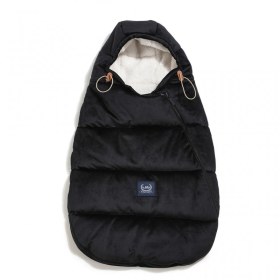
A footmuff helps keep your child warm during winter walks, but your comfort outdoors also depends on you. If your child needs protection in a carrycot, pushchair or infant car seat, consider a footmuff designed for babies. If it is your hands that get cold, a pram hand muff or pram mittens are more practical. The right choice depends on where you will use it, your child's age and height, the harness design, the weather and how easy the accessory is to use every day.
This guide will help you work out what you really need before browsing the products. We look separately at using a carrycot, pushchair, infant car seat and car seat, checking measurements and harness slots, practical differences between materials, and dressing your child in layers. You can then browse the relevant category: baby footmuffs, pram hand muffs or pram mittens.
It is important to distinguish between your child's needs and your own. A footmuff surrounds the child, a pram hand muff usually covers both hands in a single muff, and pram mittens are separate hand coverings. These are not simply different names for the same product; they serve different purposes on a walk.
To make choosing easier, this article looks at the Baby Footmuffs, Pram Hand Muffs and Pram Mittens categories separately. This lets you compare the subcategories within one overall guide without confusing their different uses.
How to choose a footmuff before buying?
Start by asking where your child spends most of their time. A newborn lying in a carrycot has different needs from a child sitting up, and a footmuff for an infant car seat must fit the harness and seat shape. Once you have decided where you will use it, compare the age range, measurements, lining and outer fabric.
Carrycot, pushchair or infant car seat?
For a carrycot, choose an option that covers your child evenly and does not bunch up uncomfortably in the carrycot. Check the carrycot's internal length, the footmuff's width and whether its upper section can be adjusted to fit your child's body. For a footmuff suitable for a newborn in a pram, it is especially important that the baby does not sink too far inside and that their face remains clearly visible.
For a pushchair or stroller, also check the footmuff's length, the shape of the foot section and how it sits when your child is upright. If your child is growing quickly, it may be worth comparing an extendable, growing footmuff with a standard-size model. According to their descriptions, the Aspen footmuffs in this category are designed for ages 0–1 years and are suitable for both pushchairs and infant car seats. For other models, always check the age and usage range separately on the product page.
For an infant car seat or car seat, it is not enough for the footmuff to fit physically in the seat. Check the position of the harness slots, the movement of the harness and the manufacturer's instructions. A footmuff for an infant car seat must allow the harness to be fastened so that it lies close to the child's body; a thick or incorrectly positioned layer must not alter the harness position or how the fastening works. Do not assume compatibility with a 3-point or 5-point seat belt based only on the product name or general description.
Measurements, age and room to grow
The age label is a starting point, not the only selection criterion. Before buying, note down your child's height, the carrycot's internal length, the footmuff's width and how much growing room is needed for the entire period of use. Also check the position of the zip, hood or foot section, and whether the product has an extension section or another feature designed to accommodate growth.
- Measure the usable internal length of the carrycot or seat, not just its external dimensions.
- Compare your child's height with the permitted or stated usage range in the product description.
- Check whether the footmuff is wide enough for your child to move comfortably and fits between the sides of the seat.
- Check the harness slots and their height in relation to your child.
- If you want to use it for longer, look for clear information about whether it can be extended in the product description; do not assume this from its appearance.
A practical comparison of materials
For the inner layer, you may come across options such as lambswool, fleece lining, a fluffy lining and synthetic filling. These have different properties, such as softness, ease of care, moisture management and how they feel for warmth, but no material is automatically best for every child or type of weather. Check which care instructions suit you and whether the manufacturer specifies the particular lining or filling material.
The outer fabric’s wind and moisture protection should be considered separately. An outer fabric described as water-repellent or waterproof may be useful on a rainy walk, but one feature alone does not tell you the product’s overall limits of use. For example, the descriptions of the Aspen models mention a quilted, reinforced velvet outer layer, breathability and a minimum waterproof rating of 10 000 mm. This information should be treated as a feature of those specific products, not as a general rule for all footmuffs.
Choosing by season
In autumn and spring, a solution that protects against wind, is easier to open and can be layered flexibly may be more important. In temperatures around freezing, the comfort of the lining, how the footmuff closes and whether the top section can be adjusted become important. In colder winter weather, consider the whole combination: outer protection, inner warmth, the child’s clothing, wind strength and whether the child will be sitting still in the pram or moving around more actively.
It is not sensible to automatically choose the thickest possible clothing for a child. Clothing inside the footmuff should be layered and suited to the actual weather and the child’s comfort. When going indoors or getting into a car, open the footmuff to prevent too much heat from building up, and check on the child regularly.
Baby Footmuffs
A baby footmuff is designed for use when a child is out in a pram carrycot, pushchair or, where compatible, car seat. The right model can help keep a child warmer than a blanket simply placed on top, because the footmuff’s shape and fastening are designed to fit around the child. However, a footmuff does not replace a safety harness. When using one in a car seat, always check the manufacturer’s instructions and that the harness slots are compatible.
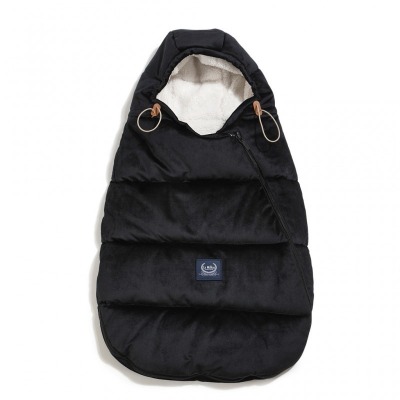
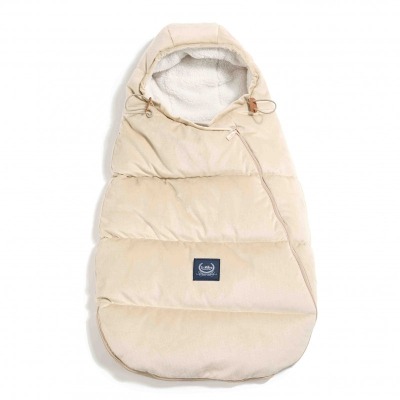
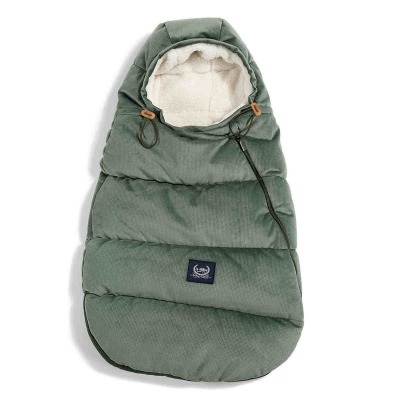
If you’re looking for a baby footmuff, first consider where it will be used and the child’s age. All the Aspen models in the article’s product selection are described as suitable for ages 0–1 years and for use in a pushchair and car seat. Their descriptions mention a quilted, reinforced velvet outer layer, breathability and a minimum waterproof rating of 10 000 mm; the inner layer is described as warm and soft.
Does the same footmuff fit a pram and a car seat?
Using one solution in more than one place can be convenient, but compatibility should be checked against the specific seat and harness. In a pram carrycot, the main considerations are length, width and a comfortable position for the child. In a car seat, you also need to consider the harness slots, the position of the 3-point or 5-point harness system and the requirement for the harness to sit close to the child’s body.
Before use, open the footmuff, place the child in the seat according to the instructions and check that the harness can move and fasten without an excessive extra layer or any change caused by the footmuff. If the product description does not specify compatibility with your car seat or child car seat, check with the manufacturer or seller. The general description “universal footmuff for a pram and car seat” does not automatically mean it fits every model.
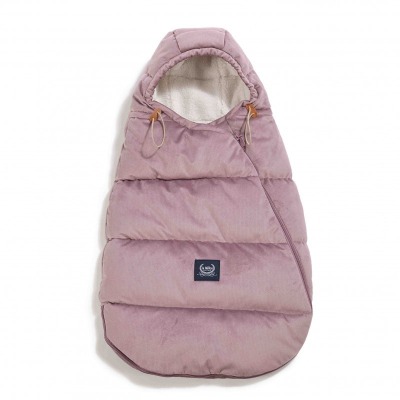
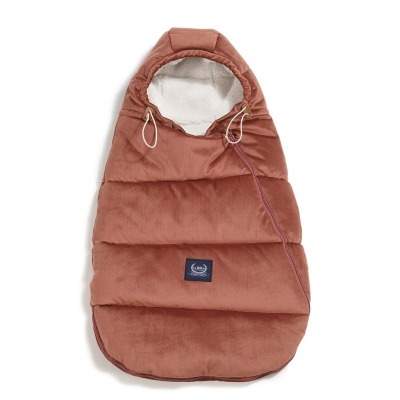
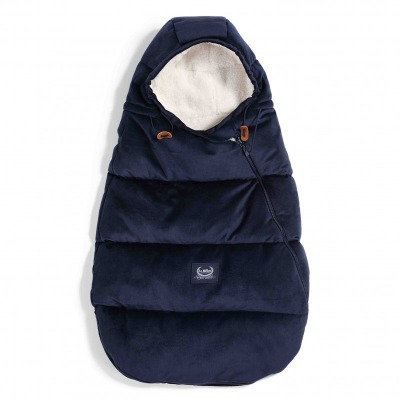
Colour helps you choose the look, but according to their descriptions, Aspen products share the same key features: use from 0–1 years, compatibility with a pushchair and car seat, and a quilted velvet outer layer. So, when choosing between black, sand, khaki, lavender, ginger and royal navy, consider which will suit your existing pram or other equipment. In practice, comfort also depends on whether the footmuff’s dimensions, openings and fastening suit the child and the vehicle.
If your child is growing quickly, do not automatically assume the Aspen models can be extended, as this feature is not confirmed in the descriptions provided. An extendable baby footmuff is a sensible choice only when the product page clearly describes an extension or room to grow. The same principle applies to lambswool, fleece lining, plush lining and synthetic filling: compare the confirmed material information, not just the product’s appearance or name.
Pram Hand Muffs
A pram hand muff is designed to keep a parent’s hands warm, not a child. It fastens to the handle or bar of a pram or pushchair, allowing you to keep your hands inside the muff instead of repeatedly putting gloves on and taking them off. It is especially useful on a long walk, in windy weather or when you often need to do something for your child.
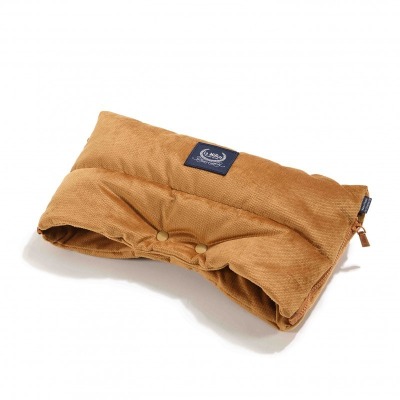
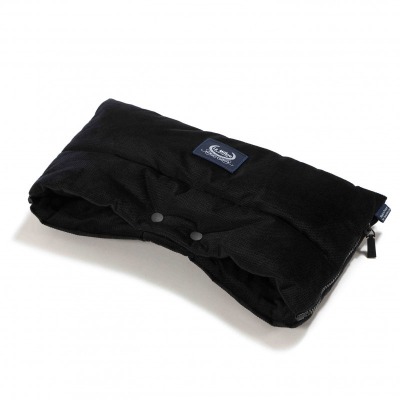
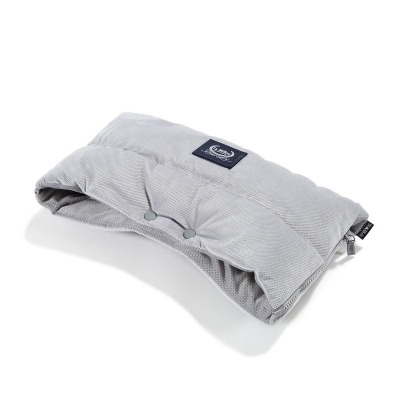
When choosing pram hand muffs, check the fastening type, dimensions, outer fabric description, lining and whether there is a pocket. According to their descriptions, Aspen models have zips on the sides, two snap fasteners, a quilted, reinforced, breathable and waterproof velvet outer layer, an additional ortalion inner layer, and a soft quilted velvet lining. They measure 22 × 42 cm, with an allowed variation of about 2 cm.
Fastening and weather protection
Snap fastenings make the muff quick to put on and help keep it in place on the handle or bar. Side zips can be practical if you want to adjust the hand opening or open the muff without removing the whole accessory. Before buying, check that your handle’s shape and width will allow the muff to sit comfortably; comparing dimensions alone may not be enough if the designs differ.
Look for information about protection from wind, rain and moisture in the outer fabric, but do not assume that waterproof means complete protection in all conditions. For Aspen hand muffs, the waterproof outer layer and the ortalion layer that protects against moisture are listed separately in the product description. The light grey and pink pram hand muffs are described as polyester, windproof and waterproof, soft and warm, and featuring a pocket.
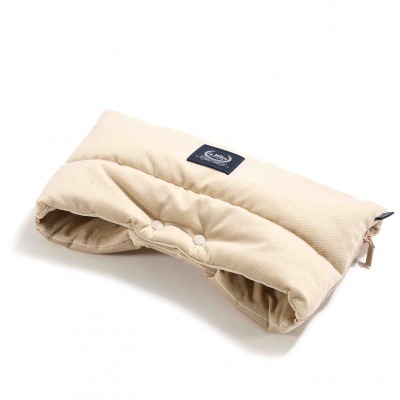
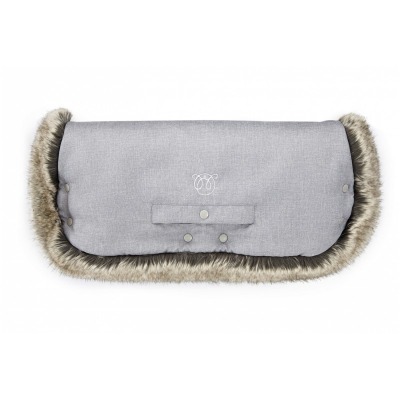
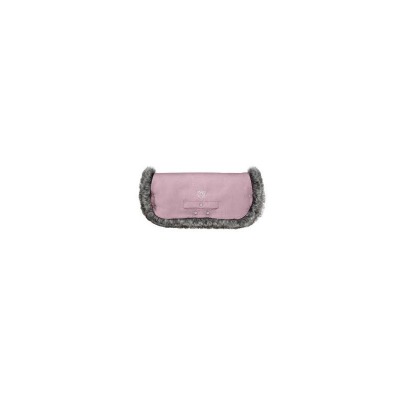
A pocket may be a small detail, but it can be practical in everyday use. It can hold a phone or another item you need close at hand during a walk, if the product description confirms this feature. However, a pocket should not be the only deciding factor: first make sure the fastening, hand opening, dimensions and weather protection are right.
A pram muff does not keep a child warm. If your child needs protection in a pram or pushchair, look for a footmuff designed for children; if you need to protect your hands, compare the muff separately with Pram Mittens. This helps avoid mistaking a product designed for a parent’s hands for winter gear for a child.
Pram Mittens
Pram Mittens protect the hands of the parent pushing a pram or pushchair from wind, rain and cold. They are a good choice if you want to cover your hands separately or prefer a design that fastens to the handlebar and stays in place during a walk. Like a pram muff, Pram Mittens do not keep your child warm; they make getting around more comfortable for the parent.
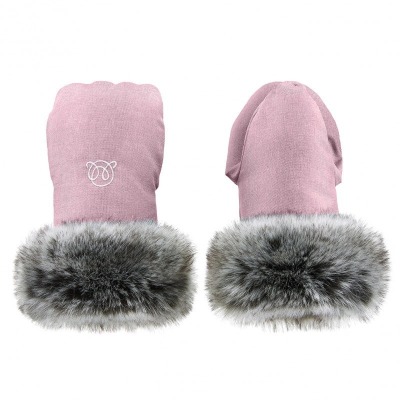
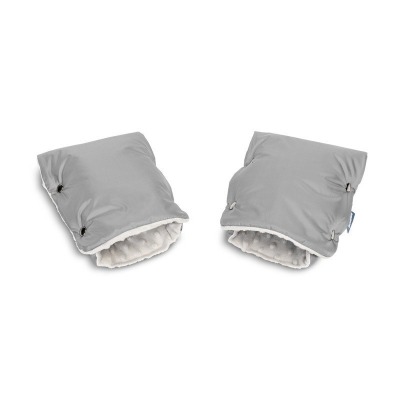
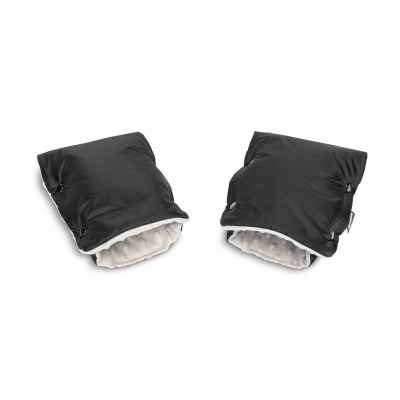
The products in this selection have different features. The description of the pink Pram Mittens specifies waterproof and windproof material, soft microfleece lining and a popper fastening. The grey and black Minky versions are described as having a waterproof outer fabric, a soft, warm Ninky inner fabric and popper fastenings. They are not connected to each other and can also be used on pushchairs with separate handlebars.
Pram Mittens or a pram muff?
A pram muff is usually one shared hand muff that fits both hands. Pram Mittens can be separate, allowing more independent movement and potentially suiting handlebars with separate grips. Before buying, consider whether you prefer the simplicity of a single muff or the flexibility of separate mittens.
The descriptions of the graphite, black and dark blue versions highlight protection from autumn and winter wind, rain or snow, as well as popper fastenings for attaching them to a pushchair or sled handlebar. These descriptions focus on hand protection and staying in place, but check the individual product page for details of the lining or exact outer material if you need that information.
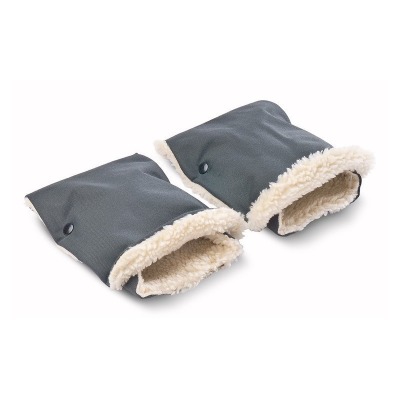
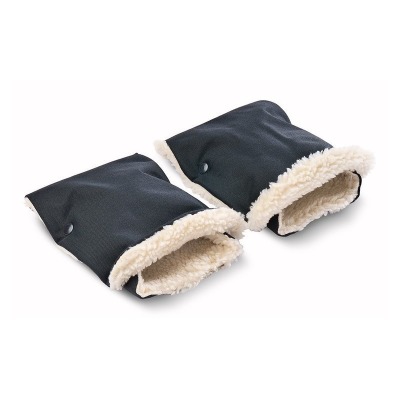
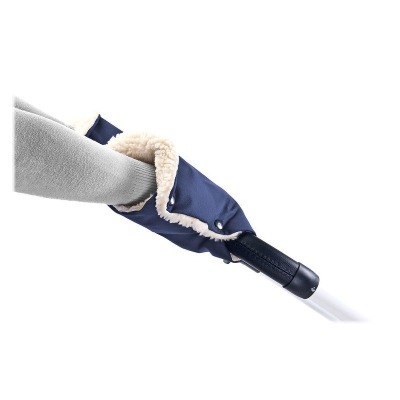
A practical choice starts with the type of handlebar and how often you need to free your hands during a walk. A popper-fastened design should be easy to position, but the fit also depends on the shape and construction of the handlebar. The Minky versions can be used separately, which may be important if your pushchair has two separate handles; a connected design may be better suited to a different style of steering.
If the main concern is keeping your child warm, choose a baby footmuff. If your child is already dressed appropriately but your hands are cold, compare Pram Mittens and pram muffs by their fastenings, lining and weather protection. The product name or colour alone does not indicate which design will be most comfortable for your pushchair.
Which option suits your walks?
Choosing becomes easier when you consider who will use the product and in what situation. A footmuff surrounds the child in a pram carrycot, pushchair or, if suitable, an infant car seat. A pram muff and Pram Mittens protect the parent’s hands and cannot be used as a winter layer for a child.
- Footmuff: for a child, when the aim is to protect their body from the cold in a pram or pushchair. Check the age, height, measurements, harness slots, intended use and descriptions of the inner and outer layers.
- Car Seat Blankets: can be a convenient layer to place over a child, but they are not automatically the same as a footmuff designed to fit the harness slots and shape of a seat. Follow the specific product’s instructions for secure fastening.
- Foot cover: focuses mainly on covering the legs and lower body. It may not cover a child in the same way as a footmuff that surrounds the whole body.
- Snowsuit: is clothing worn by a child and must be suitable for the pram, seat and safety harness. Its suitability cannot be judged solely by how thick or warm it feels.
- Pram muff: a design that goes around both of the parent’s hands, offering quick use and hand protection. Check the poppers, zips, measurements, lining, outer fabric and pocket.
- Pram Mittens: a design for the parent’s hands, used separately or as a pair. Check whether the mittens are connected, how they attach to the handlebar and whether the inner layer is described.
If your child needs protection, start by browsing baby footmuffs. If your child is already dressed appropriately and your hands are cold, look at pram muffs or Pram Mittens. This helps you choose a product for a real-life situation, rather than relying on the category name alone.
Practical checks before buying and using
Before buying a footmuff or hand accessory, work through the following checks. First, decide whether you will use it in a pram carrycot, a seated pushchair, an infant car seat, a car seat or in several places. Then compare your child’s height, the vehicle’s internal length, the muff’s width and any room for growth. If the product has an extension, an adjustable top or another feature to accommodate growth, this should be clearly stated in the product description.
- Check where the product is intended to be used and whether it is designed for a reclined or seated position.
- Check the age and size information, and measure the child and the actual space in the pram.
- For an infant car seat or car seat, check the harness slots and compatibility with a 3-point or 5-point system.
- Make sure the harness sits close to the child’s body and is not loosened or moved out of position by the footmuff.
- Compare the outer fabric’s wind and moisture protection, and the softness and care requirements of the inner layer.
- Check the fastening, poppers, zips and pocket, and how quickly you can open or remove the product.
- Read the product and vehicle instructions, and do not assume compatibility based on missing information.
In an infant car seat, fasten the harness so that the straps remain close to the child’s body and are not displaced by an excessive layer. A footmuff must not replace the safety system or prevent the harness from being fastened correctly. If compatibility information for a specific infant car seat, car seat or pram is not available, check with the manufacturer or retailer before use.
Dressing and avoiding overheating
A warm footmuff does not mean that your child always needs to wear the thickest clothes. Dress them in layers and take the wind, precipitation, temperature, your child’s age and how active they are into account. Check your child regularly by feeling the back of their neck and observing their general wellbeing, not just their hands or face.
When you go into a shop, home or car, open the footmuff or remove a layer as needed. Act immediately if you notice signs of overheating. With a pram muff or pram mittens, check from time to time that the poppers and other fastenings remain securely in place and that your hands can move comfortably.
Common buying mistakes
- Choosing by colour or appearance alone. An attractive shade does not tell you whether a product is suitable for a carrycot, pushchair or car seat. The solution: before focusing on the design, check where it will be used, the age range, measurements and fastenings.
- Measurements and room to grow are overlooked. A footmuff that is too small will quickly become uncomfortable, while one that is too roomy may not fit snugly around your child. The solution: compare your child’s height, the internal length of the pram or pushchair, and the product’s width.
- Assuming the harness slots will fit. Not every footmuff will work with every 3-point or 5-point system. The solution: check the position of the slots, that the harness can move freely, and the manufacturer’s instructions.
- Too many layers are put on under the footmuff. Thickness is not the only measure of warmth and may increase the risk of overheating. The solution: dress your child in layers and check the back of their neck and their general wellbeing.
- An accessory for a parent’s hands is judged as a way to keep the child warm. A pram muff and pram mittens protect the hands of the person pushing, not the child. The solution: to protect your child from the cold, choose a footmuff or another layer designed for children.
- Water resistance and wind resistance are treated as the same thing. One feature mentioned in a product description does not confirm all the others. The solution: check the specific information about the outer fabric and the instructions for use.
- One material is assumed to be best in every case. Lambswool, fleece lining, a fluffy inner lining and synthetic filling may suit different users. The solution: compare softness, care requirements, protection from moisture and seasonal needs.
- Fastenings and care are not taken into account. A product used every day should be easy to fit and clean. The solution: before buying, check the information about poppers, zips, removable parts and care instructions.
Frequently asked questions
Which footmuff is suitable for a newborn in a pram?
Choose a model whose age and size information includes newborns and whose measurements fit the carrycot. Check that your baby sits comfortably in the footmuff, their face remains visible and the footmuff can be closed without restricting their position.
Can the same footmuff be used in a pushchair and a car seat?
Some models are described as suitable for both uses, but this cannot be assumed for every product. Check the harness slots, seat shape and the instructions for the specific product. According to the product information, Aspen models are designed for use in pushchairs and car seats.
How do I check whether it fits 3-point or 5-point harnesses?
Check whether the footmuff slots align precisely with the shoulder, hip and crotch straps of your pram or pushchair. The harness must remain close to your child’s body, and the footmuff must not change its position. If in doubt, follow the manufacturer’s instructions or ask them to confirm compatibility.
What should my child wear under a footmuff?
Dress your child in layers according to the weather rather than automatically choosing the thickest outfit. The layers needed depend on the footmuff’s features, the temperature, wind and your child’s activity level. Check your child regularly and adjust their clothing according to how they are feeling.
How can I prevent my baby from overheating in a footmuff?
Check the back of your baby’s neck and their general wellbeing, and do not judge by their hands alone. When going indoors or getting into a car, open the footmuff or remove a layer, as the temperature can change quickly.
How long can a footmuff be used?
How long it can be used depends on the product’s age and size information, your child’s growth and whether the model is extendable. For example, the Aspen models discussed in the article have a stated age range of 0–1 years. Do not assume a footmuff is extendable unless this is stated on the product page.
What is the difference between a pram muff and pram mittens?
A pram muff is usually one shared hand warmer for both hands. Pram mittens may come as separate pieces; the Minky model description states that the mittens are not connected to each other and can also be used separately on pushchairs with separate handlebars. Both protect the parent’s hands.
Is a footmuff the same as a Car Seat Blanket or a foot cover?
No. A footmuff wraps more securely around the child and may be designed with harness slots. A Car Seat Blanket or foot cover works differently, and its suitability must be assessed separately. A winter snowsuit is clothing worn by the child, not a footmuff fitted to a pram or seat.
Summary
The right order for choosing is simple: decide where it will be used, take your child’s age and growth into account, check the measurements and harness slots, then compare weather protection, inner lining, fastenings and care requirements. A footmuff is for the child, while a pram muff and pram mittens are for the parent. Distinguishing between their roles helps avoid expecting one accessory to solve two entirely different problems.
If you need winter protection for your child, compare baby footmuffs by intended use and size. If your hands get cold while pushing, look at pram mittens or pram mittens, and check their fastenings and weather protection before buying. This way, you can go straight to the right category with a clear use in mind and a checklist to hand.